In July 1947, Cyril Radcliffe, a British lawyer, was given the responsibility of making an impartial decision on the partition of India. He had never travelled to India before and was given just five weeks to draw boundaries that would affect the lives of millions of people for generations.
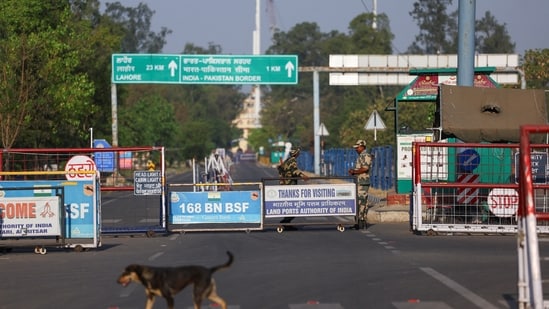
The border that separated India and Pakistan is known as the ‘Radcliffe Line’, dividing 175,000 square miles (450,000 sq km) of territory inhabited by 88 million people. The demarcation line was published only on August 17, 1947, two days after India and Pakistan officially celebrated their independence.
Also Read | Freedom the same night, but different dates: Why Pakistan marks its Independence Day on August 14
Why August 17?
To avoid disputes and delays, the division was carried out in secret. The final awards were ready by August 12 but were not published until two days after Partition, on August 17. The entire boundary-making process was kept strictly secret to prevent local disputes and attempts to derail or interfere with the boundaries before they were finalised.
An article titled “Dividing the Subcontinent: The Radcliffe Line and its Aftermath”, published by the British Online Archives, stated that in a 1971 interview with Kuldeep Nayar, Radcliffe described the time he had been given as “so short” and argued that “two to three years” would have been more realistic.
{{/usCountry}}An article titled “Dividing the Subcontinent: The Radcliffe Line and its Aftermath”, published by the British Online Archives, stated that in a 1971 interview with Kuldeep Nayar, Radcliffe described the time he had been given as “so short” and argued that “two to three years” would have been more realistic.
{{/usCountry}}Instead of releasing the boundaries as soon as they were ready, their implementation was rushed at the very last minute. Indian and Pakistani representatives were handed copies to study on August 16 at 5pm, giving them a mere two-hour window, before the award was officially made public on August 17.
By withholding the maps until after August 15, the departing British administration believed that they avoided having violent and volatile reactions to the new border overshadow the official transfer of power and independence celebrations. This left the immediate management of the resulting crisis entirely to the new governments.
In Joya Chatterji’s research paper, “The Fashioning of a Frontier: The Radcliffe Line and Bengal’s Border Landscape, 1947–52”, published in Modern Asian Studies, the partition of India is often historically portrayed as a “surgical operation” - a clean, clinical incision intended to solve a communal “disease”.
However, Chatterji challenges this metaphor, noting that it falsely portrays the British as detached surgeons and India as a passive, helpless object, rather than capturing the messy and deeply political reality of the Partition process.
After implementation
Once the border was announced, the new governments of India and Pakistan were left largely on their own to manage it. Viceroy Mountbatten quickly set up a Punjab Boundary Force to maintain peace around Lahore, but its 50,000 soldiers were vastly outnumbered, averaging fewer than one soldier per square mile, according to the book “The Proudest Day: India’s Long Road to Independence” by Anthony Read and David Fisher.
Also Read | ‘What have I done?’: When Jinnah confronted Partition’s horrors from the skies over Punjab
This made it impossible to secure cities or protect the hundreds of thousands of refugees fleeing across the new frontiers, leading to widespread violence, particularly in rural areas.
Neither nation wanted to violate the boundary agreement or support cross-border rebellions, fearing international embarrassment that could invite British or United Nations intervention.
Ultimately, the hastily imposed division failed to secure peace, sparking immediate violence and setting the stage for decades of geopolitical conflict, including the wars of 1947, 1965 and 1971, as well as the 1999 Kargil conflict.
Impact on human Life
This widespread confusion—where ordinary people had no idea where the line would fall or refused to believe a border could divide them overnight—was captured in Imtiaz Ali's bollywood partition movie "Main Vaapas Aaunga", reflecting the real historical reality that millions were kept completely in the dark until the very last moment.
When the new borders were revealed, roughly 15 million Hindus, Muslims and Sikhs fled their homes, seeking safety across the frontier, according to Britannica. While some managed to travel by train or bus, most joined massive refugee columns stretching for miles on foot. These vulnerable groups and refugee trains became frequent targets of ambushes.
Amid the devastating exodus, up to two million people were killed in communal violence, although sparse records mean exact estimates remain widely debated, according to Britannica. The Sikh community, caught directly across the divided Punjab region, suffered some of the heaviest casualties relative to its population.
At the time, British media captured the shocking violence, according to the British Online Archives. The prominent British illustrated weekly newspaper The Sphere published photographs of ruined towns and dead bodies in Amritsar, Lahore and Rawalpindi. It reported widespread looting and arson, with one reporter seeing 50 villages on fire from the air.
Just two weeks after the border was announced, 10,000 people had been killed in Punjab alone. Of the 300,000 Hindus who once lived in Lahore, nearly all had fled to India to escape the danger.
Also Read | Beyond borders: Two lines, three nations, one culture
A week later, The Sphere published another report titled “The Two-Way Exodus”. It showed photographs of families fleeing in cars and trains with whatever belongings they could carry.
Those who could not escape were often killed. The regional death toll quickly rose to 200,000, according to the article.
Women and children suffered terribly during the chaos. Historian Kamal Bhasin noted that around 100,000 women were abducted and subjected to sexual violence while trying to cross the new borders, marking one of the darkest chapters of Partition.
Today, as both nations look back, the events of August 1947 remain an enduring reminder of the resilience of millions who survived the chaos and the heavy price paid for freedom.
Women and children suffered terribly during the chaos. Historian Kamal Bhasin notes that around 100,000 women were kidnapped and abused while trying to cross the new borders, marking one of the darkest parts of the partition.
Today, as both nations look back, the shadow of August 1947 serves as an enduring reminder of the resilience of millions who survived the chaos, and the heavy price paid for freedom.