A Supreme Court bench on Thursday dismissed the last existing appeal against the 2005 Delhi high court judgment that quashed all criminal proceedings against the Hinduja brothers and Swedish arms manufacturer AB Bofors, effectively closing India's longest-running defence corruption case.
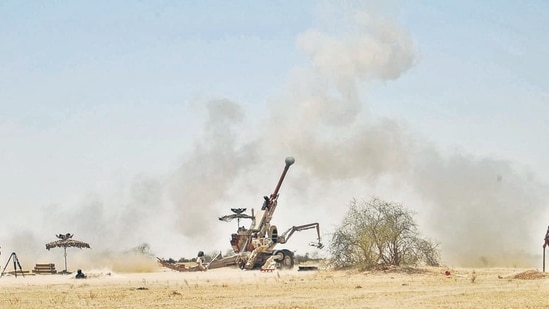
The judgment came nearly four decades after Swedish Radio first alleged that kickbacks had been paid to secure the sale of 400 howitzers to the Indian Army.
The bench of justices JB Pardiwala and K Vinod Chandran declined to grant more time to advocate Ajay K Agrawal, who had challenged the high court verdict as a private appellant.
"What is all this about the Hinduja brothers and CBI?" the bench asked at one point.
Told that the high court had exonerated the accused in 2005, it added: "All proceedings were quashed. What is this? How many years have passed?"
When Agrawal sought four weeks to delete the names of two deceased respondents — Srichand P Hinduja and Gopichand P Hinduja — from the array of parties, the bench refused, observing that the matter had been pending since 2018.
The Supreme Court had already dismissed the Central Bureau of Investigation's appeal against the same high court judgment in November 2018, on grounds that the agency could not satisfactorily explain a delay of 4,522 days in filing it. With that appeal gone and Agrawal's now dismissed, no live challenge remains to the 2005 order.
The deal
{{/usCountry}}The Supreme Court had already dismissed the Central Bureau of Investigation's appeal against the same high court judgment in November 2018, on grounds that the agency could not satisfactorily explain a delay of 4,522 days in filing it. With that appeal gone and Agrawal's now dismissed, no live challenge remains to the 2005 order.
The deal
{{/usCountry}}The Indian government signed a ₹1,437 crore contract with AB Bofors on March 24, 1986, for 400 units of the 155mm FH-77B howitzer for the Indian Army.
Just over a year later, on April 16, 1987, Swedish Radio broadcast a report alleging that Bofors had paid illegal commissions to Indian politicians and defence officials to secure the contract.
The figure at the centre of the allegations — ₹64 crore, alleged to have been paid as commissions routed through a chain of foreign agents and front companies — emerged from a documentation trail by journalist Chitra Subramaniam, who was working with material provided by Sten Lindström, then head of the Swedish police unit investigating the case.
Then prime minister Rajiv Gandhi denied the allegations. The matter nonetheless shook his government.
The political fallout
The government constituted a joint parliamentary committee (JPC) in August 1987 to probe the allegations, and in 1989, the Congress-majority committee gave the Rajiv Gandhi government a clean chit.
By then Rajiv Gandhi's own former defence minister, VP Singh, had left the government and made Bofors the central issue of the November 1989 general election. Congress lost the election, and Singh became PM at the head of a Janata Dal-led coalition.
Rajiv Gandhi was assassinated on May 21, 1991, in Tamil Nadu while campaigning for the 1991 general election. He was 46.
The Bofors case would outlive him by 35 years.
The investigation
The CBI registered its first information report in January 1990, alleging criminal conspiracy, cheating, forgery and corruption against, among others, former Bofors president Martin Ardbo, alleged middleman Win Chadha, and the Hinduja brothers.
The Hindujas were alleged to be among the middlemen who received portions of the commission payouts. They had denied the charges.
A special investigation team was set up around 1997, the same year Swiss banks — after four years of legal wrangling — released some 500 documents to Indian authorities in Berne.
The agency's 1997 chargesheet named Ottavio Quattrocchi, an Italian businessman representing the petrochemicals firm Snamprogetti and alleged to be a middleman in the deal, along with Chadha, Ardbo, defence secretary SK Bhatnagar and AB Bofors itself.
Rajiv Gandhi's name figured, unusually, as an accused not sent for trial — he had been assassinated six years earlier.
A supplementary chargesheet in October 2000 added the three Hinduja brothers, Srichand, Gopichand and Prakash, who denied that any funds they received from Bofors were connected to the gun deal.
The courtroom unravelling
Over the next decade the prosecution came apart before the Delhi high court.
In February 2004, justice JD Kapoor cleared Rajiv Gandhi posthumously of any criminal culpability while directing that a forgery charge be framed against AB Bofors. On May 31, 2005, justice RS Sodhi quashed all charges against the Hinduja brothers and AB Bofors, criticising the CBI's handling of the prosecution and observing that the investigation had cost the exchequer nearly ₹250 crore.
Quattrocchi's trajectory ran in parallel. He was arrested in Malaysia in December 2000 but granted bail. He was detained again in Argentina in February 2007 on an Interpol notice, and released. In September 2009, the then Congress-led UPA government informed the Supreme Court that it was withdrawing the case against him. A Delhi trial court discharged him in 2011 after repeated extradition efforts had failed. He died of a heart attack in Milan in July 2013.
Others died as the proceedings dragged on. Chadha died of a heart attack in 2001. Bhatnagar died of cancer the same year. Ardbo died in Sweden in 2004.
The CBI closed its probe in 2011.
Reopening the past
In 2017, a US-based private detective, Michael Hershman, who had headed a firm called Fairfax — hired by then finance minister VP Singh in 1986-87 to investigate currency control violations by wealthy Indians — told an Indian television channel that the Rajiv Gandhi government had sabotaged his work, and alleged that the bribe money had been parked in a Swiss account. Hershman had said his probe into currency violations stumbled onto payments he came to believe were bribes from Bofors.
He expressed willingness to share what he knew with Indian investigators.
The CBI, which had by then closed the case, approached a Delhi court in 2018 seeking to reopen it. It wrote to US authorities through Interpol in November and December 2023, and again in May and August 2024, seeking Hershman's material. When US authorities kept asking for more time, the agency sent a formal letter rogatory to Washington.
Separately, Chitra Subramaniam's 2025 book Boforsgate: A Journalist's Pursuit of Truth alleged that senior Indian bureaucrats "tutored" Bofors officials during secret meetings at the defence ministry in New Delhi on September 15-17, 1987, on how to absolve Rajiv Gandhi of blame. The account is attributed to Lindström, the Swedish police official who had led the original investigation.
The guns, and the company
In all these years, the FH-77B guns were considered a valuable addition to the Indian artillery. In the 1999 Kargil war, Bofors howitzers played a decisive role in targeting entrenched Pakistani troops on strategic heights along the Line of Control and clearing the way for the Indian infantry to retake positions, according to veteran accounts.
India, though, took no further Bofors orders after the scandal broke, and the company was subsequently barred from Indian defence contracts. New Delhi never exercised the transfer-of-technology clause in the original contract.
The Army waited nearly three decades for its next new artillery piece: 145 M777 ultra-light howitzers from the US, on a $750 million contract signed in November 2016, with inductions beginning in May 2017.
The Bofors guns remain in Indian Army service.
AB Bofors, in the form that signed the 1986 contract, no longer exists. Saab AB acquired its parent, Celsius Group, in 1999. United Defense Industries of the US took over the Bofors heavy weapons division in September 2000, while Saab retained the missile business. BAE Systems of Britain acquired UDI in 2005. What remains of the company is now a unit of BAE Systems AB, the Swedish subsidiary of the British arms group.
The Rafale echo
Parallels with the Rafale controversy that dominated Congress leader Rahul Gandhi's 2019 campaign ahead of Lok Sabha elections were made at the time.
Writing in Hindustan Times in 2019, senior journalist Rajdeep Sardesai observed in a column that both Rajiv Gandhi and Narendra Modi had headed majority governments, both had promised to be change agents, and both had run into defence-deal controversies involving European suppliers midway through their terms.
But Sardesai also drew a distinction. In Bofors, he wrote, investigative reporting had established a documented money trail from Sweden. In Rafale, the charge was "primarily of cronyism" — that the businessmen close to the government had received undue benefits.
The Rafale procurement was later cleared by the Supreme Court. The Bofors case, by contrast, collapsed.