The government on Monday amended vehicle emission rules so that cars can be certified to run on E100 as well as E85, high-ethanol fuels that ordinary petrol cars cannot use and that only flex-fuel vehicles (FFVs) can run on.
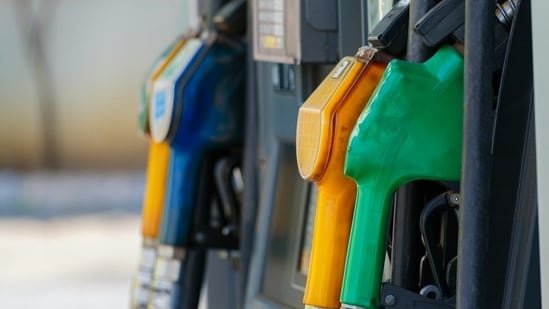
E stands for ethanol and the number for its proportion. E85 contains up to 85% ethanol by volume, and E100 is a fuel consisting predominantly of ethanol, according to the Ministry of Road Transport and Highways.
Vehicles certified for these fuels, FFVs, must meet the emission and safety requirements for their category, and the fuels are meant only for vehicles designed and certified to use them. Owners of existing vehicles do not have to switch fuel or modify their cars, and they will continue to have access to E20 petrol, with E85 and E100 being an option that only those with compatible vehicles would pick.
The change follows the nationwide rollout of E20, petrol blended with 20% ethanol, which drew complaints from some motorists and opposition from political parties this year. The government has repeatedly said E20 is safe and does not damage engines, although critics say it corrodes some components and is more prone to contamination if not kept in secure storage.
How a flex-fuel car runs on ethanol
A flex-fuel car looks like any petrol car. It has a single fuel tank, and most of its parts are the same, according to the US Department of Energy. What makes it different is how it copes with a fuel that behaves very differently from petrol.
{{/usCountry}}A flex-fuel car looks like any petrol car. It has a single fuel tank, and most of its parts are the same, according to the US Department of Energy. What makes it different is how it copes with a fuel that behaves very differently from petrol.
{{/usCountry}}Petrol is made from crude oil and is a mix of many compounds of hydrogen and carbon. Ethanol is a single chemical, the alcohol found in alcoholic drinks, and about a third of its weight is oxygen.
Fuel needs oxygen from the air to burn, so ethanol needs less air: about 9 kg of air for every kilogram of fuel, against about 14.6 kg for petrol, according to the International Energy Agency”s Advanced Motor Fuels programme. Ethanol also holds less energy. A litre of it has about two-thirds of the energy in a litre of petrol, DoE data show. A car running on ethanol therefore has to burn considerably more of it to go the same distance.
Also read: Govt allows flex-fuel vehicles that can run on E100, amends motor vehicle rules
Why all cars cannot handle ethanol
A flex-fuel car's fuel injection system, which sprays fuel into the engine, needs to be modified to deliver that extra fuel, the department says. The car also has to know what is in its tank, since a driver can fill it with petrol, E85 or any mix of the two.
In an ordinary petrol car, a sensor in the exhaust pipe checks how much oxygen is left after the fuel burns, and the engine’s computer uses that reading to keep the mix of air and fuel right, correcting it 0.5 to 1 times a second.
A flex-fuel car either adds a sensor in the fuel line that estimates the ethanol content from the fuel’s electrical properties, or works out the blend from the exhaust sensor's readings, which shift with the amount of ethanol.
An engine squeezes the mix of air and fuel inside each cylinder, the chamber where the fuel burns, before a spark plug ignites it. Squeezing heats the mixture. If the fuel catches fire on its own from that heat before the spark, it burns too early and pushes against the piston, the part the burning fuel drives, while the piston is still on its way up. Mechanics call this knock, after the metallic rattle it makes. Ethanol resists knock far better than petrol.
Once a flex-fuel car's computer knows the blend, it adjusts when to fire the spark, and more ethanol lets the engine burn its fuel at a more timely moment, raising efficiency and power, research at the US Oak Ridge National Laboratory found.
The car’s materials have to change too. Ethanol absorbs water, and high-ethanol fuel can corrode some soft metals, such as zinc and aluminium, and make some rubber parts swell. In a flex-fuel car, rubber seals and other parts that touch the fuel are made from materials that ethanol does not attack, and so is the tank. Wiring for parts inside the tank is changed as well, and some engines need different valve materials. The US National Renewable Energy Laboratory (NREL) describes the list of fuel-system parts that must be modified as extensive.
Also read: E10 petrol may make a comeback - but as a premium fuel: Report
Adoption across the world
Brazil is where flex-fuel cars caught on. They made up 85% of the country’s car fleet in 2024, according to the International Energy Agency. Ethanol is sold at pumps across the country, alongside petrol that is itself blended with ethanol. Brazilian pump ethanol is hydrous, meaning it contains some water. Drivers choose between the two largely on cost per kilometre, though not entirely, economists Alberto Salvo and Cristian Huse found in a 2013 study.
The US saw a different pattern. It had more than 20.9 million flex-fuel vehicles in 2022 and more than 4,200 pumps selling E85, in 44 states, according to the DoE.
Nonetheless, many owners did not know their car was a flex-fuel model. That’s likely because the cars were built for a different reason. US rules require each carmaker to meet an average fuel-efficiency target for the entire fleet it sells. The rules favoured flex-fuel cars as more fuel-efficient than they really were, so building them helped carmakers meet the target, economists Soren Anderson and James Sallee said in a 2011 study. Buyers, they found, placed little value on being able to use ethanol.
Changes to the rules since made these models harder to find, DoE said.
Mileage is a large part of the problem in adoption. On E85, flex-fuel cars cover roughly 15% to 27% fewer miles per gallon than on regular petrol, depending on how much ethanol the fuel contains, according to fueleconomy.gov, the US government’s fuel-economy website. In other words, a car that does 10km to the litre on regular petrol will do anywhere between 7.3-8.5km/litre.
For drivers to save money, ethanol has to be cheaper at the pump by at least that proportion.
Sweden's experience shows how quickly demand can fade. Flex-fuel cars made up almost 25% of new car sales there in 2008, helped by tax breaks and a rule requiring larger pumps to sell renewable fuel. But, by 2011, their share had fallen to 5%. Fuel-efficient diesel cars, E85 losing its price advantage and changes to rebates were the main reasons, according to a 2018 study in the International Journal of Sustainable Transportation.
In India
The Union petroleum ministry launched E85 at 48 public-sector outlets in June, with plans for about 500 by December and about 5,000 by the end of 2027. One of the pumps, in Delhi, had it priced at ₹82.2/litre at launch, lower than the ₹102.2 litre for E20 fuel then.
The country's first flex-fuel passenger car, a version of Maruti Suzuki's Wagon R that runs on blends from E20 to E100, went on sale on June 4. Its sales, according to industry sources, have been below 70 units.
Wider adoption, eventually, would rely on not just the types of FFVs available in the market, but also on how much monetary sense it makes for a consumer.