The shortage of Patriot interceptors in Ukraine is the latest example of how a US-made air-defence system has become one of the main factors steering active wars and pushing governments from Saudi Arabia to Switzerland to rethink where their protection comes from.
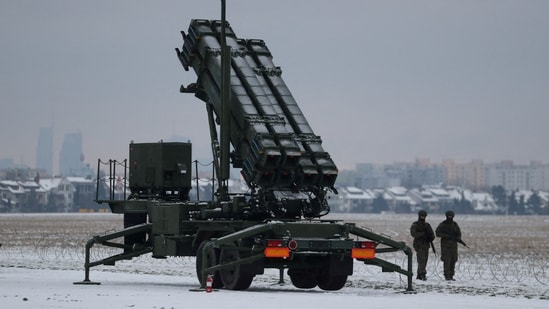
Citing a source, CNN reported on Thursday that Ukraine had run out of Patriot interceptors. The Washington Post reported the same day that Kyiv was down to its last Patriot missiles, as Russia continued striking the country's power grid ahead of winter.
Since the US and Israel went to war with Iran on February 28, interceptors earmarked for Ukraine have gone to the US military and to US allies in the Gulf, Reuters reported in August. Poland and Switzerland are waiting on the same production line.
And few weapons can take the Patriot's place. "There are no good alternatives to Patriot and THAAD for ballistic missile defence," Mark Cancian and Chris Park of the Center for Strategic and International Studies (CSIS), a Washington think tank, wrote in a report in July. THAAD, a US system that intercepts missiles at higher altitudes, is scarcer still.
Also read: How the Patriot missile system works, and why it's so hard to replace
Ukraine
{{/usCountry}}Also read: How the Patriot missile system works, and why it's so hard to replace
Ukraine
{{/usCountry}}Overnight into October 14, Russian ballistic missiles hit three power plants in Kyiv and targeted energy infrastructure in Kharkiv, killing four people in Kyiv and injuring 25, CNN reported. The source who spoke to CNN said "almost all the ballistic missiles from the last strike were not intercepted due to lack of the (interceptor) missiles".
Speed is the problem. Russia's Iskander short-range ballistic missiles take just a few minutes to reach targets in Ukraine, AP reported. That leaves almost no time to respond without a system built for the task.
The shortfall has been building for months. On August 1, Ukraine shot down only one of the 27 ballistic missiles Russia fired, Ukrainian President Volodymyr Zelenskyy had said at the time, according to Reuters. Later that month, he told CNN that Ukraine had a tenth of the interceptors it urgently needed.
The interceptors have also become a lever in a widening feud between Kyiv and Washington. US President Donald Trump has blamed Ukraine's strikes on Russian oil refineries for record US diesel prices, and has struck a deal to import Russian diesel. The US warned Ukraine and European allies that it could suspend European purchases of US weapons for Ukraine, and intelligence sharing with Kyiv, if Ukraine did not halt its deep strikes on Russian energy facilities, CNN reported.
Those purchases run through the Prioritized Ukraine Requirements List (PURL), the Nato arrangement through which allies, mostly European, pay for US weapons sent to Ukraine. Patriot shipments are part of this arrangement.
Trump has said the US has not stopped sharing intelligence. Zelenskyy, for his part, told the Financial Times he could agree to halt the energy strikes only if Ukraine received more Patriot interceptors at a "minimum". He has since announced that Ukraine would continue striking Russian refineries.
Kyiv has also tried to make the missiles itself. At a meeting in Ankara in July, Trump said the US would grant Ukraine a licence to manufacture the PAC-3, the newest Patriot interceptor. Within weeks he told reporters the US must be "very careful about letting somebody build them". Zelenskyy later said Trump had told him at their last meeting that he had made a "final decision" in Ukraine's favour, AFP reported. No licence has materialised, according to CNN.
But even with a deal, Ukraine would not receive new missiles for a year or more.
Zelenskyy has said Ukraine needs 5% of the US stock of Patriot interceptors to get through the winter, and 10% to destroy all of Russia's ballistic missiles, according to AFP.
Also read: Pentagon widens Patriot missile order to nearly $59 billion
Saudi Arabia
Saudi Arabia allocated between $64 billion and $96 billion for defence this year, the upper end being more than twice what Israel spends, and the kingdom operates Patriot batteries with the latest PAC-3 interceptors, Bloomberg reported.
Even so, attacks by the Houthis, the Iran-backed group that controls much of Yemen, hit the King Khalid International Airport in Riyadh on October 10, killing at least 13 people and wounding more than 300. It was the deadliest attack in the kingdom since a 2015 suicide bombing.
Patriot batteries do not cover a full circle, and those positioned to intercept Iranian fire may not have been able to easily stop Houthi missiles, Becca Wasser, who leads defence analysis at Bloomberg Economics, told Bloomberg. Even a layered defence "cannot create an impermeable dome over a country the size of Saudi Arabia", Andreas Krieg of MENA Analytica, a London-based risk firm, told AFP.
Riyadh has asked Washington for more help. Crown Prince Mohammed bin Salman asked Trump directly for military assistance after Houthi attacks in early September and was rebuffed, Reuters reported.
The US provides intelligence, target identification and planning for a Saudi-led offensive but has not struck the Houthis itself.
US influence in the region after Iraq invaded Kuwait in 1990 led many governments to rely on US firepower rather than build their own. Saudi Arabia was not immune to this “protection curse”, David Roberts, a reader in international security and Middle East studies at King's College London, told Bloomberg.
But Riyadh has now begun to diversify.
In August, Saudi Arabia signed the Mecca Joint Defense Agreement with Pakistan and Turkey, which the Atlantic Council, a Washington think tank, said was an effort to reduce its dependence on the US, though the pact includes no arms transfers or joint production of munitions.
Anwar Gargash, a diplomatic adviser to the UAE's rulers, called for joint Gulf action against attacks by Iran and its allies.
"It has become clear that we are all targeted, and that our security is indivisible," he wrote on social media.
The war showed the need for cheaper counter-drone systems and deeper interceptor reserves, the Stimson Center, another Washington think tank, said in a paper on US bases in the Gulf.
Also read: How are Houthis able to penetrate Saudi Arabia’s air defences?
Europe
US allies beyond the war zones are affected too.
“At this point, it looks like we are going to be affected as well. That's very visible in the area of PAC-3 MSE Patriot missiles, they're going to be delayed for sure," Gen Ireneusz Nowak, the Polish army's operational commander, told the Warsaw Security Forum on October 12, Reuters reported.
Switzerland ordered five Patriot systems in 2022, and their delivery had already slipped by four to five years because of the war in Ukraine.
In May, it said the US had warned of further delays because of the Iran war, and that it would look at systems from suppliers in Germany, France, Israel and South Korea, preferably made in Europe. "All options would lead to delivery delays as well as substantial additional costs," the Swiss government said.
Germany, meanwhile, has given about a third of its own Patriot systems to Ukraine, according to the Atlantic Council.
The queue is long because supply is thin. Lockheed Martin makes about 600 PAC-3 MSE interceptors a year and plans to reach 2,000 by 2030, according to CSIS. "Because 18 other countries use the Patriot, these missiles are highly sought after. About half of the annual production goes to support these allies and partners," Cancian and Park wrote in April.
CSIS estimates that the US stock of Patriot interceptors fell from about 2,330 before the Iran war to between 759 and 827 by late July. (Pentagon has pushed back against concerns that its capabilities have diminished).
"China does not need the United States to run out of weapons to exploit the strain," Tressa Guenov, a senior fellow at the Atlantic Council and a former senior Pentagon official, and her colleague Bailey Galicia wrote in August.
The Economist | How to survive a predatory world order
What’s next?
Expanded production, and the rebuilding of stocks, is years away. For munitions orders of this kind, the time from funding to a completed delivery takes about 52 months, CSIS estimates.
Until then, Washington will decide who goes without. "Until this increased production becomes available, the United States will face choices on allocating production to meet demands," Cancian and Park wrote, adding: "Other US allies are also in the queue."
For now, Ukraine enters winter with almost no Patriot interceptors. Saudi Arabia has signed a defence pact with Pakistan and Turkey, and Switzerland is weighing suppliers beyond the US.