
 E-Paper



Rewiring India’s future - The strategic case for a cleaner, stronger copper ecosystem
This article is authored by Divya Dhingra, research scholar, IIT Delhi.

 Prefer HTon Google


India’s growth story today is increasingly being written in copper. As the world accelerates toward electrification, renewable energy, digital infrastructure and advanced manufacturing, the metal has quietly become the backbone of modern economies. India’s own demand curve tells the story: copper consumption has jumped from 495 kilotonnes in financial year (FY) 2017 to 844 kilotonnes in FY 2024, driven by renewable energy installations, electric vehicle (EV) adoption, 5G rollout, artificial intelligence (AI) data centres, and large-scale infrastructure development supported by Atmanirbhar Bharat and Make in India.
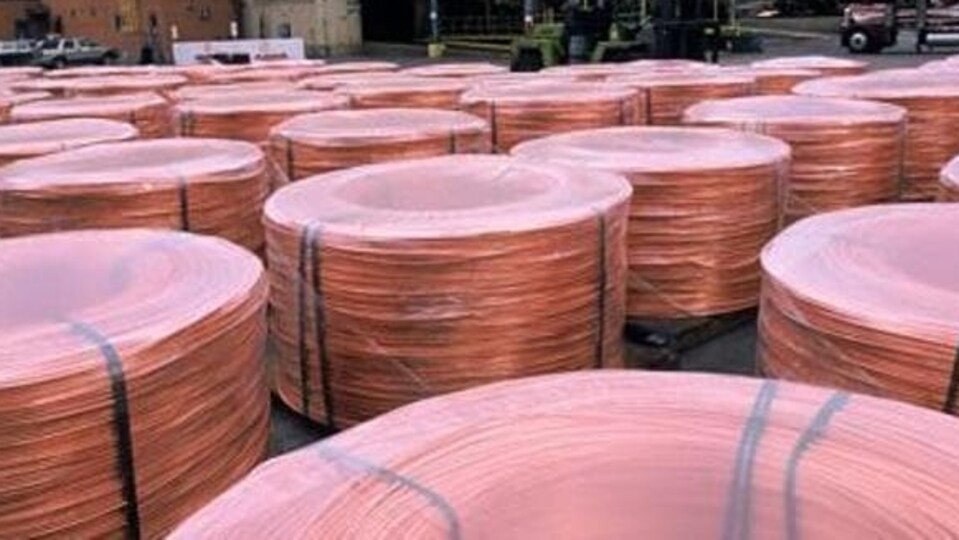
Yet even as demand intensifies, domestic output has shrunk. India now imports over 40% of its copper needs, a major vulnerability for a country that aspires to self-reliance in critical minerals. With global copper demand projected to rise sharply and China already controlling nearly 70% of refining capacity, India cannot afford long-term dependence on external supply chains.
This imbalance has revived a crucial national conversation: how can India build domestic copper refining capacity while meeting higher expectations of environmental integrity, transparency, and community trust? The potential green restart of Sterlite Copper sits at the centre of this discussion. It is not merely an industrial decision, but a test case for whether India can align strategic necessity with world-class environmental governance. Before its closure in 2018, the plant produced 40% of India’s refined copper, and its shutdown turned India from a net exporter into a net importer almost overnight.
Globally too, the copper industry is undergoing a reset. Leading refineries in Chile, Sweden, Japan and Canada have embraced advanced environmental management systems like closed-loop water circuits, zero-liquid-discharge plants, 99.9% sulphur capture, real-time public emissions data, AI-enabled safety systems, and circular waste management that repurposes by-products such as slag, gypsum and precious metals. Sustainability in industrial operations is no longer a parallel conversation; it is the operating framework.
Across the world, copper-producing nations are also reshaping their industries in response to accelerating demand. An EV requires around 83 kg of copper, a 3 MW wind turbine consumes nearly five tonnes, and each megawatt of solar installation needs 5–6 tonnes. With India’s energy transition advancing at record pace, this demand surge is no longer abstract—it is structural. In this global context, the reforms proposed for a potential Sterlite restart mirror the direction taken by leading countries: advanced off-gas treatment, 30% recycled copper in the production mix, stronger material recovery, and third party-audited transparency that puts environmental data in the public domain.
The discussion around Sterlite’s restart is being shaped by similar expectations. The new proposals emphasise upgraded emission controls, a shift to hybrid production with 30% recycled copper, tighter hazardous-waste protocols, water-positivity through expanded desalination and recycling, independent third-party audits, and a Local Management Committee ensuring community oversight. These align India with global best practises and reflect a broader shift from compliance-based operations to transparent, participatory, data-driven environmental governance.
The rationale for strengthening India’s refining ecosystem is larger than one facility. Every major element of India’s energy transition depends on copper: an EV uses 83 kg, a 3 MW wind turbine requires 4.7 tonnes, and each megawatt of solar installation needs 5–6 tonnes. With India targeting 500 GW of renewable capacity by 2030, the strategic importance of a secure copper supply cannot be overstated.
India’s copper challenge is ultimately a question of strategy: can the country secure the materials essential for its transition without compromising on the environmental expectations of its citizens? India stands today at a critical junction in its copper story. One option is to continue looking back at the circumstances that led to the shutdown of Sterlite Copper in 2018—an episode that shaped public opinion and industrial policy in equal measures. The other is to consider how dramatically the landscape has shifted since then: India’s copper demand has surged, global best practises have evolved, and new frameworks of technology, compliance and community oversight are being proposed to meet modern expectations. If India succeeds in building this balance, it will not just bridge a supply gap; it will establish a model for how industrial growth and environmental responsibility can reinforce, rather than oppose, each other.
This article is authored by Divya Dhingra, research scholar, IIT Delhi.


