“Why can’t I hold dollars for longer and convert them when I choose?” As a payments processor, this is one of the most frequent questions we get asked.
The question reflects how Indian businesses are evolving. A growing number of MSMEs serve international customers while also paying overseas suppliers. Their financial needs are no longer limited to receiving an occasional international payment; they require infrastructure that supports two-way payments across currencies and markets.Consider an exporter who receives euros, converts them into rupees and later needs to pay an overseas supplier or purchase software in US dollars. The business must convert currencies again, incurring another foreign-exchange spread and transaction charge. Each cost may appear small, but together they can materially affect their margins. While Exchange Earners’ Foreign Currency (EEFC) accounts already offer some flexibility, purchasing software, running global advertising campaigns and subscribing to dollar-denominated Saas and AI products need a flexible, sophisticated payment system across currencies and instruments.
India’s combined merchandise and services exports reached $825.25 billion in FY2024–25, while the country is working towards $2 trillion in annual exports by 2030. MSMEs account for more than 48.5% of India’s exports, according to the ministry of MSME’s 2025–26 annual report. However, there is a significant gap in how conveniently and cost-effectively these businesses can earn and spend internationally to run their everyday operations.
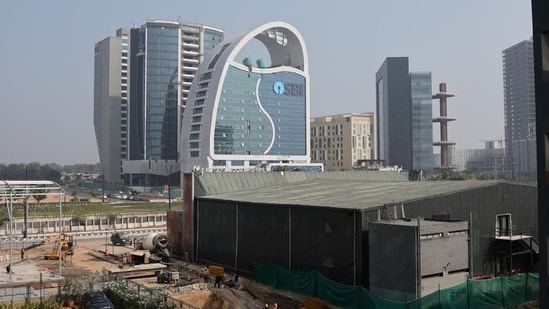
GIFT City can help bridge this gap. It was established to bring international financial activity onshore without requiring India to redesign its domestic financial system. Institutions operating from GIFT IFSC are treated as non-residents under FEMA and are regulated by the International Financial Services Centres Authority (IFSCA). IFSCA brings together the regulatory oversight of multiple regulators like RBI, SEBI, IRDAI and PFRDA within the domestic market.
GIFT City has seen strong momentum in the last few years. As of March 2026, 37 IFSC Banking Units were operating in GIFT City and managing assets exceeding $111 billion. The 2026 Budget also extended the profit-linked deduction available to eligible IFSC businesses to 20 consecutive years out of 25, providing greater long-term policy certainty.
{{/usCountry}}GIFT City has seen strong momentum in the last few years. As of March 2026, 37 IFSC Banking Units were operating in GIFT City and managing assets exceeding $111 billion. The 2026 Budget also extended the profit-linked deduction available to eligible IFSC businesses to 20 consecutive years out of 25, providing greater long-term policy certainty.
{{/usCountry}}This shows serious intent to attract large institutions to make meaningful investments into the location. However, for an MSME factory exporting from Tiruppur or a technology exporter based in Indore, establishing an IFSC unit is not viable. So, it is important to build products and services that can enable a broader set of industry participants to benefit from GIFT City's financial infrastructure without establishing a presence there.
International Trade Financing Services platforms are one example. These digital platforms enable exporters to present unpaid invoices to multiple financiers simultaneously, supporting competitive bidding and price discovery. An exporter waiting 90 or 120 days for an overseas buyer to pay can use factoring or invoice financing to unlock working capital earlier. They have financed just over 1,800 transactions so far, a modest number given India's exporter base, but an important start.
Another important development is IFSCA's Payment Service Provider (PSP) licence. The framework enables licensed entities to issue multi-currency payment accounts, facilitate cross-border collections, operate escrow accounts and provide payment infrastructure for exporters through IFSC-regulated entities. It allows banks and fintech companies to build multi-currency collection and settlement infrastructure inside GIFT City while extending those capabilities to exporters across the country who may never directly interact with GIFT City. Combined with the RBI's extension of the foreign currency retention period to three months, these changes could gradually give exporters more say over when they convert dollars into rupees, rather than accepting whatever rate happens to be available the day payment arrives.
Beyond payments, the PSP framework can also bring treasury-like capabilities to MSMEs. Large multinational corporations typically operate treasury centres to optimise global cash flows. Through GIFT IFSC, licensed PSPs can extend some of these benefits, such as multi-currency collections, liquidity management, escrow and payment optimisation, to smaller exporters without requiring them to establish a presence in GIFT IFSC. Several fintech companies have already received in-principle PSP approvals to develop these solutions, marking a gradual shift from facilitating individual cross-border transactions towards addressing the broader financial needs of exporters.
The exporter in Surat may not even need to know their account was built on GIFT City rails. They may simply find that international payments arrive faster, foreign-currency earnings are easier to manage and financing an overseas invoice is less cumbersome. That may ultimately be one of the most valuable contributions to India's export ambitions.
(The views expressed are personal)
This article is authored by Srivatsan Sridhar, co-founder and CEO, Skydo.