Artificial Intelligence (AI), remote operations and autonomous equipment are changing an industry built around heavy machinery. For Indian miners, the next challenge is to turn successful digital applications into systems that work at scale.
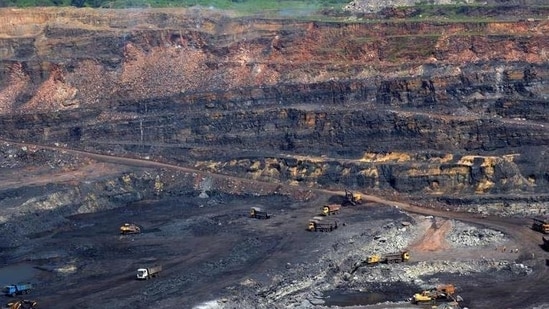
Mining has always been a business of scale. Bigger trucks moved more rock, deeper shafts reached richer deposits and larger processing plants lowered unit costs. Increasingly, however, competitive advantage is also coming from something less visible: intelligence.
AI can detect an oversized rock before it damages a crusher. Sensors can flag equipment failure before it happens. Drills can be operated remotely, while autonomous trucks move millions of tonnes without a driver in the cab.
The world's biggest miners have already moved well beyond experimentation.
Across Rio Tinto's iron-ore operations in Western Australia's Pilbara, around 90% of its haul-truck fleet is autonomous. The company also operates 40 autonomous production drills across seven sites, while its AutoHaul railway serves 18 mines over nearly 2,000 km of mainline rail. Operations can be managed from a control centre in Perth, about 1,500 km away.
Copper is going the same way. At BHP's Escondida mine in Chile, the Escondida Norte pit operates 33 autonomous trucks and 11 autonomous drills. The autonomous zone moves more than 350,000 tonnes of material a day and accounts for about 30% of Escondida's production. More than 5,000 workers have been trained in the new technologies associated with the transition.
{{/usCountry}}Copper is going the same way. At BHP's Escondida mine in Chile, the Escondida Norte pit operates 33 autonomous trucks and 11 autonomous drills. The autonomous zone moves more than 350,000 tonnes of material a day and accounts for about 30% of Escondida's production. More than 5,000 workers have been trained in the new technologies associated with the transition.
{{/usCountry}}Vale is expanding autonomy too. Its Northern System in Brazil currently has 14 autonomous haul trucks and plans to increase the fleet to around 90 by 2028. Vale says autonomous haulage elsewhere in its operations has delivered gains of up to 15% in operating performance and reductions of up to 7.5% in fuel consumption.
The direction is clear. The technology question in global mining is no longer whether an autonomous truck or an AI application can work. It is whether drilling, haulage, maintenance, processing and logistics can be connected into an operating system that continuously improves.
India is taking a different route
Indian mining is not yet operating autonomous fleets at the scale seen in Western Australia or Latin America. But India's mining landscape is also different, ranging from enormous opencast coal mines to deep underground zinc operations and integrated iron-ore and steel businesses.
For an underground mine, for instance, the most valuable technology may not be a driverless 400-tonne truck. It could be a drill operated remotely from the surface, a system that prevents a vehicle from approaching a worker, or an algorithm that allows equipment to be maintained before it fails underground.
Hindustan Zinc's Financial Year (FY) 2026 Annual Report offers one illustration. The company is using AI and Machine Learning (ML), industrial Internet of Things (IoT) sensors, computer vision, tele-remote drilling, predictive maintenance and remote technologies across mines and smelters. It describes HZL 2.0 as a technology-led operating model rather than a collection of standalone digital projects.
Some applications are already producing measurable results. An AI-based thermal and optical monitoring system for high-load switchyard equipment saved a reported 172 hours of downtime across smelters. AI-based pallet grate-bar monitoring reduced breakdowns by more than 20%, while an integrated machine-learning system for autonomous chemical dosing reduced chemical-consumption norms by around 4%.
Underground, the technology case is closely linked to safety. Sindesar Khurd recorded what the company describes as the world's first tele-remote raise-bore operation. Collision-avoidance technology at the mine covers 11 low-profile dump trucks and 19 load-haul-dump vehicles, using equipment sensors, pedestrian tags and proximity detection.
The same shift is visible in exploration. Hindustan Zinc's exploration arm is using drone-based magnetic surveys integrated with LiDAR, borehole electromagnetic surveys, hyperspectral imaging, remote sensing, three-dimensional geological modelling and AI/ML for target generation and drilling optimisation. Better geological information can reduce unnecessary drilling and sharpen decisions on where capital should be deployed.
Tata Steel offers another model. The company reported more than 558 AI models in FY2024-25 across areas including process control, predictive and prescriptive maintenance, procurement analytics and boulder detection at mines.
At Noamundi, which completed a century of operations in 2025, Tata Steel has progressively moved from mechanisation towards AI and machine learning. The mine has an installed capacity of 19 million tonnes per annum and annual iron-ore output of around 9.5 million tonnes. For an integrated steelmaker, improvements in ore consistency, equipment availability and material movement can influence beneficiation, logistics and ultimately steelmaking costs.
The arithmetic is different again at Coal India, where the scale of opencast operations makes visibility and coordination valuable in themselves.
The ministry of coal says large opencast projects use GPS-based operator-independent truck dispatch systems, while Integrated Command and Control Centres across Coal India subsidiaries combine AI-based video analytics, RFID access control, vehicle tracking, automatic number-plate recognition and drone surveillance.
These applications may look less futuristic than an autonomous haulage fleet, but they create the digital infrastructure on which greater automation depends. A mine cannot become autonomous unless it first knows accurately where its machines, materials and people are and can connect that information reliably.
Technology is also changing what miners consider waste. Mining and smelting generate vast quantities of tailings and other residues. Improvements in processing technology are turning some of these into potential resource inventories.
Hindustan Zinc is developing a 10 million tonne-a-year tailings reprocessing plant at Rampura Agucha to recover zinc, lead and silver from legacy tailings. Its existing fumer operation recovered 2.8 kt of additional metal and 11.9 tonnes of silver in FY2026, while the company says broader circular-economy initiatives generated more than ₹300 crore in revenue and over ₹100 crore of EBITDA contribution during the year.
This points to a wider shift in mining economics. Productivity will increasingly be measured not only by how much rock is moved, but by how much economic value can be recovered from every tonne already mined.
There remains a clear difference between Indian miners and the most advanced global operators. Rio Tinto is operating autonomous trucks, drills and trains as parts of an interconnected system. BHP has moved an entire pit at the world's largest copper mine to autonomy. Vale is preparing to operate around 90 autonomous haul trucks in one mining system.
Indian miners have credible examples of AI, remote drilling, sensors, digital dispatch, predictive maintenance and computer vision. What is less common is system-wide deployment.
That is the next frontier.
The biggest gains are unlikely to come from accumulating hundreds of unrelated pilots. They will come when the geological model informs the mine plan, the mine plan communicates with the fleet, equipment condition automatically informs maintenance schedules and processing plants adjust to the ore arriving from the mine.
In other words, the important transition is from digital tools to digital operations.
Automation does not necessarily mean mining without people. It changes the people the mine needs. At Escondida, BHP has trained more than 5,000 employees as autonomy has expanded. Hindustan Zinc says 88% of its identified high-potential employees were upskilled in FY2026 in areas including AI, ESG analytics and data science.
The mining engineer of the future may need to understand algorithms as comfortably as ore grades. Equipment operators will increasingly become remote operators. Maintenance engineers will interpret predictive models, while geologists will combine field knowledge with three-dimensional modelling and machine learning.
Mining will remain a physical industry. Technology cannot overcome poor geology, weak mine planning or bad operating discipline.
But the source of advantage is changing.
The last mining revolution was about mechanising physical effort. The one now unfolding is about reducing uncertainty: knowing more accurately where the ore is, when a machine might fail, whether a worker is in danger, how a process should be adjusted and how much more value can be recovered from material once considered waste.
The smartest mine will not necessarily be the one with the most technology. It will be the one that makes the best decisions with it.
This article is authored by Amit Pandey, CTAIO & co-founder, Augmen.io and GenAI Mentor - mining, manufacturing & BFSI, SINE, IIT Bombay.