
 E-Paper



Breaking gender biases around nutrition
This article is authored by Parvinder Singh, head, media and communication, World Food Programme, India.

 Prefer HTon Google


Access to nutrition for girls and women in many parts of India is influenced by gendered biases rooted in social norms passed down through generations. As a lived experience, girls and women see it play out as decisions about who eats first, how much, and when.
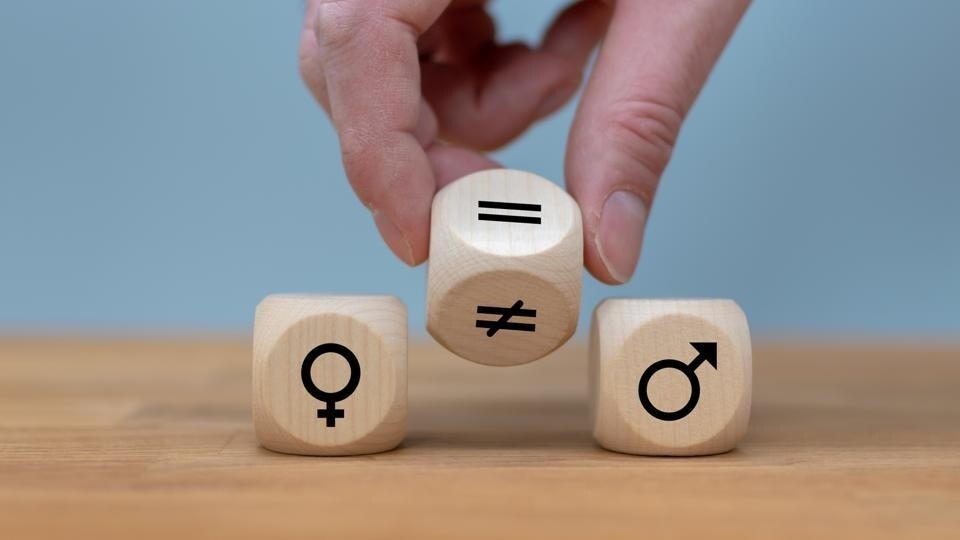
Nutritional challenges faced by girls and women at different life stages put them at a disadvantage, impacting their health and susceptibility, especially during pregnancy and as young mothers. These nutritional deficiencies also affect women’s access to economic and professional opportunities.
According to the latest National Family Health Survey (NFHS-5, 2019–21), nutritional challenges among girls and women in India have worsened, marked by a rise in both anaemia and obesity. This "double burden of malnutrition" poses risks at every life stage, from adolescence to motherhood and beyond.
The prevalence of anaemia among adolescent girls significantly increased from 54.1% in NFHS-4 to 59.1% in NFHS-5. This is due to the physiological demands of rapid growth and menstrual blood loss, combined with an inadequate dietary intake of iron and folate.
A project launched by the United Nations World Food Programme (WFP) and the Department of Women and Child Development (WCD), Government of Haryana, with support from Citibank, is training frontline staff who serve as anganwadi workers in Nuh district, Haryana. This initiative aims to improve India’s flagship nutrition and health scheme for pregnant women, breastfeeding mothers, and children below six years by tackling gender biases that impact nutrition.
The project relies on master trainers or senior nutrition and health workers, who then organise training sessions for frontline Anganwadi workers. A cohort of approximately 260 Master Trainers was created in November-December 2024. These are the WCD district and block level staff spread across all 22 districts of Haryana. These workers subsequently visit the communities they serve to conduct dedicated sessions, engaging in one-on-one conversations with pregnant women and young mothers to emphasise the importance of nutrition, hygiene, and now tackling gender biases. The community sessions had 30% male participation, including village elders, panchayat heads, adolescent boys,
“My brother and I have different kinds of fruits and food. I wonder how hard it must be for our mother to treat us differently. Certain fruits that are more expensive are for him, and cheaper ones are for me,” says Shikha, who is in class nine and studies in a government school.
“We can share, even if we have less of it. It doesn’t have to be a choice between apples and jujubes,” she adds with a smile. There is no anger or pain in her voice, only genuine curiosity and empathy for the reasons why she and her brother are treated differently. Unlike most girls at her school, she aspires to be a police officer to make society safer for girls and women.
“Girls get married and move to their husbands’ households, but boys stay and earn, so they are entitled to the best food, and care is what families say. But what about women’s health? We go through periods and become mothers. We want to work and excel at sports or whatever we choose to do. It all starts with nutrition even before birth,” says Zanooba, who works at the local anganwadi.
Girls and women, across ages and socio-economic backgrounds, are highly conscious of gender biases and social norms that influence their lives, from the food they eat to the choice of schools, whether government or private, the clothes they wear, and the timing and choice of marriage.
“It is vital for girls and women to participate in these conversations about patriarchy, stereotypes, and nutritional requirements. They also need to be aware of social schemes. However, we must go further by engaging boys and men,” adds the male school principal, who did not want to be named, as the community meeting at the local school unfolds.
As the session gets underway, the nuanced messages about nutrition and social pathways for deeper conversation on how gender impacts everything begin to emerge.
Young mothers, many of whom aspired to be athletes but have now settled into family roles, engage in lively discussions that rapidly shift towards creating a wish list of qualities they believe an ideal male should have. The list is quickly jotted down on a whiteboard. At the top of the list are the virtues of respect, equality, and secularism.
In the meeting, mothers-in-law and mothers are quick to acknowledge the importance of nutrition and how the consumption of proteins and fruits by girls and women is discouraged.
According to the National Family Health Survey of 2020-21, the sex ratio in Haryana is 926 females for every 1000 males, which is below the national average of 1020. In 2001, the sex ratio of females was 861 per 1,000 males in Haryana. These shocking figures indicate not just a preference for male children but also sex selection. The sex ratio has been on a decline in recent times after registering an improvement a couple of decades ago.
Anganwadi workers are community-based frontline health workers in India who play a crucial role in delivering primary health care, nutrition, and early childhood education services, particularly to women and children in rural/ urban areas. They are the backbone of the Integrated Child Development Services (ICDS) programme. Currently, there are over 1.3 million anganwadi workers registered in the government’s tracker.
As the presentations are screened and questions are asked about gender biases and nutrition, the women begin speaking out about their own experiences, many of which are harrowing, ranging from near-death encounters due to severe anaemia to immense pressure for a male child.
But what stands out is the will and resilience the women must keep pushing for gender equity and addressing the gaps in nutrition, perception and access to schemes, one conversation at a time.
An interesting conversation unfolds between a young couple with two children—a girl and a boy—sitting on a traditional wooden cot made from coir ropes. The wife is a former cricketer who now takes care of the home, and the husband teaches at a computer science institution.
The husband talks about how he has ‘allowed’ the wife to do as she pleases and is eager for her to pursue higher education. He points at the small family car parked outside the bare-brick house and adds, I let her drive around despite it raising eyebrows.
The wife values the ‘space’ her husband offers. However, she also notes that stereotypes remain very common. “These trainings on how to discuss the less openly talked about issues of discrimination in access to food and nutrition are vital, especially when didis – a term used in the community for nutrition workers – visit our homes,” she says, hesitantly glancing at her husband.
The gender training project in Nuh fosters a deeper engagement in addressing social and attitudinal pathways to raise awareness and improve nutritional outcomes, particularly for women, children, and adolescent girls, with a focus on anganwadi and community workers.
Awareness from gender training and a deep-rooted desire born from lived experiences are the strengths that frontline nutrition workers in the state rely on to turn difficult conversations into a process of dismantling gender biases that affect health, nutrition, and the aspirations of girls and women.
This article is authored by Parvinder Singh, head, media and communication, World Food Programme, India.


