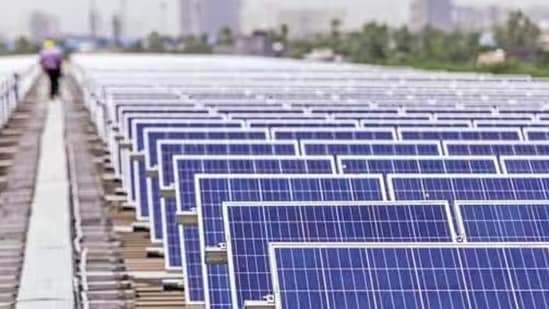
India’s energy transition in agriculture is being rapidly reshaped through the solarisation of irrigation, marking a shift from diesel and erratic grid electricity to decentralised renewable systems. In an effort to encourage farmers to transition to solar energy, the central's PM-KUSUM programme offers financial assistance for off-grid standalone pumps, grid-connected pumps, and solar agriculture feeders and requires the states to match this support. However, this transition is not merely technological but deeply socio-technical: The adoption of solar irrigation requires new skills in system operation. This creates a growing need for training, extension services, and technical support systems to ensure effective use. Without adequate capacity building, the benefits of this transition risk being unevenly distributed, setting the stage for differentiated access and participation within agriculture, an issue that becomes particularly significant when examining who is able to adopt, control, and benefit from these emerging energy systems. Where do women farmers stand in this transition? Despite constituting the backbone of India’s agrarian economy, women remain structurally marginalised within it. Empirical data reveals a striking paradox: While nearly 64.4% of the agricultural workforce in India is female (PLFS 2023–24) and about 76–80% of rural women are engaged in agriculture, their economic recognition remains minimal. Women contribute extensively across the production cycle—accounting for nearly 75% of crop production, 79% of horticulture, and up to 95% of livestock-related activities, yet this labour is largely undervalued and often invisible in national accounting systems. A major factor underlying this marginal position is the asset ownership gap: Barely 8–14% of women own agricultural land, which directly restricts their access to institutional credit, subsidies, and insurance schemes. Consequently, a significant proportion of women are concentrated in unpaid family labour, with recent estimates showing a sharp rise in unpaid female agricultural workers over the past decade. This exclusion from asset ownership and formal farmer identity translates into limited bargaining power, wage discrimination, and exclusion from markets and policy benefits. From an economic standpoint, such gendered constraints not only suppress women’s incomes but also reduce overall agricultural productivity; studies indicate that equal access to productive resources could raise farm yields by 20–30%, underscoring the macroeconomic cost of women’s marginalisation. Thus, women’s central role in agricultural production coexists with systemic deprivation of economic rights, reflecting a deeply embedded structural inequality within India’s rural economy. Agri-services are designed to be gender-neutral, but technology experts have pointed towards increasing systemised exclusion of women farmers from the agri-tech revolution. For instance, one of the analysis by financial express of field data revealed that less than 20% of women farmers were utilising advisory and insurance services offered by the agri-tech start-up DeHaat, even while the services were accessible to both male and female farmers. The transition to renewable energy in Indian agriculture is often framed as economically transformative, yet its benefits remain unevenly distributed due to entrenched structural inequalities. Women, despite their substantial contribution to agricultural labour, face systemic barriers in accessing schemes, resources, and technical knowledge. The absence of land ownership limits their entry into subsidy-driven programmes, which in turn restricts their exposure to training and skill development. This creates a cycle where women remain excluded from emerging technical roles within the green economy. The energy transition in Indian agriculture risks becoming gender unequal unless training systems are redesigned to include women as active participants rather than passive beneficiaries. Women’s exclusion from renewable energy-based agricultural innovations becomes most visible in irrigation, where the shift to technologies like solar powered pumps is transforming access to water and energy in rural India. While women contribute extensively to irrigation related labour, water management, crop planning, and post-harvest work; their role in decision making around these technologies remains limited due to institutional barriers. A major constraint is land ownership, with only about 12–14% of women owning land, which restricts their access to subsidy driven schemes such as the PM-KUSUM Scheme. This is compounded by financial exclusion, as limited access to formal credit prevents women from investing in solar technologies, even when they are primary cultivators. The training gap further deepens this divide, as technical knowledge related to installation and maintenance is largely disseminated through male dominated networks. Consequently, even when solar pumps are adopted, ownership and control often remain with men, leaving women as unpaid or low-paid labourers. Studies from regions such as Bihar and Rajasthan illustrate that women are rarely registered as beneficiaries despite their central role in agriculture. This pattern highlights not just exclusion but a critical policy blind spot: The renewable energy transition risks reinforcing existing gender hierarchies if it fails to recognise women as independent economic agents. There is an urgent need for targeted awareness and capacity-building initiatives that reposition women from passive beneficiaries to informed decision makers ensuring that access to schemes, training, and institutional platforms is consciously redesigned to include them. An example of gender-inclusive reform in renewable energy based agriculture can be seen in the Kudumbashree Mission model in Kerala, where women function as producers, entrepreneurs, and decision-makers rather than passive beneficiaries. As of recent estimates, Kudumbashree has mobilised around five million women across 300,000 neighbourhood groups, making it one of the largest women led development networks in the world. Through collective farming initiatives, women cultivate hectares of leased land, overcoming individual land ownership constraints and enabling access to credit, inputs, and increasingly, technological innovations (Kudumbashree Annual Report). This institutional design directly addresses structural barriers seen elsewhere in India. From a broader economic perspective, such gender inclusive frameworks significantly enhance productivity and efficiency. According to the Food and Agriculture Organization (FAO), if women had the same access to productive resources as men, farm yields could increase by 20–30%, raising overall agricultural output in developing countries by 2.5–4%. Similarly, the McKinsey Global Institute estimates that advancing gender equality in India could add $700 billion to GDP by 2025, largely through increased labour force participation and productivity gains. Evidence from Kudumbashree itself shows that women-led farming groups report higher cropping intensity, better input management, and improved incomes due to collective decision-making and institutional support. As male outmigration from agriculture intensifies, women are increasingly becoming the primary cultivators and decision makers in rural economies, yet they continue to face structural constraints in access to land, credit, extension services, and markets. This paradox highlights that recognising women’s role without addressing these institutional gaps limits both productivity and equity. In this context, gender-inclusive reforms such as those demonstrated by the Kudumbashree Mission in Kerala highlight how integrating women into ownership structures, training systems, and governance institutions can unlock more efficient resource use, enhance technology adoption, and strengthen food security. Thus, gender inclusion is not merely a matter of social justice but an economic imperative: without it, the ongoing agricultural and energy transition risks reinforcing existing inequalities, whereas with it, it can become a pathway to sustainable and broad-based rural development.
(The views expressed are personal)
This article is authored by Saloni Khandelwal, independent researcher, New Delhi.