India's agricultural future is often discussed through the lenses of technology, productivity and sustainability. Yet one of the country's most significant opportunities for agricultural transformation remains under-recognized: women farmers.
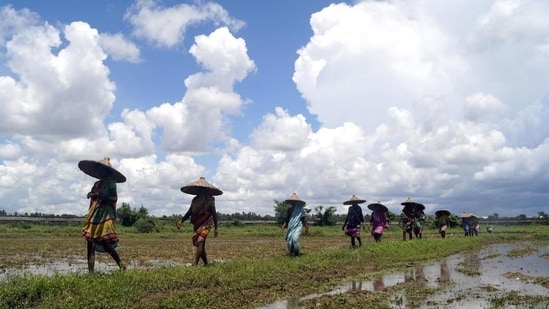
Across rural India, women are the backbone of agriculture. They plant and harvest crops, manage livestock, conserve natural resources, preserve household nutrition and contribute across every stage of the agricultural value chain. Despite this vital role, their contributions remain inadequately recognised and insufficiently supported.
This is not merely a question of inclusion. It is an economic necessity.
Indian agriculture is facing a defining moment. Farmers are navigating climate variability, rising input costs, labor shortages and increasing pressure to produce more with fewer resources. Meeting these challenges will require every source of talent, innovation and leadership available to us. India cannot afford to overlook half of its agricultural workforce.
Empowering women farmers is therefore not simply the right thing to do. It is one of the most effective ways to strengthen productivity, resilience and long-term competitiveness across the agricultural sector.
As the world observes the International Day of Rural Women and prepares for the United Nations' International Year of the Woman Farmer in 2026, the conversation must move beyond recognition and toward meaningful action.
Because when women farmers succeed, agriculture succeeds.
{{/usCountry}}Because when women farmers succeed, agriculture succeeds.
{{/usCountry}}When women gain access to knowledge, technology and finance, farm productivity improves. Household incomes rise. Food security strengthens. Communities become more resilient. The impact extends far beyond individual farms, generating social and economic benefits that ripple across rural economies.
Yet significant barriers continue to limit this potential. Access to land ownership remains uneven. Credit is often difficult to secure. Extension services and training opportunities do not always reach women at scale. Mechanisation is frequently designed without considering their needs, while market access continues to remain constrained.
The result is a persistent gap between women's contribution to agriculture and the opportunities available to them.
Closing that gap could unlock one of the greatest opportunities for rural and agricultural growth in India.
The conversation must also evolve. Women should not be viewed merely as beneficiaries of development programmes. They are decision-makers, entrepreneurs, innovators and business leaders whose participation shapes the future of farming.
I have witnessed this transformation firsthand.
In Bihar, Rani Devi began her farming journey with limited opportunities and support. Through access to training and improved agronomic practices, she increased productivity on her farm and improved her income. More importantly, she became a trusted source of knowledge for other women farmers, encouraging wider adoption of better farming practices across her community.
Her story is about more than one individual farmer. It demonstrates what happens when knowledge creates confidence and confidence creates leadership.
Similar stories are emerging across India. In Madhya Pradesh, women-led farmer groups are building producer companies, improving access to quality inputs, strengthening market linkages and creating new livelihood opportunities. Women who once participated at the margins of the agricultural economy are increasingly shaping local agricultural enterprises and influencing decisions that affect their communities.
This is the shift India needs.
From participation to leadership.
From labour to ownership.
From support roles to decision-making.
Farmer Producer Organisations have an especially important role to play in this transition. Collective institutions help women strengthen their bargaining power, improve access to finance and markets, and capture greater value from what they produce. Most importantly, they provide a platform through which women can exercise greater influence over economic and agricultural decisions.
At the same time, women must have greater access to innovation.
Climate pressures and resource constraints are reshaping the realities of farming. Farmers need solutions that help them produce more with fewer resources. Improved agronomy, advanced seed technologies, water-efficient practices and appropriate mechanisation can all contribute to more sustainable and productive agriculture.
However, innovation delivers its greatest impact only when it is accessible. And accessibility improves when women are actively involved in designing, adopting and scaling solutions.
At Corteva Agriscience, this belief underpins our commitment to enable two million women across India's agricultural value chain by 2030 through the #2MillionWomen initiative. Our ambition extends beyond a numerical target. We seek to help create an ecosystem where women can thrive as farmers, entrepreneurs, scientists, researchers, extension professionals and business leaders. An ecosystem where opportunity is not determined by gender, and leadership can emerge from every village.
Achieving this vision requires a collective effort. Government, industry, financial institutions, academia, civil society and farmer organisations must work together to expand access to land, credit, insurance, extension services and markets. We need greater investment in gender-responsive technologies, stronger rural infrastructure and a sharper focus on outcomes such as income growth, ownership, leadership and decision-making power.
The International Year of the Woman Farmer presents an important opportunity. But symbolism alone will not be enough.
India does not need more acknowledgement of women's contributions. It needs greater investment in their potential.
Rural women are not waiting to be empowered. They are already driving change in fields, villages, producer organisations and communities across the country.
Our task is clear: Remove the barriers, expand the opportunities and invest in their leadership.
Because the future of Indian agriculture will not simply include women farmers.
It will be shaped by them.
(The views expressed are personal)
This article is authored by Subroto Geed, president, APAC, Corteva Agriscience, and co-chair, FICCI National Agriculture Committee.