
 E-Paper



Language and power of identity politics in Maharashtra
This article is authored by Jisu Ketan Pattanaik and Sumit Kumar Singh, research assistant, National University of Study and Research in Law, Ranchi.

 Prefer HTon Google


Maharashtra's language row has once again put the question of linguistic identity at the forefront, as reports and interviews have emerged wherein Hindi-speaking people are being targeted for failing to speak Marathi. A common line of perception is that if one has been living in Maharashtra for more than five to ten years, then one must learn to speak Marathi. This expectation, framed as a call for cultural integration, raises deeper questions on the transforming role of language in India.
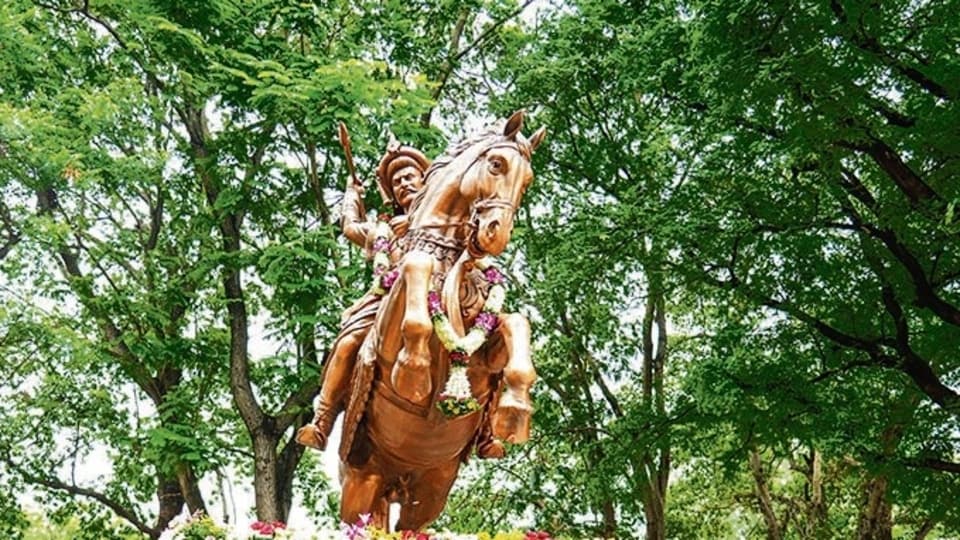
We are witnessing a clear paradigm shift from language having been principally a means of communication to it now becoming a powerful symbol of cultural identity, political assertion, and social stratification. This linguistic argument is rooted in historical and cultural symbolism; Maharashtra Navnirman Sena (MNS) state vice president Reshma Tapase in an interview stated that Marathi is the language of Chhatrapati Shivaji Maharaj, and, therefore, anyone who lives in Maharashtra should honour that legacy by speaking his language. Hindi is presented by Reshma Tapase as the language of "invaders," further increasing the divide.
Parallel tensions are to be found in Karnataka where resistance against the perceived imposition of Hindi is still strong. Incongruously, Hindi is resisted, and English is accepted and even preferred by people in domains such as education, business, and the state. Such differential linguistic accommodation encompasses the multi-layered complexities of cultural identity, perceived hegemony, and class aspiration in contemporary India.
These incidents, state-wise, are not a singular event; they are symptomatic of a broader, new trend in identity politics in which language is being employed as a vehicle for expressing regional pride and self-rule backed by religious fervour. They lead us to reconsider the role of language in India's federal polity. Is language being used to bring together diverse societies, or is it becoming a fault line that breaks social cohesion?
In a socially stratified and multilingual society like India, language not only needs to be considered as a cultural object but also as a politically living force, a force driving power relations, access, and belonging.
Pierre Bourdieu's "cultural capital" perspective is applicable in the current scenario as proficiency in English or Hindi usually means having access -- access to quality education, good employment, and political influence. This is an effective hierarchy: English is at the centre as a global lingua franca; then Hindi, and thereafter regional languages.
Language, therefore, becomes entangled with social mobility and political agency. The ability or inability to navigate these silos of linguistics spheres can either reinforce privilege or magnify exclusion. For many, promoting regional languages is not merely about linguistic pride, but about resisting marginalisation.
From the anti-Hindi protests in Tamil Nadu to the resistance in Karnataka or the present one in Maharashtra, local languages have come as rallying grounds for political mobilisation. These movements are founded on the cry for linguistic and cultural sovereignty, a reaction against perceived the creeping centralisation of cultural power through language.
These are the trends of how language becomes such a powerful sign in the articulation of regional pride and political autonomy, often merged with wider struggles for resources, representation, and recognition.
One can understand the tension between cultural ethnocentrism, the view that one’s own culture or language is superior, may take the form of rhetoric that promotes Hindi over other languages. Cultural relativism, on the other hand, enjoins us to value each language tradition in its own social and historical context. The Maharashtra case is an example of a common case of sub-nationalism in which regional identity is brought to the fore.
The implementation of a one nation, one language paradigm, contradicts the pluralistic ethos animating the Indian Republic. Institutionalising cultural relativism in policy and practice is needed to make federalism a reality.
Constitutional Provisions: Protecting Linguistic Rights
Indian Constitution provides a strong framework for linguistic rights. Articles 29 and 30 ensure minorities' cultural and educational rights, including the preservation of one's language. Article 343 makes Hindi the official Union language with a caveat that English will continue to be used. Articles 350A and 350B provide for facilities for learning in the mother language at the primary level and for a Special Officer for linguistic minorities.
Diversity a shared heritage
Language can be a divider as well as a unifier. In the age of new forms of linguistic polarisation reappearing in political discourses and social media, it is especially important to promote a public consciousness of India’s linguistic wealth not as a source of fissures but as building blocks of unity in diversity. This necessitates an inclusive conversation amongst linguistic communities, state and central governments and amongst the civil society. Above and beyond developing linguistic empathy, supporting bilingual or multilingualism and working for national cohesion and it will not be brought by imposing uniformity as diversity is a shared heritage.
The language of politics in India reflects and refracts larger issues of identity, autonomy, and, yes, power. Even as regional movements pride themselves on their language and jealously guard against centralisation, language can be a bridge rather than a barrier, a way of uniting different communities in a bond of mutual respect.
This article is authored by Jisu Ketan Pattanaik, assistant professor of sociology and Sumit Kumar Singh, research assistant, National University of Study and Research in Law, Ranchi.


