Every policy document in India for the last two decades has celebrated the demographic dividend. The youngest country in the world; 65% of the population below 35. Half a billion workers entering the labour force. The story was so compelling that it drowned out the other story entirely: India is also ageing faster than any country its size has ever aged before.
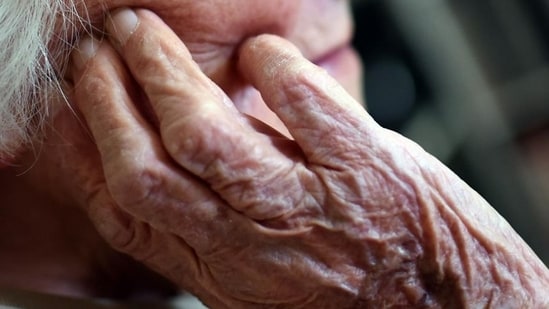
The UNFPA released its latest assessment this month. The numbers are not projections that policymakers can defer. They are demographic certainties. India's elderly population, currently 153 million, will reach 347 million by 2050. One in five Indians will be above 60. The elderly population will grow at 3%, while the overall population growth rate slows below 1%. By 2036, Kerala will have the oldest population structure of any major Indian state, with 23% its population above 60. Tamil Nadu, Himachal Pradesh, and Punjab are already mirroring ageing patterns seen in Japan and Germany.
India spent a decade building an institutional architecture for its young. Skill India, Mudra, Start-Up India, National Education Policy, Digital India. These are real investments in a real demographic opportunity. What India has not built is an equivalent architecture for the 347 million people who will need health care, housing, pensions, and daily care within a generation.
The data on who these elderly citizens are makes the gap more urgent. The Longitudinal Ageing Study of India found that women constitute 58% of the elderly population. Around 54% of elderly women are widows. The sex ratio among the elderly is 1,065 females per 1,000 males. Women live longer. They also live poorer; 70% of India's elderly are economically dependent on their families; 78% have no pension coverage. For elderly women, the dependence is near-total: Most have no independent income, no property in their name, and no institutional safety net beyond the family unit. When the family unit breaks, as it increasingly does in an urbanising society where children migrate to distant cities, the elderly woman is left with nothing the State can reach.
{{/usCountry}}The data on who these elderly citizens are makes the gap more urgent. The Longitudinal Ageing Study of India found that women constitute 58% of the elderly population. Around 54% of elderly women are widows. The sex ratio among the elderly is 1,065 females per 1,000 males. Women live longer. They also live poorer; 70% of India's elderly are economically dependent on their families; 78% have no pension coverage. For elderly women, the dependence is near-total: Most have no independent income, no property in their name, and no institutional safety net beyond the family unit. When the family unit breaks, as it increasingly does in an urbanising society where children migrate to distant cities, the elderly woman is left with nothing the State can reach.
{{/usCountry}}The Maintenance and Welfare of Parents and Senior Citizens Act, 2007 allows elderly parents to claim maintenance from children who neglect or abandon them. The cases that come before magistrates are not about legal complexity. They are about a mother in East Delhi whose son moved to Bengaluru and stopped calling. A father in Patna whose daughter-in-law locked him in a room. An 80-year-old woman who was told by her grandchildren that she should "go to an old age home." The law gives her a remedy. The law does not give her a family.
The government's institutional response has been more substantial than most critics acknowledge. The Atal Pension Yojana has grown from 1.54 crore subscribers in 2019 to 8.27 crore by October 2025, with assets under management exceeding ₹49,000 crore. In October 2024, the government expanded Ayushman Bharat to cover all senior citizens aged 70 and above, regardless of income, providing ₹5 lakh in annual hospitalisation coverage. By January 2025, 40 lakh seniors had enrolled. The Rashtriya Vayoshri Yojana provides free assistive devices, walkers, hearing aids, wheelchairs, and dentures, to elderly citizens below the poverty line. The SACRED portal connects citizens above 60 with employers for re-employment. The Elderline helpline (14567) provides emotional, legal, and care assistance. India was among the first countries to adopt a National Policy on Older Persons in 1999, three years before the Madrid International Plan of Action on Ageing.
These are not token programmes. They represent a genuine social security expansion for the elderly. But they are built for a crisis that is arriving faster than the programmes can scale.
Three structural gaps remain.
The first is the absence of a long-term care framework. India's health care system is hospital-centric. It treats acute episodes. Elderly citizens suffer from chronic conditions: Cardiovascular disease affects 35.6% of those above 60, hypertension affects 32%, diabetes and respiratory illness are rising. These conditions require continuous, integrated, home-based care, not periodic hospitalisation. Ayushman Bharat covers hospitalisation. It does not cover the daily management of a chronic condition that will last twenty years. India has approximately 900 trained geriatricians for 153 million elderly. The ratio is not a gap. It is an absence.
The second is the pension coverage deficit. Despite APY's impressive growth, 78% of the elderly remain without any pension. The Indira Gandhi National Old Age Pension Scheme provides ₹200 per month for BPL citizens aged 60 to 79, and ₹500 per month for those above 80. Adjusted for current prices, ₹200 per month does not cover two days of food. The pension exists. Its quantum does not. Increasing APY coverage is the right strategy. Revising IGNOAPS amounts to reflect 2026 costs is the immediate necessity.
The third is the care economy vacuum. As nuclear families replace joint families and children migrate to cities for employment, the informal care system that India historically relied upon, daughters-in-law, is collapsing. No formal care economy has replaced it. There are no regulated standards for old age homes. No trained home-care workforce at scale. No insurance product that covers long-term elderly care. Japan, which faced this transition a generation ago, built a long-term care insurance system in 2000 that now covers every citizen above 65. India has not begun the equivalent conversation.
The UNFPA's India representative said this month that older women are "more likely to live alone and face poverty." That sentence contains the next twenty years of social policy in thirteen words. India's elderly are disproportionately female, disproportionately widowed, disproportionately dependent, and disproportionately invisible in every policy conversation that is not specifically about them.
India spent a decade preparing for its demographic dividend. It has not spent a day preparing for its demographic debt. The 347 million people who will be above 60 in 2050 are already alive. They are not a future problem. They are a present generation ageing into a system that has not been built for them.
(The views expressed are personal)
This article is authored by Bhavya Razshree, advocate, Delhi Courts and co-founder of LawSarathi.in. and Aditya Ashok, public policy consultant, Government Advisory.