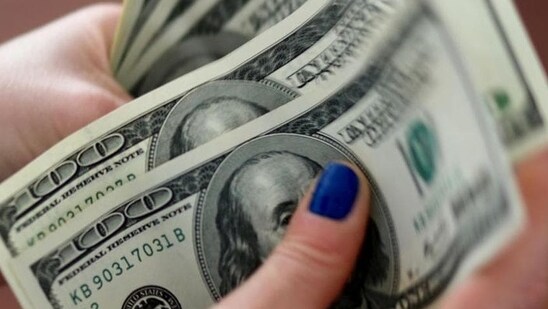
Since early 2023, the international currency discussion has gained enormous traction. Around 19 countries have decided to carry out transactions in local currency in bilateral trade. And the trend has not stopped here; more and more countries are making decisions to trade in other currencies and not rely entirely on the United States (US) dollar.
The two largest economies of South America -- Brazil and Argentina agreed to transact in a common currency. Further, in January 2023, several countries in
Since early 2023, the international currency discussion has gained enormous traction. Around 19 countries have decided to carry out transactions in local currency in bilateral trade. And the trend has not stopped here; more and more countries are making decisions to trade in other currencies and not rely entirely on the United States (US) dollar.
The two largest economies of South America -- Brazil and Argentina agreed to transact in a common currency. Further, in January 2023, several countries in South East Asia also deliberated over how to circumvent the US currency dominance; meanwhile, the dollar continues to gain strength.
However, since the US dollar exchange rates have reached the highest in 20 years amongst the kitty of currencies, this rapid rise in rates has given jitters to economies around the globe, as the US dollar holds 58% of the global foreign exchange reserves followed by euro accounting for 20% and Chinese yuan accounting for meagre 2.7%.
As a result, several big and small economies are apprehensive of the over-dependence on the dollar for their trade. In the year 2022, in his speech to the BRICS Business Forum, Russian President Vladimir Putin said that the minilateral member nations were working on creating a new global reserve currency. Although, the statement from Putin could be construed as a gesture of Russian obeisance to China and a yearning to challenge the US.
Notably, two-thirds of all dollars used today are outside the United States, and international trade and investment agreements also reflect this proportion. It's interesting to note that the oil and mineral trades are virtually entirely conducted in dollars, making Iran (and many other countries) especially susceptible to dollar weaponisation.
The world's political structure has undergone significant changes due to the conflict between Russia and Ukraine. The US has harshly sanctioned Russia and Iran, frozen their assets in US dollars, and even threatened to seize their possession, greatly undermining the confidence of the US and the US currency abroad.
However, the moot question that remains under study is whether de-dollarisation will actually take place or if it is just another prick in the thorny relations between the West and the rest. Let us understand the BRICS nations’ frustration with the Dollar dominance.
In Brazil’s experience, its reliance on the dollar is relatively apparent, given that about 90% of its export invoices are in dollars. In response to the dollar's dominance in Brazilian commerce, the former president of Brazil, Lula Da Silva, endorsed utilising the BRICS as a de-dollarisation alliance. In retrospect, however, it is clear that Brazil's opposition to the dollar waned in 2014 as a result of a dreadful economic downturn. Additionally, the Liberal Party under Jair Bolsonaro was pro-western, so it was not keen on deliberating over other currencies.
In the case of Russia, it is well-known that the Putin administration is always looking for an opportunity to bully the US. And through BRICS, Russia can push for a de-dollarisation movement. The Ukraine-Russia faceoff since early 2022 is another reason for the concept of an alternate financial system. Through this idea, Kremlin is not simply supporting the BRICS agenda but is also viewing it as a way to protect its own economic sovereignty.
Indian position on dollar dominance is unique, considering India is one of the most crucial Indo-Pacific region's allies. Therefore, for India to take a bold stand like China and Russia is not a viable option. Although, India, in its own right, does promote the use of Indian rupees in bilateral trade, especially with the oil-exporting nations. It can be argued that India’s position on the dollar debate is more about its relations with China and the recent military standoff between the two, which stops India from supporting this China-instigated scheme of dethroning the dollar. Also, US oil sanctions on Iran, Russia and the Biden-Xi conflict have encouraged India to be watchful and practical in this deliberation.
The Chinese have obstinately been vocal about the dollar’s dominance, given its bitter relations with first Trump and later with the Biden administration. So far, besides creating noise about a hegemonic dollar, Xi has failed to develop a practical plan to promote renminbi as a global reserve currency. Also, the Chinese trade imbalances and complicated development financing have led to a lack of confidence among the BRICS and other nations to trust Chinese currency.
Lastly, South Africa, like any other BRICS nation, has no strategy for replacing the dollar as a global reserve currency. However, that doesn’t translate into South Africa being ignorant about the issue; instead, it is wary of the international currency volatilities. Like India, the South African government has been promoting the concept of trading in local currencies so that the unpredictability of international currency doesn’t affect developing countries’ economies. But at the same time, South Africa has included renminbi in its foreign exchange reserves.
However, the fact of the matter is that despite the de-dollarisation movement being in the discussion for the last several years.
The shift in international relations and geopolitical conflicts have enthused the de-dollarisation movement. Therefore, in conclusion, it could be argued that despite some turbulence in the economic world, it is unlikely that the greenback can be replaced in the near future.
The US dollar is too profoundly integrated into the global financial market, with the US controlling the most liquid markets and critical assets for central banks that it is unlikely to be shaken.
In fact, de-dollarisation is a general trend which appears routinely; for example, a similar debate occurred in 2009 and 2011 and continues to do rounds, but the US dollar remained stable.
The Russian and Chinese arguments are considered more of a rhetoric, and apart from creating ripples in the global market, it has not achieved anything substantial. Given the US presidential elections scheduled for 2024, these discussions could be a part of power politics.
Although, in hindsight, having a single currency as an international currency is opposed to the new realities of the multilateral system of international relations, and there could be a possibility of specific risks. Key characteristics of a reserve currency are transparency, marketable financial instruments like bonds in a particular currency, and the money itself being freely exchangeable. At this time, only the dollar possesses these characteristics. Therefore, dethroning of the dollar analysis must be country specific. Russia, Iran, India and Europe have bypassed the US dollar primarily to ease settling their trade with US-sanctioned Russia and Iran.
As far as yuan being a probable contender for alternative currency is questioned, it must be understood that China has a very tight control of trade and does not hold any international assets in yuan. Hence, for any country to trade in yuan, China must first develop a portfolio that promises trust and confidence in yuan, for which the world is probably unprepared.
This article is authored by Soumya Awasthi, consultant, Tony Blair Institute for Global Change.
One Subscription.
Get 360° coverage—from daily headlines
to 100 year archives.
Archives
HT App & Website