Conceptualisations of countries’ power in the post-Cold War period underwent a drastic change as economics increased eminence and military might no longer remained the prominent criterion of power. Owing to its economic rise, China’s position in the international system changed drastically since the 1990s onwards. As it emerged as the manufacturing platform of the world, and countries became increasingly reliant on it for trade and commerce, China leveraged its economic potentials and turned it into a tool for its rapid
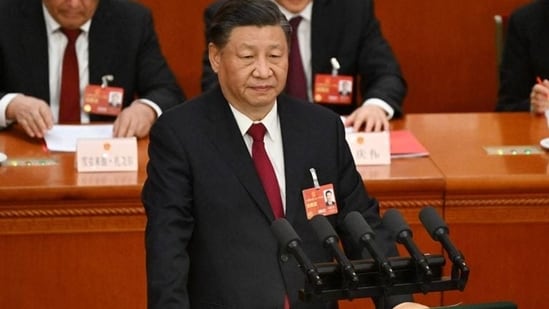
Conceptualisations of countries’ power in the post-Cold War period underwent a drastic change as economics increased eminence and military might no longer remained the prominent criterion of power. Owing to its economic rise, China’s position in the international system changed drastically since the 1990s onwards. As it emerged as the manufacturing platform of the world, and countries became increasingly reliant on it for trade and commerce, China leveraged its economic potentials and turned it into a tool for its rapid ascension as a leading player in international politics. However, China’s export reliant growth model started experiencing severe strains around 2012. The economy entered a period of slowdown, Gross Domestic Product (GDP) growth rates declined from double digit figures to around 6%, because of which President Xi Jinping stated that China had entered the phase of a “new normal”. The global financial crisis had added further strains to the already strained Chinese economy as China’s prime markets in the European Union (EU) and in the United States (US), no longer had the capacity to absorb Chinese exports! China needed alternative markets to ensure sustained economic growth, which is when, taking a leaf out of history around the ancient maritime Silk Route, China came up with what in 2013 was known as the One Belt One Road, and is now known as the Belt and Road Initiative (BRI).
A grand strategic and economic vision, the BRI hoped to connect markets across the world to China through infrastructure and investments, which would yield not just investment return benefits for China, but also create newer markets to absorb Chinese exports, as well as would generate employment for Chinese labour in the connected countries. The immense importance of the BRI is revealed by the fact that it was written into the Constitution of the Communist Party of China (CPC) in 2017. However, a stock taking of the performance of BRI projects across the globe reveals worrisome trends for China, as multiple countries have either abandoned BRI projects, or have renegotiated terms of agreements of BRI projects with China. China's finance and investment spending in Belt and Road countries fell to $ 28.4 billion in the first half of 2022 as compared to $ 29.6 billion a year earlier. Multiple countries saw a 100% drop in BRI engagement compared to 2021. Even, Pakistan, China’s iron brother saw an investment drop in the China- Pakistan Economic Corridor (CPEC) by about 56%! If only the case of Pakistan were to be taken to analyse the overall efficacy of the BRI, it was seen that last year, more than two dozen Chinese firms threatened to cease operations in Pakistan if Islamabad could not make payments to them upfront. Reportedly, Pakistan must pay more than 300 billion Pakistani rupees in dues to several Chinese firms operating in Pakistan. Beyond Pakistan, there actually has been a spate of defaults from Sri Lanka to Zambia.
World Bank economists have stated that about 60% of all BRI loans involve countries in financial distress. Even before the more recent news of potential defaults, Chinese bankers had warned about the financial and economic viability of BRI arrangements. With Chinese State-owned enterprises facing massive defaults from domestic property developers, with Evergrande being one example, along with defaults on BRI loans, pressures have become so stressful for China that Xi Jinping has now described the BRI as being increasingly complex and in need of stronger risk controls as well as of cooperation. Xi used to earlier refer to the BRI as the “project of the century”. The question now is, would China roll back the BRI?
The BRI, as much as it has been touted by China as an economic project, is actually a strategic one. The takeover of the Hambantota port over loan defaults actually works well for China, because the port is in a strategic location in the Indian Ocean! There also have been instances where Tajikistan and Kyrgyzstan had to cede lucrative mines as well as agricultural land to China due to inabilities to repay loans! This arrangement of gaining strategic control of other countries’ territories without a military conflict, actually works well for China.
China has developed a system of bailouts on the BRI that helps recipient countries to avoid default and continue servicing their BRI debts. All Chinese rescue loans have gone to low- and middle-income BRI countries with significant outstanding debts to Chinese banks. Chinese loans tend to be opaquer compared with other international lenders of last resort. And often come at an average interest rate of 5% compared with a typical two per cent rate on an IMF loan
This creates a vicious cycle of never-ending debts for the recipient countries, increasing China’s economic and political leverage over them, to the extent that China can take over strategic, sovereign territories for defaults as and when it pleases! A rollback of the BRI in any case is not possible given that it will mean an immense loss of face for Xi Jinping, who wrote the BRI into the CPC Constitution. The BRI is thus a perfect tool for strategic takeovers and for attaining hegemony of the international system. The major powers of the international system need to understand that the BRI creates winning situations for China even if it finds markets in other countries through BRI projects or if countries fault on BRI loans and end up in the never-ending trap of Chinese debt.
This article is authored by Sriparna Pathak, associate professor and director for Northeast Asian Studies, OP Jindal University, Sonipat.
One Subscription.
Get 360° coverage—from daily headlines
to 100 year archives.
Archives
HT App & Website