India’s ambition to expand women’s employment faces a question that goes beyond getting more women into the workforce: what kind of work will be available? Artificial Intelligence (AI), digital platforms and the green transition are changing jobs, while demand for care is growing. If women are trained for these opportunities but remain responsible for most unpaid care, or enter jobs without adequate protection, the promise of the future of work will ring hollow.
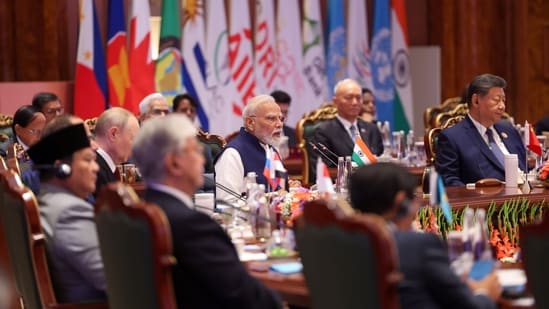
The 2026 BRICS New Delhi Declaration recognises these connections. It commits members to forecast skills needs in digital, green and care sectors, supports women’s fuller economic participation and calls for approaches to extend social protection to gig and platform workers. Its value will depend on whether BRICS countries can turn those commitments into better jobs, rather than another list of training initiatives.
The challenge is shared, though it looks different in each member country. Women face barriers ranging from unequal access to education and finance to occupational segregation and informal employment. In India, care responsibilities and the availability of suitable jobs are central to participation. Counting how many women enter the labour force tells only part of the story. Policymakers must also ask what they earn, whether their work is secure and whether they can progress.
Skills forecasting is a sensible place to begin. Governments need to know which occupations are expanding, what qualifications they require and where women are being left out. But forecasts should lead to decisions. If employers expect demand for workers in renewable energy or artificial intelligence, training institutions should offer relevant courses and work placements. If care services are expanding, governments should plan for qualified workers and fair employment conditions.
{{/usCountry}}Skills forecasting is a sensible place to begin. Governments need to know which occupations are expanding, what qualifications they require and where women are being left out. But forecasts should lead to decisions. If employers expect demand for workers in renewable energy or artificial intelligence, training institutions should offer relevant courses and work placements. If care services are expanding, governments should plan for qualified workers and fair employment conditions.
{{/usCountry}}The route from a classroom to a career needs particular attention. Scholarships can encourage women to enter science, technology, engineering and mathematics, but qualifications alone do not overcome biased recruitment or a lack of workplace support. Paid placements, mentorship, safe travel and childcare can determine whether a woman accepts a job and remains in it. BRICS cooperation would be more useful if countries compared employment and career outcomes, rather than simply reporting how many people completed a course.
The green transition presents a similar choice. New investment in energy, transport and buildings will create technical and managerial roles. Unless women can enter apprenticeships and hiring networks, they may be channelled into lower-paid support work while the best opportunities go elsewhere. That outcome is avoidable, but it requires governments and employers to examine who gains access to training, recruitment and promotion.
Care deserves equal prominence in this strategy. Women perform a disproportionate share of unpaid childcare, elder care and household support. Globally, the estimated value of unpaid care would be about $11 trillion, or 9% of GDP, if it were compensated. However, people bear these costs privately, often through women who reduce their paid hours or leave work altogether. Affordable, accessible care services would give more women the time to work while creating employment in their own right.
India has an opportunity to build this sector deliberately. A recent NITI Aayog report proposes a national caregiving policy, improved training and certification, and stronger protection for caregivers. These steps move toward recognising care as skilled work. Formalisation, however, must bring reliable pay and routes to advancement. Expanding a sector while leaving its workers poorly paid and insecure would reproduce the very problem that care investment is meant to address.
Digital platforms make this question more urgent. An app may help a caregiver find clients or allow a woman entrepreneur to reach new markets. It may also leave workers with unpredictable earnings and no clear route to paid leave, accident cover or retirement benefits. Flexibility is valuable when it is a choice; it is less valuable when workers carry every risk themselves. BRICS members should compare ways to register platform workers and deliver benefits that remain accessible when people work for several clients or move between jobs.
The New Delhi Declaration gives them mechanisms to do so. BRICS CONNECT is intended to support cooperation on employability and skills, while a proposed digital repository would allow members to share practices that support women. These forums should be judged by the questions they answer. Which training programmes led to paid work? Which care policies helped women remain employed? Which forms of social protection reached workers with irregular incomes?
No single model will fit every BRICS economy. India cannot import another country’s approach without accounting for its own labour market and public services. But members can compare evidence, identify failures and adapt what works. They should publish results that show differences between women in major cities and those elsewhere, and between women entering high-skilled jobs and those working in care or on platforms. Otherwise, aggregate progress could conceal those still excluded.
For India, the practical test is whether a woman can train for a growing occupation, find a decent job and stay in it without bearing the full cost of care or the risks of insecure work. BRICS has brought these issues together in New Delhi. It now needs to follow through with investment, worker protection and evidence of better outcomes. Women-led development will mean more when women can share in the opportunities of economic change on fair terms.
(The views expressed are personal)
This article is authored by Mousumi Roy, columnist, politics, culture and economic history.