
 E-Paper



Getting Kurds involved in the Iran war will open a new front
This article is authored by Sanjay Turi.

 Prefer HTon Google


During his previous presidential term (2016-2020), one of the major election campaign strategies of Donald Trump was to bring American soldiers back home from military bases located all around the world, and Afghanistan was one among them. In fact, it was Trump’s policy to withdraw from Afghanistan, which was officially carried out during the tenure of President Joe Biden in August 2021. During more than two decades of American occupation in Afghanistan, thousands of American soldiers fell victim to the guerrilla warfare of the Taliban. As Iran has also started actively using guerrilla warfare strategy, this asymmetric warfare tactic by Iran seems to be forcing the US and Israel into a defensive state.
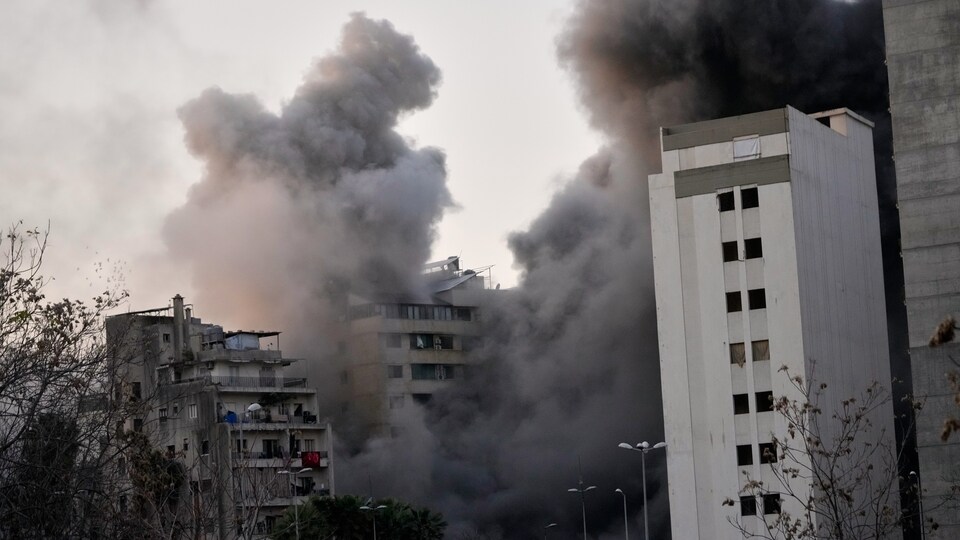
Ever since Iran has blocked the Strait of Hormuz, a major choke point for energy trade from the Gulf to the world, the US-Israel attack on Iran seems to be taking a new turn, where the American strategy of defeating Iran and toppling the Khomeini regime is not working, As Iran has been using a variety of low-cost drones to attack enemy targets, it is becoming very difficult for the joint forces of the US and Israel to intercept these drones, as this costs more than 15-20 times the actual price of the Iranian drones, which is possibly forcing the US and Israel to reconsider their offensive against Iran.
In retaliation to the American and Israeli bombardment, Iran has also opened multiple war fronts against the two, precisely attacking American military bases located in the Gulf countries, putting massive security and economic pressure on the Gulf Kingdoms to compel the US to withdraw its military presence from the region. The recent statement by the Islamic Revolutionary Guard Corps (IRGC) that it is the US and Israel who have started this war, but it is Iran who will decide when to end this war. This statement itself shows that, as Iran has nothing much left to lose in this war, its retaliation to defend its existential threat is very much justified, which is unfortunately causing damage to the world economy in general and its adversary in particular.
Analysing the recent conditional offer by the Iranian president that Iran won’t attack its neighbours, it can be inferred that the Iranian attack on Gulf countries is not just oriented towards causing damage to the US only, but it is primarily oriented towards exposing the US security umbrella over the Gulf States. In this context, retired Colonel Rajiv Agrawal argues that the ongoing war in the region is probably a lesson for the Gulf States: The national security of a country can neither be bought nor outsourced.
As Iran, after the killing of Ayatollah Khamenei, out of fear of regime change, has immediately decentralised its army command within the IRGC into 31 divisions, ordering them to tackle the US-Israel attack in their own different ways, it has now become almost impossible for the US to topple the regime through an air raid. Given the difficult topography of Iran, the modern warfare strategy of the US will hardly work, as the multiple command chains in Iran have synced with its guerrilla warfare strategy. As the US has had a very bad experience of fighting a guerrilla war in Afghanistan, the Trump administration is not likely to repeat the same mistakes here in Iran. Even if he wants to enter Iran through a ground offensive, he will have to send a large number of US troops into Iran. Iran’s geography is not likely to make it easy for these untrained US troops to defeat the Iranian guerrilla fighters. Apart from the topographical technicality, since the US is approaching a mid-term election, Trump’s poll promises of the safe return of US soldiers might also prevent him from starting a ground offensive.
On one side, the US president is continuously reiterating that the US is winning this war and this conflict will soon come to an end; on the other side, the joint defence forces of the US and Israel are gradually intensifying airstrikes in Iran. This dichotomy shows that this war is not just limited to arms and weapons, but is more of a psychological warfare and narrative building. The way the Iranian leadership is responding makes one thing very clear: President Trump may have realised that he has made a mistake by equating Iran’s capability with Afghanistan. The frequently changing rhetorical stance of President Trump and Prime Minister Netanyahu shows that the Iranian regime is far from collapsing. Therefore, the stress coming from supply chain disruption and the skyrocketing energy price is putting so much pressure on the US to search for an early exit from this conflict. Ironically, the pressure to end this war is probably not coming from countries and international organisations per se, but from skyrocketing energy prices and worldwide cost-push inflation, which the US is also likely to suffer more from. This attitude of the US and its unilateral decision to do whatever it wants is making a mockery of the rules-based international order.
Even after the massive bombardment in Iran, it has become difficult for the US and Israel to defeat and topple the regime, as Iran has also started hitting harder, targeting Israel as well as American military bases located throughout the region. Now, here comes the twist. Amid rising difficulty for the US-Israel action, reports are coming out that the US is approaching Kurdish groups in Iran, as well as neighbouring region, to participate in this conflict against Iran. Although Trump has recently refuted his own previous statement that he will not let the Kurdish militia get into Iran, his statement cannot be taken for granted, given that the US and Israel are now engaged in psychological warfare, as the resistance from the Iranian regime continues to grow.
Although Israel hardly cares about the political fallout in West Asia, the US cannot afford to leave this region in turmoil, as it did in Afghanistan. Hence, regardless of outcomes, be it regime change or a US compromise, the ongoing war in Iran is likely to come to an end soon. However, any miscalculation by the US will most likely result in larger regional chaos, and one such possible action could be the involvement of Kurds in this conflict.
The Kurds have been historically marginalised in the region. The Kurdish region (bordering region of Iran, Iraq, Syria and Turkey) is a mineral-rich one. After the collapse of the Turkish Ottoman Empire post-World War I, this Kurdish-dominated region was strategically divided by allied powers in such a way that the Kurdish population remained a minority and was strategically divided among Turkey, Syria, Iraq, Iran, and a part of Armenia too. The Kurds, with their population ranging from 25 to 45 million, have been fighting for self-determination for centuries in the region. This ethnicity was initially suppressed by the Turkish Ottoman Empire, but after the post-World War I division of this region, they have been facing brutal suppression in their respective host countries. Today, they are considered the largest stateless ethnicity in the world. In this context, Kurds living in Iran represent around 20% of the total Kurdish population in West Asia, which is around 8% to 17% of the total Iranian population. They have always been suppressed and marginalised by the Iranian regime.
Although the US-Israel-Iran war is an opportunity for long-awaited Iranian Kurds to establish an autonomous Kurdistan in Iran, their involvement in this war may open a new front in a larger regional conflict in West Asia, as no Kurdish minority country in this region, particularly Turkey, would ever want Iranian Kurds to become independent as this may reactivate mainstreaming Kurdish groups (dormant) and create a domino effect for the demand of Kurdistan in West Asia. Therefore, given Iran’s geography, the ground invasion of Iran by the US and Israel with the help of the Kurdish militia will not just be catastrophic for invading armies, but it will also possibly set all of West Asia on fire.
This article is authored by Sanjay Turi, doctoral candidate, Centre for West Asian Studies (CWAS), School of International Studies, Jawaharlal Nehru University, New Delhi.


