The global community remains frozen in a state of passive spectatorship as the escalating military conflict between the US and Iran pushes West Asia—and global economic stability—toward a catastrophic precipice. Despite the clear threats of skyrocketing energy prices, disrupted maritime trade routes, and a massive humanitarian crisis, international bodies and major world powers have largely confined their responses to redundant diplomatic platitudes and toothless calls for restraint. This widespread paralysis exposes a severe systemic failure in global governance, revealing how heavily modern international security relies on a fragile balance of power rather than enforceable international law.
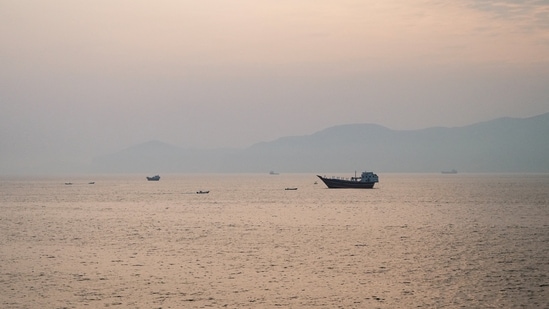
The US-Iran war has escalated rapidly. Following the collapse of a brief June ceasefire agreement, hostilities have intensified significantly. The conflict has moved beyond a local maritime dispute into a broader regional war involving consecutive nights of airstrikes, direct troop casualties, and missile exchanges expanding across multiple Gulf countries. By watching from the sidelines as two heavily armed adversaries engage in retaliatory brinkmanship, the international community is not merely witnessing a localised war; it is proving that the world remains a helpless bystander when the international order collapses into open warfare.
The US military has carried out its 11th straight night of air campaigns across Iran. The United States Central Command (US CENTCOM) expanded its targets to include command centres, air defence systems, and communication networks. B-52 bombers and jet fighters have struck locations ranging from southern coastal ports like Chabahar and Jask to northwestern cities like Tabriz. Tensions peaked following the deaths of three US service members. Two troops were killed during a strike on a base in Jordan, and a third died in Iraq during the detonation of a downed Iranian drone. US President Donald Trump cited these casualties when ramping up the offensive. Bombardments are edging closer to highly sensitive areas.
According to the US CENTCOM, air strikes have targeted Iranian underground weapons storage, surveillance sites, and military logistics infrastructure. Local Iranian media reports claim civilian infrastructure has also sustained damage. The activation of air defence shields and reported projectile impacts have occurred near Iran's Bushehr civilian nuclear plant and under-construction facilities in Tabriz and Darkhovin. Iran has formally declared it is in a "full-scale war". The IRGC launched massive retaliatory missile and drone swarms targeting US military installations hosted in neighbouring countries. This includes strikes against Ali Al Salem airbase in Kuwait, Aqaba airport and Muwaffaq Salti air base in Jordan, and positions in Bahrain.
{{/usCountry}}According to the US CENTCOM, air strikes have targeted Iranian underground weapons storage, surveillance sites, and military logistics infrastructure. Local Iranian media reports claim civilian infrastructure has also sustained damage. The activation of air defence shields and reported projectile impacts have occurred near Iran's Bushehr civilian nuclear plant and under-construction facilities in Tabriz and Darkhovin. Iran has formally declared it is in a "full-scale war". The IRGC launched massive retaliatory missile and drone swarms targeting US military installations hosted in neighbouring countries. This includes strikes against Ali Al Salem airbase in Kuwait, Aqaba airport and Muwaffaq Salti air base in Jordan, and positions in Bahrain.
{{/usCountry}}A core trigger remains control over the Strait of Hormuz, a vital corridor carrying 25% of global oil shipments. The Islamic Revolutionary Guard Corps (IRGC) has enforced a shipping blockade, demanding that commercial vessels follow unilateral Iranian protocols and pay traffic fees. The US Navy is attempting to forcefully reopen the Strait of Hormuz and has responded by re-imposing blockades on Iranian ports. Though backchannel international mediators like Qatar are actively searching for a diplomatic "off-ramp" to prevent total regional destabilisation, formal commitments under prior peace memorandums remain completely suspended. Iran continues to warn that the Persian Gulf will remain entirely unsafe for international energy transit as long as US aerial operations persist.
Yemen's Houthi rebels have significantly escalated their involvement in the regional conflict by officially declaring a maritime embargo and naval blockade against Saudi Arabia. This major development reshapes the current geopolitical landscape. Houthi military spokesman Yahya Saree announced a "maritime embargo against the criminal Saudi enemy" effective immediately on an "eye-for-an-eye" basis. Houthi naval forces have begun actively contacting commercial vessels bound for Saudi Arabia via VHF radio, instructing them to turn back under threat of military action. This move follows a severe escalation in which the Houthis fired missiles into Saudi Arabia, effectively shattering a fragile four-year truce between the kingdom and the militant group.
The blockade closely follows reports that Iran's leadership instructed the Houthis to stand ready to choke off the Red Sea route if the US targeted Iranian power infrastructure. This isn't their first entry into the wider theatre; the Houthis initially crossed into active belligerency in the expanding US-Israeli-Iranian war back on March 28 by launching ballistic missiles directly at Israel.
With Iran already keeping the vital Strait of Hormuz shut, a successful Houthi blockade of the Bab al-Mandeb Strait and the Red Sea would successfully freeze West Asia's two primary oil export pathways simultaneously.
Saudi Arabia relies heavily on its Red Sea ports, like Jeddah and Yanbu, to bypass the blocked Persian Gulf. Because these ports are well within range of Houthi missile and drone arsenals, global energy markets are bracing for an unprecedented supply shock.
However, the international community’s response to the escalating US-Iran conflict is largely defined by calculated detachment and risk management. Caught between defending a rules-based order and preserving vital trade links, powers like the EU and the UK have generally opted for calls for restraint over forceful intervention. India has actively urged both the US and Iran to pursue dialogue and diplomacy to achieve an early end to the conflict. Meanwhile, nations bordering the Persian Gulf struggle with the fallout, caught in the crossfire as Iran retaliates against US military assets hosted on their soil. As the US continues its relentless military campaign and the Strait of Hormuz choke point threatens global energy, major actors like China and Russia maintain a strategic, often self-serving distance, allowing the crisis to unfold without risking direct confrontation with Washington. This passive observation highlights a troubling global paralysis: the world watches a devastating war unfold, yet offers little more than frantic diplomatic pleas as civilian casualties mount and global markets brace for instability.
The United Nations cannot end the US-Iran war due to Security Council paralysis from veto powers. The UN Security Council is structurally paralyzed because permanent members utilise their veto power to shield allies or veto proposed resolutions, reducing the UN's ability to mandate de-escalation. Both the US and Iran have continuously defended their military strikes and naval blockades—particularly concerning the Strait of Hormuz—by citing Article 51 of the UN Charter, which allows for the use of force in self-defence. The UN Secretary-General has stated there is "no military solution to this conflict," but the warring nations continue to use unilateral measures for strategic leverage rather than deferring to international mediation.
Summing up, the current diplomatic outlook in the US-Iran war is highly fragile and volatile, characterised by a precarious balance between open military conflict and backchannel mediation. While consecutive nights of heavy US airstrikes target Iranian command centres and Tehran retaliates against Gulf states hosting American assets, active diplomacy has not been successful in ending the crisis. Deep mutual distrust and conflicting demands over nuclear enrichment and regional security remain massive roadblocks to a lasting settlement. The only sign of hope is that Iran's foreign ministry recently confirmed that it is reviewing new de-escalation proposals delivered by international mediators—including a rumoured 10-day technical truce—even as Tehran asserts its right to a simultaneous military response.
(The views expressed are personal)
This article is authored by Prabhu Dayal, former ambassador, New Delhi.