India-Bangladesh ties are at a crossroads. Two years after Sheikh Hasina escaped Dhaka to India following the student-led uprising that brought an end to her 15-year rule, Bangladesh has moved from the Yunus-led interim administration into a new political phase under the current BNP-led government. Yet the transition has done little to ease strains in bilateral relations. Hasina’s recent “media interaction” has only deepened the strain, injecting a fresh political complication into an already fragile relationship.
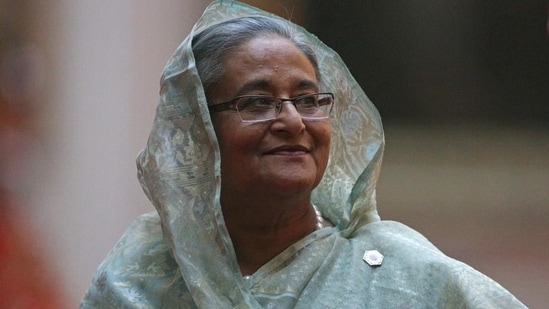
The virtual interaction on August 5, 2026, organised by the Foreign Correspondents’ Club of South Asia, saw the former prime minister (PM) rebut charges against her government over the July 2024 killings of protesters, defend her record, criticise Bangladesh’s current leadership and demand the lifting of the ban on the Awami League. Dhaka reacted sharply.
The BNP-led government had already urged New Delhi to “expeditiously act” on its request for Hasina’s extradition, describing it as necessary to create a “propitious environment” for bilateral relations. The recent press interaction further renewed that demand from the Bangladesh authorities; after calling the media event an “affront” to Bangladesh’s sovereignty.
The issue is particularly difficult for India because Hasina was, for decades, its most reliable political partner in South Asia and played a central role in deepening cooperation in security, connectivity, trade and other sectors. Her fall, departure and continued stay in India have left New Delhi balancing its longstanding relationship with a former partner against the political realities of post-Hasina Bangladesh. At the same time, her continued presence in India has become a politically sensitive issue among Bangladesh’s competing factions, complicating the ruling government’s domestic posturing.
The fallout of the event is already affecting political engagement. Dhaka’s response to India’s invitation to PM Tarique Rahman to attend the BRICS meeting in September, along with the possibility of an early standalone visit, suggests that high-level engagement may now face greater difficulty. Dhaka has maintained that the Hasina issue has “vitiated” the bilateral atmosphere and stressed no urgency for Rahman’s India visit.
{{/usCountry}}The fallout of the event is already affecting political engagement. Dhaka’s response to India’s invitation to PM Tarique Rahman to attend the BRICS meeting in September, along with the possibility of an early standalone visit, suggests that high-level engagement may now face greater difficulty. Dhaka has maintained that the Hasina issue has “vitiated” the bilateral atmosphere and stressed no urgency for Rahman’s India visit.
{{/usCountry}}This comes despite New Delhi’s efforts to contain the fallout by clarifying that Hasina’s interaction was organised by a media organisation and was not an initiative of the Indian government. The clarification, however, has done little to assuage mistrust in Dhaka.
The stakes are higher because the strain in bilateral ties is unfolding in a particular delicate moment. The newly formed BNP government has taken clear steps towards Beijing, pursuing deeper economic and strategic engagement with China. This is not merely a diplomatic adjustment. For New Delhi this has implications beyond diplomacy, particularly for connectivity, ports, infrastructure and the strategic environment along India’s eastern flank.
Dhaka’s China gambit has been reinforced by two high-level visits, including a BNP delegation’s visit in April and Tarique Rahman’s recent visit in June. During the latter, the two sides agreed on a series of memoranda of understanding and signed 13 agreements, including the reported handover of the strategically important Mongla port to China, a project that had earlier been assigned to India.
Dhaka has also moved more decisively towards securing Chinese backing for a feasibility study of the strategically important Teesta river project near India’s Siliguri Corridor, moving beyond its earlier hesitations. Moreover, expanding partnerships in areas such as Artificial Intelligence, along with Dhaka’s decision to formally join the Beijing-led Global Development Initiative, could increasingly undercut India’s developmental initiatives in Bangladesh while expanding China’s strategic leverage in the country.
New Delhi cannot afford to view Bangladesh only through the prism of the Hasina-led order nor can it ignore the political reality that Dhaka’s domestic posturing along-side its foreign-policy choices are increasingly being shaped by a post-Hasina political environment.
India’s task, therefore, is to maintain engagement while addressing longstanding differences through institutional channels. Bangladesh remains India’s largest trading partner in South Asia, and trade and economic links continue to provide an important foundation for the relationship. But the wider agenda includes border management, migrations, connectivity, energy, transit, security and addressing other components in the relationship such as the renewal of the Ganga Water Treaty.
This will require sustained diplomatic engagement with the BNP-led government, greater attention to mutually beneficial economic and connectivity projects, and a willingness to accommodate Bangladesh’s legitimate interests while safeguarding India’s own strategic concerns. China’s growing influence in Bangladesh need not automatically translate into an adversarial relationship with India; the more important question is whether New Delhi can remain a relevant and credible partner as Dhaka diversifies its external relationships.
India-Bangladesh ties need a strategic reset. The Hasina issue has already narrowed the space for political trust just as Bangladesh’s domestic posturing and external partnerships are evolving. New Delhi’s challenge is to protect the core interests of the relationship while adapting to these political and geopolitical changes. How it manages this transition will determine whether the present strain remains temporary or develops into a deeper strategic shift in India’s eastern neighbourhood.
(The views expressed are personal)
This article is authored by Mahesh Ganguly, teaching assistant and research fellow, IIT Bombay and Soumi Ganguly, research assistant, Institute of Development Studies, Kolkata.