Today when the formal stage of the high-profile 81st Session of the UNGA in New York draws global attention with leaders around the world supported by several thousand accredited media representatives facilitating live broadcasts of meetings, perhaps another vital channel has opened up where informal meetings at the sidelines have become more significant to watch out, especially for the audiences of social media sites. Today experts, activists and researchers all believe in the efficacy of such talks at the sidelines of the main plenary sessions. While the audience shows great interest in unique stories with updates, it seems a sizeable content of the busiest diplomatic week of the year that informs, inspires, and engages would be produced by and derived from the informal setting of sideline talks predominated by the personal chemistry of leaders.
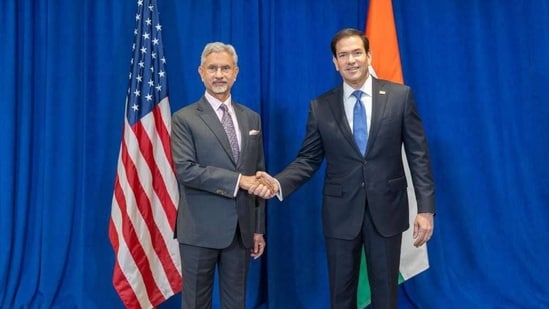
Thus, while the meetings and speeches from the iconic podium of the UNGA are guided by protocols, sideline meetings and interactions are no longer peripherals but tend to provide cosy functional workaround for diplomatic headway for restoring trust in the system and for managing real challenges through transformative initiatives. Today such talks gain added value in the context of shockwaves as President Trump’s short-sighted MAGA policies have damaged the US global image. On the other hand, countries such as China, Russia and India have moved closer to one another on several strategic issues. Furthermore, in the post-Operation Sindoor period, though Pakistan has been favoured by the US from a regional perspective, its security cooperation with Saudi Arabia and Turkey has emerged as a provocation to the prevailing atmosphere of geopolitical tension. Under these circumstances, it is plausible that sideline talks could prove to be altogether different and persuasive touchpoints to humanise relations through futuristic partnerships.
Already, external affairs minister S Jaishankar has met official representatives from V4 countries, from Nepal, Italy at the sidelines of the dialogue and discussions at the UNGA. Besides, he will hold talks with French foreign minister Jean Noel Barrot, where the Ukraine conflict, security in the Gulf region, and reforms of the United Nations Security Council might be taken up as key issues of bilateral exchange. Second, in response to the attack on Iran by the US-Israel alliance and the resulting Hormuz blockade and global energy crisis and growing atmosphere of insecurity, Jaishankar will meet Sheikh Tamim bin Hamad Al Thani of Qatar on ways to address these challenges. Third, it is expected that, in the interest of fostering new economic and regional cooperation, India will hold discussions with several Central European countries, including Poland, Hungary and Slovakia. Fourth, the G4 foreign ministers’ meeting is expected to be the most significant engagement for India. The meeting involving India, Japan, Germany and Brazil is expected to focus on reforms of the Security Council, particularly the expansion of its permanent and non-permanent membership. Along with this India will move on to hold discussions with the presidents of the European Union, as well as with the representative of Canada, Australia, Kenya and several other countries, to find modalities to protect international law and strengthen multilateral institutions.
{{/usCountry}}Already, external affairs minister S Jaishankar has met official representatives from V4 countries, from Nepal, Italy at the sidelines of the dialogue and discussions at the UNGA. Besides, he will hold talks with French foreign minister Jean Noel Barrot, where the Ukraine conflict, security in the Gulf region, and reforms of the United Nations Security Council might be taken up as key issues of bilateral exchange. Second, in response to the attack on Iran by the US-Israel alliance and the resulting Hormuz blockade and global energy crisis and growing atmosphere of insecurity, Jaishankar will meet Sheikh Tamim bin Hamad Al Thani of Qatar on ways to address these challenges. Third, it is expected that, in the interest of fostering new economic and regional cooperation, India will hold discussions with several Central European countries, including Poland, Hungary and Slovakia. Fourth, the G4 foreign ministers’ meeting is expected to be the most significant engagement for India. The meeting involving India, Japan, Germany and Brazil is expected to focus on reforms of the Security Council, particularly the expansion of its permanent and non-permanent membership. Along with this India will move on to hold discussions with the presidents of the European Union, as well as with the representative of Canada, Australia, Kenya and several other countries, to find modalities to protect international law and strengthen multilateral institutions.
{{/usCountry}}It is noteworthy that the US President has also met a coalition of Arab leaders and foreign ministers. Their discussions were centred on regional stability particularly in the backdrop of Houthi attacks posing new challenges to another vital chokepoint at Bab el-Mandeb. Also, there are reports that despite the threat, US and Iranian officials met for hours on the sidelines of UNGA.
A new development is Pakistan’s West Asian tilt as PM Shehbaz Sharif met directly with Syria’s new president. Moreover, the country is also expected to hold discussions with several countries, including Kenya, Austria, and Somalia regarding regional security and economic development. Similarly, the meeting of the Secretary-General of GCC with the newly-appointed UNGA President, Khalilur Rahman, has been reported.
Thus, it is increasingly evident that a new trend is set apace that drives the structural mechanics of high-profile summits towards a shift from dialogue to flexible multilogue. It is not constrained by strict agenda setting but implements the urge for confab for tentative solutions without throwing weight in the vortex of some complicated rigmarole. Remember that climate finance or regional stability are more macro concerns. But the compounded matrix of repercussions can’t wait for long. Hence, sideline talks are now an integral subtext of the main event.
(The views expressed are personal)
This article is authored by Gouri Sankar Nag, professor & head, department of political science, SKB University, Purulia and Mihir Dey, assistant professor, Sushil Kar College, Kolkata, WB.