The India–EU Free Trade Agreement (FTA) took nearly two decades to negotiate and will take longer than that to be significant. That gap between the moment of signature and the years of implementation that follow is where the agreement's real value will be created. Tariff schedules phase in over years. Regulatory recognition, the harder currency of modern trade, is earned over even longer horizons. The negotiation, in that sense, was only the opening move.
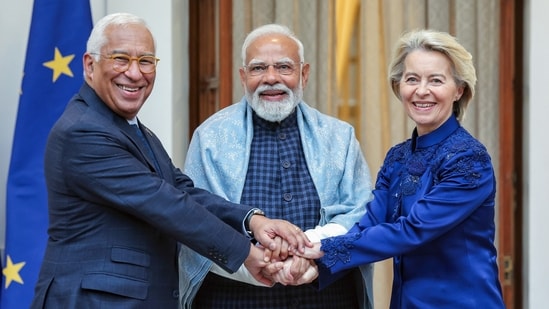
That is because modern trade agreements are no longer just about tariffs. In sectors like pharmaceuticals, chemicals, aerospace, green tech and services (the lion’s share of EU and Indian GDP), market access increasingly depends on whether regulators trust each other's approval systems, not on how low a tariff line has fallen. The competitive advantage in global trade is shifting from low cost to low risk. In that world, trusted regulatory systems, predictable standards and resilient partnerships become commercial assets in their own right. Mutual recognition is the new name of the game. The India–EU agreement is built for that reality more than most FTAs signed a decade ago were. It is Schrodinger’s agreement: a trade agreement that is not a trade agreement.
This shift in what trade agreements are for is also a shift in what they mean geopolitically. An agreement built around regulatory trust, not just tariff concessions, is one built to last and to extend. Alongside initiatives such as the India–Middle East–Europe Economic Corridor (IMEC), the FTA is part of a wider effort to connect Europe, the Gulf and India through infrastructure, investment and increasingly compatible rules. Some have described this emerging geography as an "Indo-Sphere", an economic architecture that gives both India and Europe a credible alternative to overdependence on China, without either side needing to frame it as containment. The FTA is not the culmination of this wider strategic partnership. It is the first institutional expression of it. Whether it becomes the backbone of that partnership or simply a well-negotiated agreement that never quite delivers on its promise depends on what both sides do next, not on what has already been signed.
{{/usCountry}}This shift in what trade agreements are for is also a shift in what they mean geopolitically. An agreement built around regulatory trust, not just tariff concessions, is one built to last and to extend. Alongside initiatives such as the India–Middle East–Europe Economic Corridor (IMEC), the FTA is part of a wider effort to connect Europe, the Gulf and India through infrastructure, investment and increasingly compatible rules. Some have described this emerging geography as an "Indo-Sphere", an economic architecture that gives both India and Europe a credible alternative to overdependence on China, without either side needing to frame it as containment. The FTA is not the culmination of this wider strategic partnership. It is the first institutional expression of it. Whether it becomes the backbone of that partnership or simply a well-negotiated agreement that never quite delivers on its promise depends on what both sides do next, not on what has already been signed.
{{/usCountry}}Europe negotiated because it increasingly recognises India as an indispensable strategic partner and, implicitly, as a way to reduce its own economic exposure to China. Yet scarcely had the negotiations concluded before Brussels found itself returning to another equally difficult question: How should Europe recalibrate its relationship with China? That is not a contradiction. It is simply the reality of European policymaking today, in which India competes for institutional attention amid ongoing friction with Washington and a domestic competitiveness agenda with industry undergoing an onslaught from Chinese imports.
But it means Europe may struggle to give the India relationship the sustained attention the moment calls for. A strategy aimed at reducing dependence on China is not easy to execute at the same time as a government is actively trying to stabilise its relationship with Beijing, and Brussels is attempting both at once. And India for its part is also working to improve its relationship with China, out of necessity, and thus will never accept to be ‘used’ by the EU, cynically speaking, as a counterweight in some of kind of geopolitical ménage à trois.
None of this diminishes India's strategic importance to Europe. It simply means the real work and the real opportunity now shift to regulators, technical agencies and sector ministries, who will spend years turning a signed agreement into a lived one. The EU–Japan Economic Partnership Agreement is a useful precedent: Signed in 2018 with similar fanfare, its regulatory cooperation chapters took years longer than its tariff schedule to generate commercial impact, demonstrating that regulatory cooperation requires sustained working-level attention long after the political spotlight has moved on.
The agreement also creates an opportunity for India to complete the wider architecture of the partnership, though Indian commentary so far has focused mostly on the tariff wins rather than this larger prize. The Investment Protection Agreement and the Geographical Indications Agreement were always intended to complete that architecture, not to trail behind it indefinitely, and both were meant to be concluded alongside the FTA rather than years after it.
Neither has been. That delay sits with India, just as the attention-and-bandwidth question sits with Europe, and their timely conclusion would strengthen the wider strategic partnership that the FTA was designed to enable. An investment agreement will provide much-needed stability and equal treatment for investors in both regions. The GI agreement would be an important first step in boosting farmers’ incomes and improving trade in agricultural products, a sector largely excluded from the FTA.
There is a similar opening on standards: EU sustainability disclosure rules and carbon border adjustments are evolving on their own track, and Indian pharma and auto-component exporters that get ahead of them can turn compliance into a genuine competitive edge rather than a cost of entry. The same holds for the EU’s deforestation rules now entering into force and impacting on Indian exporters.
Implementation now sits with a different set of institutions than negotiation did — health, digital policy, standards, and industrial ministries often in the EU at national level, and in India at sub-Federal level - are now taking over the coordination work that trade negotiators committed during the talks, and it is in this well-managed hand over that the agreement's promise will actually be realised.
Trade agreements remove (some) barriers. They do not, by themselves, build strategic partnerships. That takes sustained political attention and working-level cooperation among regulators, ministries, and businesses, maintained long after the signing ceremony is forgotten. IMEC may provide the physical corridors. The FTA provides rules. An investment agreement can provide long-term confidence. Together, they begin to create the architecture of a partnership extending well beyond trade.
The India–EU FTA has thus given both sides something more valuable than improved market access. But whether it becomes the foundation of a genuine strategic partnership or simply another well-negotiated agreement whose broader promise fades over time depends on what both sides choose to build in the next 20 years.
(The views expressed are personal)
This article is authored by John Clarke, former director, international relations, European Commission and head, EU Delegation to the WTO and UN & Suryaprabha Sadasivan, managing principal, Chase Advisors.