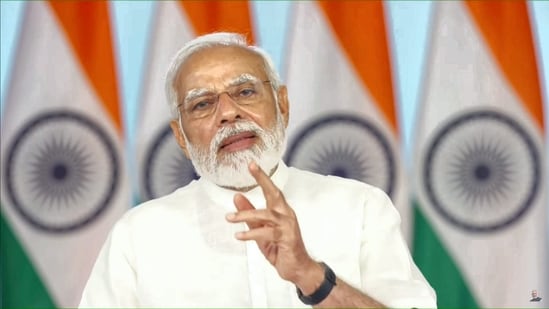
Prime Minister (PM) Narendra Modi’s four-day visit to Central Asia, beginning August 29, 2026, is a timely initiative to calibrate India’s Eurasian interests at a time of intensifying geopolitical competition. From August 29–30, he will undertake a bilateral state visit to Uzbekistan at the invitation of President Shavkat Mirziyoyev. This will be his fourth trip to Uzbekistan and second State visit after 2015. He will then proceed to Bishkek, Kyrgyzstan, from August 31 to September 1 to attend the 26th Shanghai Cooperation Organisation (SCO) Summit, which coincides with the organisation’s 25th anniversary. A bilateral meeting with Russian President Vladimir Putin is expected on the sidelines. The itinerary, combining focused bilateral diplomacy with high-level multilateral engagement, underscores New Delhi’s determination to mark its presence in a region it regards as part of its extended neighbourhood and natural partner with millenia-old civilisational connections.
Central Asia occupies a pivotal place in India’s strategic calculus. Landlocked yet resource-rich, the five republics sit at the crossroads of South Asia, West Asia, Russia and China. They possess substantial reserves of oil, natural gas, uranium and increasingly sought-after critical minerals and rare earths. For an energy-importing India pursuing industrial modernisation and supply-chain resilience, these resources offer valuable diversification. The region also shares India’s concerns over terrorism, extremism and instability emanating from the Af-Pak region. Yet geography has long constrained engagement. Pakistan blocks direct overland access, forcing reliance on longer multimodal connectivity routes via Iran’s Chabahar Port and the International North-South Transport Corridor (INSTC).
China has gradually become the dominant economic actor, while Russia retains residual security influence even as the Ukraine conflict strains its bandwidth. Turkey, the US and European partners have expanded their own multi-vector outreach. The Central Asian States themselves pursue balanced foreign policies, seeking partners that do not come with hegemonic baggage. India fits this preference. It carries no historical threat perception and enjoys civilisational affinity.
India projects itself as a developmental partner rather than a great-power rival. Modi’s 2015 tour of all five republics, the institutionalisation of the India-Central Asia Dialogue and Summit, and full SCO membership since 2017 have steadily elevated the relationship. This latest visit aims to convert political goodwill into more tangible strategic and economic outcomes.
{{/usCountry}}India projects itself as a developmental partner rather than a great-power rival. Modi’s 2015 tour of all five republics, the institutionalisation of the India-Central Asia Dialogue and Summit, and full SCO membership since 2017 have steadily elevated the relationship. This latest visit aims to convert political goodwill into more tangible strategic and economic outcomes.
{{/usCountry}}The bilateral leg in Tashkent carries particular weight. Uzbekistan is the region’s most populous country and has emerged as one of India’s most proactive partners. Delegation-level talks with President Mirziyoyev are expected to review and expand cooperation across trade and investment, defence, digital connectivity, energy, critical minerals, education and people-to-people ties. The two sides will seek to align India’s Viksit Bharat 2047 vision with Uzbekistan’s national development strategy to 2030. Bilateral trade currently hovers around the $1–1.3 billion mark—respectable growth but still well below potential. Recent intergovernmental discussions have already identified pharmaceuticals, IT and digital public infrastructure, mining, agriculture, and health care as priority sectors, with ambitions to address non-tariff barriers and roughly double trade volumes. Defence cooperation, including joint exercises such as DUSTLIK, and educational linkages (thousands of Indian students and Indian university campuses) add further depth. Symbolic visits to the Shastri Memorial and the Mahatma Gandhi Centre will reinforce historical and cultural bonds. Strengthening this partnership consolidates India’s presence in a key Central Asian State that can serve as a gateway for wider regional engagement.
The SCO Summit in Bishkek provides a multilateral platform. Founded to combat the evils of terrorism, separatism and extremism, the organisation remains relevant amid continuing regional security challenges. India will highlight its priorities of security, connectivity and opportunity. The summit offers structured interaction with China, Russia, Iran, Belarus and the Central Asian members simultaneously. SCO provides a vital platform for New Delhi for advancing counter-terrorism cooperation, promoting alternative connectivity frameworks and safeguarding its interests without compromising strategic autonomy. The expected meeting with President Putin allows a comprehensive review of the India-Russia relationship at a moment of shifting global alignments. Participation in related cultural events, such as the opening of the Sixth World Nomad Games, adds a soft-power dimension.
Beyond the immediate itinerary, the visit advances several enduring Indian interests. Energy and critical-mineral security remain central: reliable access to uranium and other resources supports both civilian nuclear ambitions and defence-industrial requirements. Connectivity progress can gradually raise the low trade baseline and integrate India more firmly into Eurasian logistics networks. Enhanced intelligence sharing and defence collaboration strengthen India’s western security flank. Sustained high-level presence also helps balance China’s economic weight and supports Central Asian preferences for diversified partnerships. India’s comparative advantages—digital public infrastructure, pharmaceuticals, education, skill development and capacity-building—allow it to contribute constructively without the scale of Chinese infrastructure financing.
Challenges, however, are real and persistent. Physical distance and limited connectivity continue to constrain commerce. Political goodwill has not yet translated into the volume of trade and investment that the relationship’s potential warrants. Institutional mechanisms, including the promised India-Central Asia Summit process, require more consistent follow-through. Competition from better-resourced actors remains intense. Success will, therefore, hinge less on the symbolism of a single visit and more on sustained bureaucratic and commercial implementation in the months that follow.
In the broader context of global flux, Modi’s Central Asia visit is a timely reaffirmation of India’s multi-aligned foreign policy. It signals that New Delhi will neither neglect its extended neighbourhood nor allow great-power competition to freeze it out of a region of lasting strategic importance. By combining bilateral deepening with Uzbekistan and pragmatic multilateral engagement through the SCO, India seeks to convert historical affinity and political capital into durable economic and security partnerships. If followed by concrete progress on connectivity, minerals, trade and institutional mechanisms, the visit could mark a meaningful step toward embedding India more firmly in the emerging Eurasian order.
(The views expressed are personal)
This article is authored by Pravesh Kumar Gupta, associate fellow, Vivekananda International Foundation, New Delhi.