Sins and omissions as they say, always come home to roost. After doing nothing at all about a promised, signed and agreed upon pipeline for 15 years, Pakistan may have to pay billions to Iran in damages. Or so the Asia Nikkei report says. That’s not hard to believe. Teheran has a solid case if it takes this up at the International Arbitration Court as threatened, given that the project was signed 18 years ago, and Pakistan has been sitting on its hands. Apart from that, it has taken a good deal from Islamabad, in terms of a stream of terrorist attacks from Pakistani soil. So, the threat is not just about the pipeline. Iran is clearly hardening its stance.
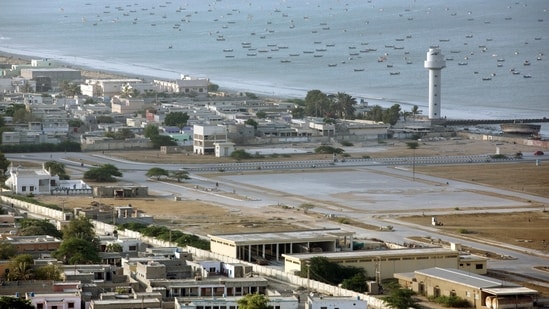
The story of the pipeline is fascinating in its twists and turns. The 1900 km pipeline was to start in Assaluyeh in the rich South Pars gas fields in Iran and move via Gwadar port to Nawabshah in Pakistan, to bring one billion cubic feet per day of gas to energy starved Pakistan. And beyond. In 2008, it originated as an Iran-Pakistan-India pipeline proposal. That soon bit the dust ostensibly on price issues. But the Kargil experience, the Mumbai attacks and the sheer instability that was Pakistan deterred India. Iran and Pakistan decided to go ahead anyway, and Tehran began its section of 900 km and completed it by 2011, while Pakistan was to do so by 2014. It didn’t even start. The then petroleum minister Shahid Khaqan Abbasi said Pakistan was finding it difficult to get banks and contractors to back the project, due to sanctions. Yet when in 2016, all sanctions were lifted after Tehran agreed to suspend its nuclear activities under the JCPOA (Joint Comprehensive Plan of Action), Islamabad still dithered.
The reasons were four-fold. First, as South Block had long concluded, Islamabad were apprehensive that the Saudis would frown on any such enterprise. It was not just about generous loans from Riyadh. Pakistani political big wigs are accustomed to sheltering with the Saudis or allied states. No one would ever dream of sheltering in Tehran. The second issue was the sheer money involved in massive and open smuggling across the border. That has been estimated at $1 bn worth of natural gas coming into Pakistan yearly. The pay off’s on that for border forces would be enormous, and several officers of the Frontier Corps have faced dismissal in not so frequent ‘clean-up’s’ though the political dons involved in the trade remain untouched. Then is the fact that this trade doesn’t involve the exit of hardly available foreign exchange, which would make financial planners unwilling to end it (regardless of the loss to the exchequer.) A third reason is that smuggling is the mainstay of Baloch tribals. An intelligence report noted that some 2.4 mn people depend on this, and an abrupt end would worsen an already explosive situation. The report, leaked to local media, named over 200 individuals involved including government and security officials, indicating widespread corruption at border checkpoints. The fourth and final reason is ostensibly the wrath of the United States (US), evident enough in frequent warnings from White House officials at any mention of a pipeline, with the most recent seeing also assurances from the State Department that it would assist Pakistan in meeting its energy needs. But as Donald Lu US assistant secretary of state for South and Central Asia, said, Islamabad had not requested a sanctions waiver to conduct gas trade with Iran at any time. Yet in February, Cabinet Committee gave the green light for the pipeline to go ahead, apparently finding it cheaper to go ahead rather than pay damages. Yet a few months down the line, things are back to square one. As the US threatened sanctions, a bargain may have been made. In July an International Monetary Fund disbursal came through.
{{/usCountry}}The reasons were four-fold. First, as South Block had long concluded, Islamabad were apprehensive that the Saudis would frown on any such enterprise. It was not just about generous loans from Riyadh. Pakistani political big wigs are accustomed to sheltering with the Saudis or allied states. No one would ever dream of sheltering in Tehran. The second issue was the sheer money involved in massive and open smuggling across the border. That has been estimated at $1 bn worth of natural gas coming into Pakistan yearly. The pay off’s on that for border forces would be enormous, and several officers of the Frontier Corps have faced dismissal in not so frequent ‘clean-up’s’ though the political dons involved in the trade remain untouched. Then is the fact that this trade doesn’t involve the exit of hardly available foreign exchange, which would make financial planners unwilling to end it (regardless of the loss to the exchequer.) A third reason is that smuggling is the mainstay of Baloch tribals. An intelligence report noted that some 2.4 mn people depend on this, and an abrupt end would worsen an already explosive situation. The report, leaked to local media, named over 200 individuals involved including government and security officials, indicating widespread corruption at border checkpoints. The fourth and final reason is ostensibly the wrath of the United States (US), evident enough in frequent warnings from White House officials at any mention of a pipeline, with the most recent seeing also assurances from the State Department that it would assist Pakistan in meeting its energy needs. But as Donald Lu US assistant secretary of state for South and Central Asia, said, Islamabad had not requested a sanctions waiver to conduct gas trade with Iran at any time. Yet in February, Cabinet Committee gave the green light for the pipeline to go ahead, apparently finding it cheaper to go ahead rather than pay damages. Yet a few months down the line, things are back to square one. As the US threatened sanctions, a bargain may have been made. In July an International Monetary Fund disbursal came through.
{{/usCountry}}The question of what else Pakistan has been promised to lay off the pipeline has yet to be seen. The International Monetary Fund disbursal will hardly even cover even a part of the threatened costs in damages of $18 bn. Meanwhile, the very fact that Iran has chosen to up the ante indicates the slide in bilateral relations, as apparent in the recent air and missile strikes by the two on each other’s territory. Though there is much reference to ‘brotherly Islamic countries’, the truth of the matter is that Pakistan has been supporting attacks on its neighbour, in just the same way that it has with all the others neighbours. In Iran it uses the Jaish ul Adl together with the (Pakistan version) of the Islamic State. Some of this activity also serves the intelligence requirements of the US is a given, which Teheran could not but be aware of. That Israeli intelligence also used Pakistani terrorists to get ingress into Iran is also now out in the open.
The crux of it all is this. Pakistan can no longer afford to follow an ‘independent’ foreign policy, sanctions or no sanctions. Its bitter internal divisions, and terrorist based external policies have landed it into a mess, where it faces the threat of paying Iran some $18 billion in damages, which it can ill afford. Iran knows this, and chooses to turn on the screws to get Pakistan to back off. To get out of this trap, Islamabad has to fall at the feet of the US or China, which is has its own costs in terms of what each would like to squeeze out of Islamabad. Unlike Iran or Russia, or even Turkey, Pakistan can’t afford to choose one or other side. Playing all sides in the hope that is simply unsustainable, however good Islamabad may have been in playing a bad hand all these years. For India, the choice of staying out of a bad bargain proved to be the right one, given the sheer impossibility of the pipeline ever being laid anytime in the near future. Quite simply, no one’s going to fund it. Though Pakistan is likely to take up the case again, so far it remains a pipe dream.
This article is authored by Tara Kartha, director (R&A), Centre for Land Warfare Studies, New Delhi.