
 E-Paper



What Adam Smith would say about the India-UK trade deal
This article is authored by Sir Anton Muscatelli, distinguished honorary professor, Adam Smith Business School, University of Glasgow.

 Prefer HTon Google


This year sees the 250th anniversary of the publication of the Wealth of Nations, the book which made Adam Smith famous amongst his contemporaries, and rightly has seen him anointed as the father of modern economics. Prior to Smith’s towering contribution, mercantilism held sway: The thought that nations could grow wealthier not through mutually beneficial open trade but by establishing a dominance in trade which led to the accumulation of trade surpluses. Adam Smith instead made an argument that lowering trade barriers would ultimately benefit consumers and producers in all countries, through a process of international specialisation. Adam Smith’s thinking lies at the heart of the post-1945 trend to foster world trade, which has sustained growth in the world economy and ultimately has lifted many billions around the world out of poverty.
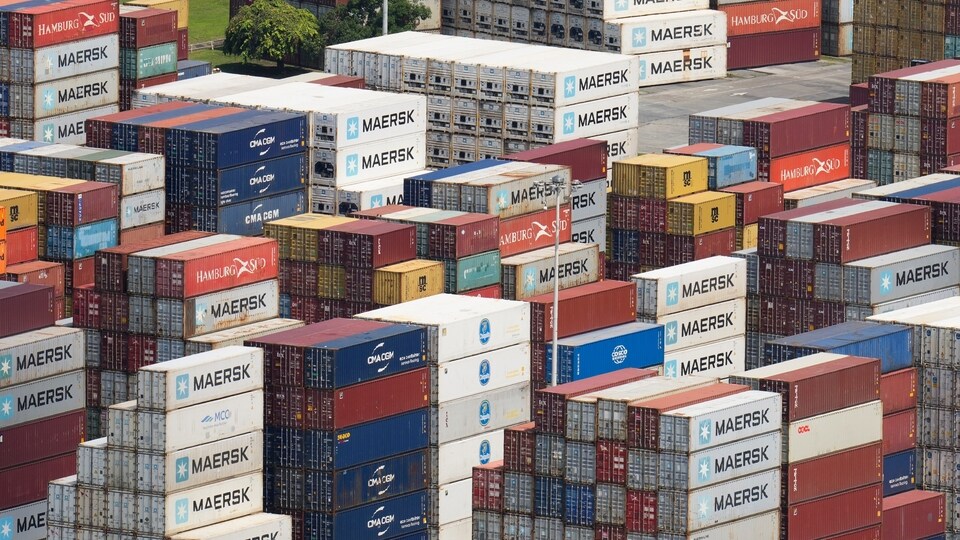
After three years of negotiations, the UK-India Free Trade Agreement (FTA) was signed in July 2025 and is expected to double bilateral trade in goods and services between the two countries by 2030. The deal provides duty-free access for 99% of India’s exports to the UK, covering almost 100% of trade value. The deal is slightly asymmetric around timing, with UK tariff-free access limited to 28% of UK exports, rising to 85% within a decade. However, it is still seen as mutually beneficial because key UK sectors like financial and professional services will benefit from market access and non-discriminatory treatment in procurement. Key UK food and drink sectors like salmon, whisky and lamb exporters will also benefit. Both countries have also committed to cooperation on FinTech, financial stability, and mutual recognition of professional qualifications.
The deal has been broadly welcomed in India, though with some nuance around specific sectors. The geopolitical context matters. With the US increasing tariffs on India’s exports as part of its protectionist drive, India has been pursuing an energetic drive to increase its bilateral free-trade agreements. The UK deal was strategically timely given the US’s trade policy.
As would be expected, individual sectors which feel they might be negatively affected in India responded less positively. Indian spirits producers of Indian Made Foreign Liquor (IMFL) producers of whisky were the most concerned with the lowering of tariffs on UK whisky exports. Other drink producers in India were less concerned as they see whisky consumption in India as complementary to domestic production of beer and wine. But this is exactly as Adam Smith characterised it in his Wealth of Nations: Direct competitors for import-sensitive sectors which are protected by tariffs will complain about tariff reductions, but trade liberalisation will benefit consumers and will benefit the Indian economy as a whole.
Indeed, the sectors in India with most to gain are clearly supportive. These cover both micro, small and medium enterprises (MSMEs) in India as well as larger enterprises in key high-growth sectors for India (engineering, IT services, chemicals and biopharmaceuticals). The trade deal also evens out the playing field with other countries in the region: until the trade deal, Indian knitwear exporters had faced a 12% tariff disadvantage relative to Bangladesh and Pakistan, which already had duty-free access.
What is also very positive about the deal is what it may do to human capital development and broader economic linkages between the UK and India. Around 75,000 Indian workers will benefit from a Double Contribution Convention, exempting them and their employers from National Insurance contributions for three years when temporarily working in the UK. The FTA also directly addresses science and innovation, promoting joint R&D, researcher exchanges, and institutional partnerships in areas including digital innovation, clean energy, agriculture, and health care — mirroring India’s National Education Policy’s agenda.
Further, although it’s not a formal part of the FTA, the two Governments have published India-UK Vision 2035 — a strategic document that goes considerably further as a political commitment.
Vision 2035 includes an education and skills partnership to nurture the next generation of global talent, deepening transnational education collaborations between UK and Indian universities, including the establishment of campuses of leading universities in each other’s countries. It also involves exciting commitments to joint research and innovation and a mutual recognition of qualifications, alongside dual degree programmes.
The delivery of some of the promises of Vision 2035 is potentially even more exciting and impactful than the FTA itself: Providing the basis for a longer-term collaboration between the UK and India which will generate domestic productivity growth. This is something Adam Smith also foresaw: the potential for trade to be an important dynamic engine for long-term economic growth, beyond the narrow static gains from trade.
This article is authored by Sir Anton Muscatelli, distinguished honorary professor, Adam Smith Business School, University of Glasgow.


