In India, more men in their 20s appear to be experiencing receding hairlines and thinning crowns, according to recent studies.
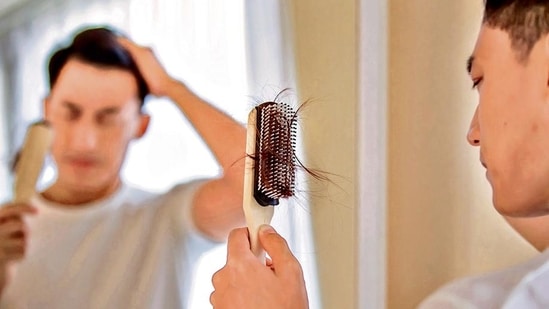
Traya Health, an Indian health-tech company, analysed 5,61,960 men across India, estimating the median age of men experiencing hair loss at 29, with 76.4% of those studied under 35. Man Matters’ Hairfall Index, based on 7,04,152 hair-loss consultations over the year through August 2026, found that two in three men consulting the platform were in their 20s, while nearly 87% were under 35. Its data put the median age at around 26.
Doctors and hair care industry experts say the trend is evident in clinical practice, too. “We are increasingly seeing young men, even around 18–20 years of age, presenting with hair loss and thinning that we traditionally associated with men in their 40s and 50s,” says hair expert Dr Ameesha Mahajan, director of Eden Skin Clinic, Amritsar.
“Hair loss is not arriving earlier because genetics changed, but because the body is under strain from a much younger age. The hair is just the first place it shows,” says Saloni Anand, co-founder of Traya Health. She cites long working hours, irregular eating, poor sleep, chronic stress and inadequate nutrition as contributing factors.
The emotional side of hair loss
Hair loss can affect confidence and self-esteem as well as appearance. Dr Munia Bhattacharya, senior consultant, clinical psychology, Marengo Asia Hospitals, Gurugram, says, “Hair loss can be genuinely upsetting. But when the preoccupation is difficult to switch off or starts interfering with dating, work, relationships or everyday life, it’s concerning.”
She advises men to keep investing in their work, relationships, friendships, interests and fitness while deciding how to address hair loss. “Hair can absolutely be part of your identity. It just shouldn’t become the only way you measure yourself,” she says.
What causes early hair loss in men?
{{/usCountry}}She advises men to keep investing in their work, relationships, friendships, interests and fitness while deciding how to address hair loss. “Hair can absolutely be part of your identity. It just shouldn’t become the only way you measure yourself,” she says.
What causes early hair loss in men?
{{/usCountry}}Dr Mahajan notes:
- Genetics and hormones: Androgenetic alopecia, the most common cause, is linked to genetic predisposition and hair follicles’ sensitivity to dihydrotestosterone (DHT), a hormone that gradually shrinks them
- Disrupted sleep: Irregular sleep patterns and circadian rhythms may affect hair health
- Stress: High stress levels can contribute to hair shedding
- Smoking: Smoking may negatively affect hair health
- Poor diet and nutritional deficiencies: Inadequate nutrition and a slow metabolism may contribute to hair loss
- Underlying health conditions: Thyroid disorders and scalp conditions can trigger hair loss
- Rapid weight loss or recent illness: Both can cause significant shedding
- Certain medications: Some medicines can trigger hair loss and may require medical review
Hair loss patterns
Identifying hair fall pattern and likely cause helps determine its treatment, says Dr Priyanka Hemrajani, senior consultant, dermatology, Marengo Asia Hospitals. Common types include:
- Androgenetic alopecia: Also called male-pattern hair loss, it is linked to genes and hormones and causes a receding hairline or thinning crown as follicles shrink
- Telogen effluvium: This causes sudden, diffuse shedding, often months after a fever, infection, surgery, severe stress or rapid weight loss
- Nutritional hair loss: Deficiencies in iron, vitamin D, zinc, vitamin B12 or protein can contribute to shedding
- Alopecia areata: An autoimmune condition that causes smooth, well-defined patches of hair loss and may also affect the eyebrows, eyelashes and other body hair
- Traction alopecia: Repeated pulling from tight hairstyles can damage follicles. Continued traction may cause permanent hair loss
Treatment and procedures that can help
Early hair loss can often be managed once its cause and severity are identified. Starting treatment early improves the chances of controlling it, says Dr Rashmi Ranjan, consultant, dermatology, Yatharth Hospital, Noida. Options include:
- Minoxidil: A topical treatment that stimulates hair follicles, helping slow hair loss and encourage regrowth
- Prescription tablets: Certain medicines reduce DHT’s effects and can slow male-pattern hair loss. They should be taken only under medical supervision
- PRP therapy: Uses a person’s own blood plasma, injected into the scalp, to stimulate hair follicles
- Low-level laser therapy: Uses low-level light to stimulate follicles and support hair growth
- Hair transplant: In advanced cases, healthy follicles can be moved from one part of the scalp to thinning areas
It is advisable to consult a doctor before trying any hair loss treatment.