
 E-Paper



110mn informal sector workers in India: Data
Calculation puts the value added and employment share of the informal sector outside agriculture at 6% and 19% respectively

 Prefer HTon Google


There were around 65 million informal or unincorporated non-agricultural enterprises in India in 2022-23, which employed about 110 million workers and created Gross Value Added (GVA) worth ₹15.4 lakh crore in nominal terms, a government report said on Friday.
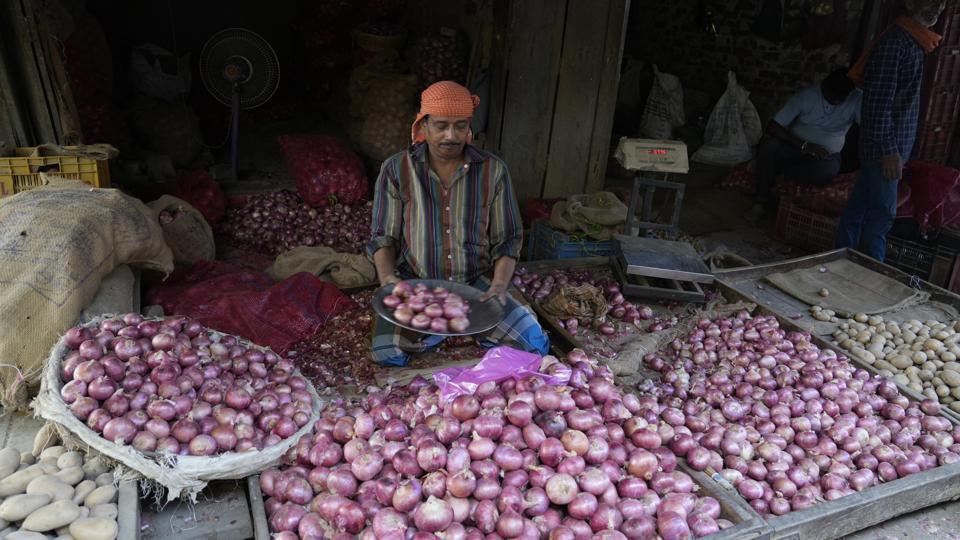
A back-of-the-envelope calculation shows that this puts the value added and employment share of the informal sector outside agriculture at 6% and 19% respectively. When read with the 45% employment and 18% income share of agriculture in the overall GVA, it means that around two-thirds of workers account for just about one-fourth of India’s GVA. While these numbers underline the entrenched inequality in the Indian economy, the publication of these numbers will give a big boost to the task of updating a lot of statistical series including the overall GDP numbers.
The National Sample Survey Office (NSSO) released a fact sheet on the results of the first and second Annual Survey of Unincorporated Sector Enterprises (ASUSE) for 2021-22 and 2022-23. While the full report and unit-level data from the surveys has not been released, even the preliminary results fill a huge data gap about the importance of informal sector enterprises in the Indian economy.
“Broadly, this unincorporated sector also covers the informal sector enterprises. The necessity for comprehensive data pertaining to unincorporated sector including informal sector for planning and policy formulations needs no emphasis,” the fact sheet says. While the ASUSE surveys include activities like manufacturing, trade and other services, they do not include construction.
The first ASUSE survey was originally planned in 2020-21 but got delayed because of the pandemic. It was started from April 2021 but part of the survey’s period coincided with the second wave of Covid-19 which peaked in May 2021. The first quarter of the 2021-22 ASUSE results show a much lower employment and value creation in informal sector than the later three which supports the understanding that the pandemic was particularly harsh on informal enterprises.
The second round of the survey was conducted between October 2022 and September 2023 and fact sheet which has been published on Friday has summary findings of both these surveys.
According to the 2022-23 ASUSE results, there were 35.6 and 29.4 million unincorporated enterprises in rural and urban India. They employed 52.3 and 57.2 million workers and created a GVA of ₹5.4 lakh crore and 10 lakh crore in nominal terms. The ASUSE report also gives a sector-wise break-up of these enterprises between manufacturing, trade and other services. The respective share of these three sectors in employment and GVA in the informal sector works out to 28%, 36% and 36% and 23%, 36% and 40%.
The survey also shows that while most informal sector enterprises in India produce primarily for the market, only 15% of them hired even one worker on a regular basis. In rural areas, this number was just 8%, which shows that these are mostly subsistence enterprises. The GVA per worker and per establishment was ₹1.4 lakh and ₹2.4 lakh in nominal terms in 2022-23, which works to around ₹20,000 and ₹12,000 per month respectively. Even in manufacturing, the share of informal sector enterprises which had been one hired worker on a regular basis was just 12.7%; with the rural and urban numbers being 7% and 21.5%.
These statistical insights aside, what is the larger takeaway from the ASUSE numbers? The most important insight from these numbers is the importance of informal sector outside agriculture in the Indian economy. The ASUSE report puts the nominal GVA of informal sector enterprises between October 2022 and September 2023 at ₹15.4 lakh crore. This is 6% of India’s overall GVA during this period. The total workforce employed in the informal sector during this period is about 110 million which is almost 20% of India’s projected workforce of 567 million in the 2022-23 Periodic Labour Force Survey (PLFS) which was conducted between July 2022 and June 2023.
When read with the 18% and 45% share of agriculture in overall GVA and employment, this shows that almost two-thirds of India’s workforce had a share of just one fourth in India’s overall GVA. The informal sector share from ASUSE also shows that inequality and low incomes are problems which extend outside India’s agriculture and construction sector, both of which are known to provide a lot of low-income employment in the Indian economy.
“Lack of data on informal sector for more than a decade has had a crippling impact on the credibility of all economic data beginning with GDP numbers. It is welcome that we finally have some data to fill this vacuum,” said Himanshu, associate professor of economics at Jawaharlal Nehru University.
“The government should release the full report along with the unit level data in a transparent manner as soon as possible and undertake wide and open-minded consultations before updating other statistical series to restore the credibility of India’s statistical system which was once among the best in the world,” he added.
Auhona Mukherjee contributed to this story


