
 E-Paper



16 Maoists killed, 2 jawans injured in Chhattisgarh: Police
Bastar, Dantewada, Bijapur, Kanker, Narayanpur, Kondagaon, and Sukma in Chhattisgarh’s Bastar division are known as the epicentre of Maoist insurgency

 Prefer HTon Google


Raipur: At least 16 Maoists were killed and two district reserve guard (DRG) officers were injured on Saturday in an exchange of fire with security forces in Chhattisgarh’s Sukma district, a police officer said.
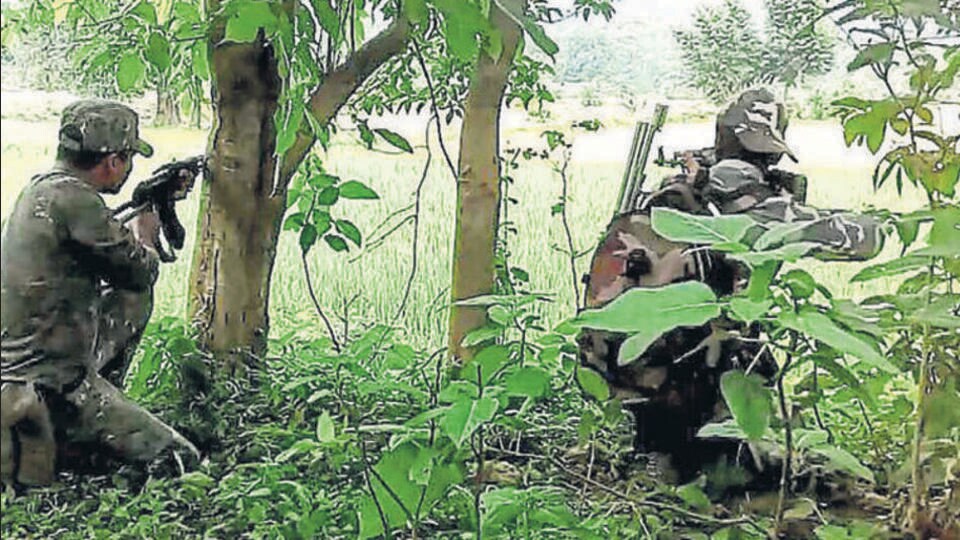
“16 Maoists have been killed. Search operation is going on and more details are awaited. AK 47, INSAS (Indian Small Arms System) and other arms were recovered from the spot even as the identity of those killed was to be ascertained,” inspector general of police, Bastar range, Sunderaj P said.
Over two dozen Maoists and a police personnel were killed in twin gunbattles in Chhattisgarh’s Bijapur and Kanker districts on Thursday. Over 116 Maoists have been neutralised in the state this year amid intensified operations against Left-Wing Extremism (LWE). In 2024, 219 Maoists were killed in Chhattisgarh, compared to 22 in 2023 and 30 in 2022.
Also Read: Maoist with ₹25 lakh bounty among three killed in Chhattisgarh
Union home minister Amit Shah told Parliament last week that the Narendra Modi-led government is adopting a ruthless approach against Maoists and a zero-tolerance policy towards ultras who have not surrendered, despite being offered various incentives, from surrender to inclusion. He reiterated that India will be Naxal-free by March 31, 2026.
Officials last week said 113 Maoists have been killed this year and 104 have been arrested across the country. Another 164 have surrendered, according to Union home ministry.
Bastar, Dantewada, Bijapur, Kanker, Narayanpur, Kondagaon, and Sukma in Chhattisgarh’s Bastar division are known as the epicentre of Maoist insurgency. Thousands of forces have been deployed there for the anti-Maoist operations in what is known as the “Red Corridor” to push back rebels, take over their hideouts in forests and cripple their fortifications.
Also Read: 30 Maoists killed in twin Chhattisgarh encounters
A broader government strategy against the Maoists includes the construction of roads and developmental projects in Left-wing insurgency-hit areas. Modi was scheduled to visit Chhattisgarh on March 30 to launch infrastructure projects and meet Maoist violence-hit people.
Security forces have created 17 new camps in previously core Maoist-controlled areas including a 4,000 square kilometre forested area straddling Chhattisgarh and Maharashtra—Abhujmad, which remains unmapped.
Difficult terrain, lack of infrastructure, and Maoist fortification have frustrated attempts to survey the region since 2017. Bastar is referred to as the last Maoist bastion because of an administrative vacuum. Top Maoists including the politburo and the central committee members are believed to be holed up there.
-kW0H-U20214218012MgB-250x250%40HT-Web.jpg)


