On Tuesday, a special court in Ahmedabad convicted 49 accused of the July 26, 2008, terror strike on Ahmedabad which left 56 persons dead and 240 injured with 21 improvised explosive devices rocking the city in a span of 70 minutes. Three days later, on July 29, 2008, a total of 23 bombs were defused in diamond processing and residential areas of Surat.
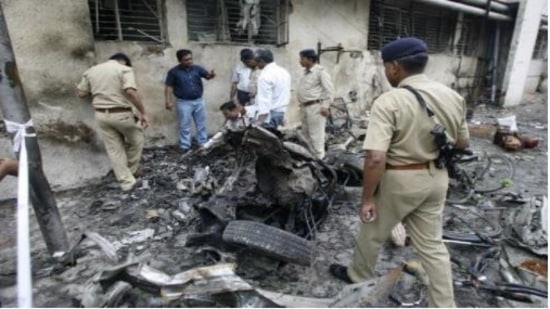
The Ahmedabad blasts were very significant as for the first time the Indian Mujahideen terrorist group had brutally targeted the trauma centre of civil hospital, where the bomb injured were being brought in, by an IED laden car. The maximum number of casualties occurred at the hospital as those innocents who had come to donate blood to blast victims were also targeted by the murderous terrorists. The Ahmedabad terror strike was Indian Mujahideen revenge for the 2002 riots in Gujarat.
Given that the Indian Mujahideen group had activated strike against India in 2005 and killed hundreds, it was the investigations done by Gujarat police and the Intelligence Bureau that for the first time unearthed the group behind the strike. At that time, DGP Gujarat was P C Pande, Joint Commissioner (Crime), who carried out the investigation, now DGP Gujarat Ashish Bhatia, then Baroda Police commissioner and now Delhi Police Commissioner Rakesh Asthana unearthed the Indian Mujahideen group for the first time. The police had the full backing of then Gujarat Chief Minister Narendra Modi and then State Home Minister Amit Shah.
The Ahmedabad strike was singular in several respects. The Ahmedabad IEDs were assembled by the Azamgarh module of Indian Mujahideen, while the Surat IEDs (which fortunately did not work) were made by Riyaz and Iqbal Bhatkal group. The ammonium nitrate explosive was sourced from Karnataka with the jihadists brainwashed by ex-SIMI leaders like Safdar Nagori and Sarai Meer Mufti Abu Bashir. The case was solved after Mufti Abu Bashir was picked up by the Gujarat Police and Intelligence Bureau from Sarai Meer on August 16, 2008. The ideologue was brought into Gujarat for questioning by a special aircraft chartered by the state from Lucknow.
{{/usCountry}}The Ahmedabad strike was singular in several respects. The Ahmedabad IEDs were assembled by the Azamgarh module of Indian Mujahideen, while the Surat IEDs (which fortunately did not work) were made by Riyaz and Iqbal Bhatkal group. The ammonium nitrate explosive was sourced from Karnataka with the jihadists brainwashed by ex-SIMI leaders like Safdar Nagori and Sarai Meer Mufti Abu Bashir. The case was solved after Mufti Abu Bashir was picked up by the Gujarat Police and Intelligence Bureau from Sarai Meer on August 16, 2008. The ideologue was brought into Gujarat for questioning by a special aircraft chartered by the state from Lucknow.
{{/usCountry}}The case was solved after one of the cars used in the blast had a GJ-6 or Baroda fake registration and the newspaper used to wrap the Surat IEDs was published in Baroda. It was investigations conducted in Baroda that led to arrest of persons, which led to the unravelling of the case. The Ahmedabad blasts investigations not only led to pin-pointing of real terrorists behind the bombing but also led to cracking up of the entire Azamgarh, Delhi, Mumbai and Bhatkal modules of the group which had the support of jihadist groups across the border. Batla House encounter in which the Azamgarh module was hit by Delhi Police special team was a direct result of Ahmedabad blast investigations.