The Delhi high court on Wednesday issued notice in an appeal filed by two persons against trial court’s order convicting and awarding them life imprisonment in connection with the murder of Intelligence Bureau (IB) official Ankit Sharma during the Northeast Delhi riots in 2020.
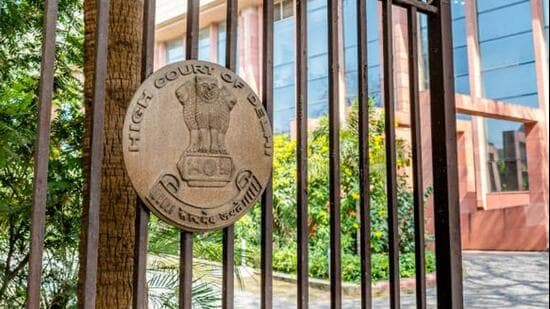
A bench of justices Prathiba M Singh and Vikas Mahajan sought Delhi Police’s response in an appeal filed by Nazim and Kasim against trial court’s orders and application for seeking suspension of the sentence.
During the hearing, Delhi Police’s counsel, Rajat Nair, accepted notice and informed the court that the police were also in the process of filing an appeal against the order, as the trial court had acquitted six accused.
The trial court on July 13 convicted former Aam Aadmi Party (AAP) councillor Tahir Hussain and four others for Sharma’s murder, holding that Hussain, along with an “armed” mob, had carried out a “savage” and “relentless” attack. It had however acquitted six other accused.
On July 31, the trial court sentenced Hussain, along with four others including Nazim and Kasim to life, ruling that while the crime was “horrendous” and “sickening”, the prosecution had failed to prove that the convicts were beyond the possibility of reform.
The court rejected the Delhi Police’s plea for capital punishment. The court observed that although the murder fell within the “rarest of the rare” category on account of its brutality, the prosecution had not established that the convicts’ continued existence in prison “would pose a menace to society”.
Emphasising the severity of the crime, the court held, “The crime was brutal, with a murderous mob baying for the blood of the victim… the manner and the utmost brutality with which the victim was killed was done solely on account of religion. He was sucked in by a murderous mob and strapped like an animal… and as if the hatred had still not been satiated, the dead body was thereafter thrown into the nala.”
Nazim and Kasim then moved the high court against the verdict.
In their appeal, they argued that no test identification parade was conducted and the conviction was based on the testimony of the sole witness, which was not corroborated.
The matter will be heard on December 2.