The Supreme Court has hailed a 2025 judgment authored by Justice JB Pardiwala as the “last nail in the coffin” of its 1987 ruling that it said has been repeatedly invoked to secure condonation of delay, warning that an overly liberal approach to limitation has kept the country “driven back” for decades by allowing litigation to continue despite inordinate delays.
Bench criticises repeated reliance on 1987 Katiji ruling
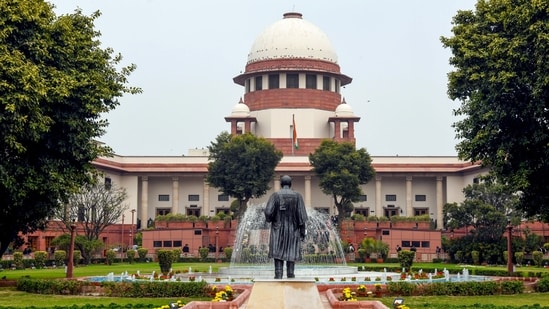
A bench of justices Dipankar Datta and Sheel Nagu on Friday criticised the Supreme Court’s decision in Collector, Land Acquisition, Anantnag Vs Mst Katiji, which condoned a delay of just four days in filing an appeal, saying the judgment had since been treated as a “panacea” for virtually every application seeking condonation of delay.
“Nobody considers what Justice Venkatachaliah wrote in 1994,” remarked Justice Datta, referring to a subsequent judgment by former Chief Justice of India MN Venkatachaliah that cautioned against allowing bureaucratic indifference to defeat the government’s own legal interests. “And the last nail in the coffin is Justice Pardiwala’s judgment in the Shivamma case,” he added.
Justice Datta’s remarks underscore a judicial push towards stricter enforcement of limitation periods, with the court signalling that the need to do substantial justice cannot become a licence for litigants, including government bodies, to disregard deadlines and reopen disputes after years of inaction.
Also read: Supreme Court to hold special sitting today on pleas against Delhi detentions, curbs on transport
Court rejects Karvy appeals over delayed SEBI challenges
{{/usCountry}}Also read: Supreme Court to hold special sitting today on pleas against Delhi detentions, curbs on transport
Court rejects Karvy appeals over delayed SEBI challenges
{{/usCountry}}The bench made the observations while dismissing appeals by Karvy Stock Broking Limited and its former chairman and managing director C Parthasarathy against orders of the Securities Appellate Tribunal (SAT) refusing to condone delays in challenging penalties imposed by the Securities and Exchange Board of India (SEBI).
“We are not going to go by any other judgment. We will go by our own judgment,” said the bench, referring to the principles laid down by the Supreme Court on how applications for condonation of delay and challenges to orders granting such condonation must be examined.
It specifically referred to the court’s ruling in Sheo Raj Singh vs Union of India (2023), authored by justice Datta, which drew a distinction between explaining a delay in the first instance and scrutinising a lower court’s decision to condone it.
“Condoning a delay is one thing, but sitting in appeal over condonation of delay invites different kind of scrutiny,” said the bench.
Court seeks to rein in liberal approach to limitation
The 1987 Katiji judgment had advocated a justice-oriented and liberal approach to condonation of delay, emphasising that substantial justice should ordinarily prevail over technical considerations. It also stressed that litigants should not be denied a hearing merely because of a short, non-deliberate delay.
But the principle subsequently acquired a reach that the court now appears keen to rein in, particularly where litigants seek to reopen proceedings after failing to act with reasonable diligence.
In Shivamma (Dead) by LRs Vs Karnataka Housing Board, delivered in September 2025, Justice Pardiwala laid down that a litigant seeking condonation of delay must explain the entire period from the commencement of limitation until the actual filing of the proceeding. The court rejected the notion that the explanation need only cover the period after the prescribed limitation period had expired, underscoring that diligence must be demonstrated throughout.
The judgment also refused to extend special indulgence to the State or its instrumentalities merely because their decision-making involves bureaucratic processes. It set aside a Karnataka High Court order condoning a delay of 3,966 days by the Karnataka Housing Board in filing a second appeal, reinforcing the principle that limitation law exists to bring litigation to an end and protect successful litigants from perpetual uncertainty.
Justice Datta’s own judgment in February this year, in State of Odisha Vs Managing Committee of Namatara Girls High School, traced the tension between the liberal approach associated with Katiji and the court’s increasingly firm insistence on timely litigation.
SC rejects Odisha government’s plea over delayed appeal
In that case, the Supreme Court rejected the Odisha government’s plea to condone delay, describing its conduct as “utterly lethargic, tardy and indolent” and holding that the explanation offered was “not an explanation but a lame excuse”.
The judgment revisited the 1987 ruling and a 1987 decision in G Ramegowda Vs Land Acquisition Officer, in which Justice Venkatachaliah had acknowledged that government decisions were institutional and often slowed by procedural red tape. The court had then held that some latitude for governmental functioning was permissible, while cautioning that the law of limitation bound everyone.
But Justice Datta’s February judgment pointed out that the same Justice Venkatachaliah had, within a few years, expressed deep frustration with the government’s continued failure to act promptly.
Also read: Rules promoting caste bias in jails struck down by Supreme Court
1994 ruling had warned government against bureaucratic delay
In a 1994 order in Commissioner of Wealth Tax, Bombay Vs Amateur Riders Club, Bombay, Venkatachaliah had refused to condone a 264-day delay in filing a special leave petition by the revenue department, observing that repeated judicial warnings had produced no visible improvement.
“There is a point beyond which even the courts cannot help a litigant even if the litigant is Government which is itself under the shackles of bureaucratic indifference,” he had said, rejecting the department’s explanation that its file had moved between officials and legal representatives before the petition was filed.
Justice Datta’s February ruling observed that reading Ramegowda and Amateur Riders Club together left little doubt that the Supreme Court’s initial optimism about improving governmental conduct had soon given way to frustration.
On Friday, the bench further made clear that the standard would apply equally to public and private litigants. During Friday’s hearing, it said SEBI itself would face the same scrutiny if it approached the Supreme Court with a time-barred appeal.
“We will be equally harsh with the SEBI when it comes up before us with time-barred appeals. We will not recognise any distinction between a private litigant or a public litigant or a government,” emphasised the bench, adding: “From now onwards, you will come in time.”