
 E-Paper



4 astronauts shortlisted for manned space mission: Isro
A national advisory committee to review the manned spaceflight — or Gaganyaan mission — has been constituted.

 Prefer HTon Google


Four astronauts have been shortlisted for India’s first manned spaceflight, scheduled for December 2021,and will be trained in India and Russia starting the third week of January, the Indian space agency said on the first day of the new year, while also formally announcing a Chandrayaan-3 mission to the moon in 2020.
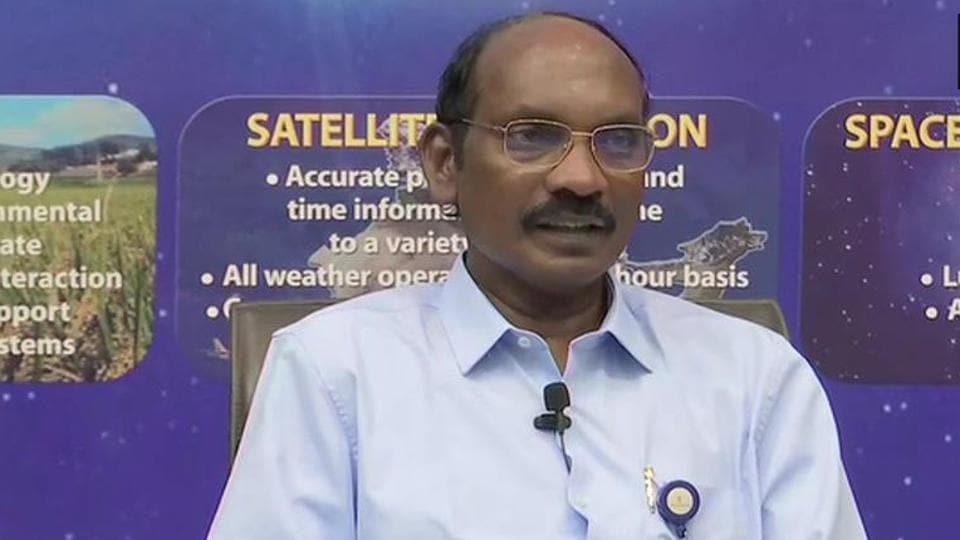
A national advisory committee to review the manned spaceflight — or Gaganyaan mission — has been constituted, further setting in motion a plan first announced by Prime Minister Narendra Modi from the ramparts of the Red Fort on August 15, 2018.
Isro did not name the astronauts, who will all be Indian Air Force pilots.
“We have made good progress on the Gaganyaan mission this year. Many of the designs have been completed. The selection process for the astronauts is over, now the training for the four astronauts identified is planned for the third week of January this year,” said K Sivan, chairperson of the Indian Space Research Organisation (Isro).
This year, Isro scientists will work towards human rating the propulsion modules (currently the rockets are not fit to carry humans); test the crew escape system (emergency exit in case of a contingency); and the modified GSLV Mk III vehicle with a 4-metre ogive shape payload faring (top section of the rocket, where the crew will be located). The space agency said in 2019 that the first unmanned flight will take place in December 2020, followed by another unmanned flight in July 2021, and the manned flight in December 2021.
Under the Gaganyaan mission, which is expected to cost ₹10,000 crore, two or three astronauts are expected to be in the low earth orbit (an earth-centred orbit with an altitude of 2,000km where most of the manmade objects in outer space are placed) for around seven days.
Apart from the developments in the human spaceflight programme, Isro plans to carry out three purely scientific missions in 2020.
The Isro chairperson formally announced the Chandrayaan 3 – a lander-and-rover-only mission – to be launched within the year. “This is the year of Chandrayaan 3,” said Sivan. “The work on the mission is progressing smoothly and India will again attempt a soft landing on the lunar surface within the year,” he said.
HT reported on Wednesday that a 2020 Chandrayaan-3 mission was confirmed by Jitendra Singh, minister of state in the department of space,and that it would not carry an orbiter because the Chandrayaan-2 orbiter is already circling the moon in an 100km orbit from where it will keep sending data for nearly seven years.
The Chandrayaan-2 mission in 2019 was India’s first attempt to land on moon. After completing a 48-day journey in space, the indigenously developed lander-rover separated from the orbiter and headed towards the lunar surface. But an unexpected loss of velocity during the second phase of the automated descent -- or “15 minutes of terror”, as Sivan called it last year -- led to the lander-rover to make a hard landing 500 metres from the chosen site.
A successful landing would have made India the fourth country in the world to do so after the US, the erstwhile USSR and China and the first country to have landed so close to the lunar south pole.
The other scientific missions planned for the year are India’s first solar mission Aditya L1 and a space observatory to study the polarisation of cosmic rays called X-ray Polarimeter Satellite (XPoSat). The Aditya-L1 satellite will travel 1.5 million kilometres from the Earth to the L1 point, or Lagrangian point between the earth and the sun where the gravitational pull of both the bodies on the satellite is equal to the centripetal force needed to keep the satellite in orbit.
The L1 point has an uninterrupted view of the sun and will allow the satellite to study the visible surface of the sun (Photosphere), and the irregular layer above it (Chromosphere), along with the Corona, which extends for thousands of kilometers and has very high temperatures of around 6,000 Kelvin (5726.85 degrees Celsius).
So far, the purely scientific satellites launched by Isro include the Chandrayaan-1 in 2008, Mars Orbiter Mission in 2013, and India’s space telescope AstroSat in 2015. Isro also plans to test the Small Satellite Launch Vehicle meant for carrying small and nano satellites to space. The vehicle will have a carrying capacity of 500kg to the low earth orbit, and will take only 72 hours and six persons to be assembled. In comparison, India’s workhorse Polar Satellite Launch Vehicle takes 70 days and 600 people to put together. The GSAT 20 satellite is also likely to be launched this year, completing the four satellite network to provide high bandwidth connectivity of over 100 Gbps, including in-flight and maritime connectivity.
The Indian space agency also plans to launch the IRNSS 1J satellite with an indigenously developed atomic clock, adding to the Indian navigation satellite constellation. NaVIC, or India’s regional satellite-based navigation system, was approved for use in mobile phones this year by the 3rd Generation Partnership Project (3GPP), which is a standards organisation that develops protocols for mobile phones.
“Soon, our mobile phones will have NaVIC along with GPS,” said Sivan.
“Now, the launch of satellites for communication, navigation etc has become fairly routine and there is more focus on scientific missions, as it should be. Isro is supposed to be a “research” organisation. None of the announcements made today was surprising as these missions have been in the pipeline, except for the Chandrayaan 3. However, there is a greater need for Isro to let private players conduct routine launches and focus more on the research aspect. This is not likely to happen in the near future as their progress in even privatising the manufacturing of PSLV has been very slow,” said Rajeswari Rajagopalan, head, nuclear and space initiative, Observer Research Foundation (ORF).


