The Northeast continues to be a geographical, ecological and ethnographic curiosity even among seasoned travellers. For the slightly adventurous too: offbeat travel where you eat worms and nettle soup? Go to the Northeast.
PREMIUM
Voices of the Land, which dropped on JioHotstar around the peak of this year’s annihilating Assam floods, is a six-episode series showing some of the world’s oldest living indigenous cultures
{{^htLoading}} {{/htLoading}}
When, in the new travel documentary series Voices of the Land, actor Gaurav Adarsh gets a whistle tune as his new name in Thingdol, a village of the Dima Hasao tribe in Cachar, Assam, or follows a group of women from the Sherdukpen tribe of Sheraton, Arunachal
{{^usCountry}}{{/usCountry}}
Voices of the Land is directed by and co-written with Nitin Gupta by Megha Ramaswamy, a Mumbai-based filmmaker and writer whose work spans fiction, hybrid cinema and documentary.
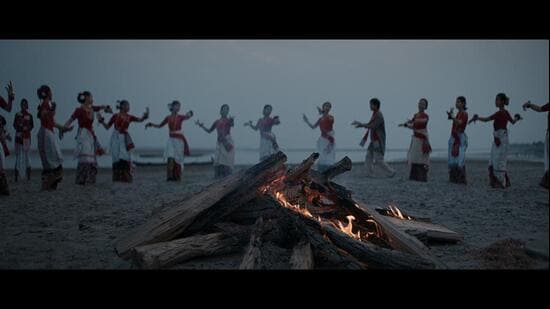
Voices of the Land, which dropped on JioHotstar around the peak of this year’s annihilating Assam floods, is a six-episode series showing some of the world’s oldest living indigenous cultures — the Angami of Nagaland, the Mising of Assam, the Sherdukpen of Arunachal Pradesh, the Biate of Dima Hasao, Assam, and the Khasi of Meghalaya. Adarsh (The White Tiger, 2021; Kho Gaye Hum Kahaan, 2023; Superboys of Malegaon, 2024) is an extremely curious sutradhar and traveller — on a bike, in crumpled pyjamas and a windcheater, he takes the bumps on this expansive trip with the sanguinity of someone who understands slow travel. He is student-like in his responses to ordinary facts of his subjects, like adopting a river: Aspirational, and maybe replicable in Mumbai? It works for the series that the host is “kethekrye”, a fond colloquial title that the Angamis give him, which means a keen learner, an eager beaver.
{{^htLoading}} {{/htLoading}}
Voices of the Land is directed by and co-written with Nitin Gupta by Megha Ramaswamy, a Mumbai-based filmmaker and writer whose work spans fiction, hybrid cinema and documentary. It isn’t an unscripted series in the rigid sense that we know documentaries today, in OTT parlance.
Actor Gaurav Adarsh gets a whistle tune as his new name in Thingdol, a village of the Dima Hasao tribe in Cachar, Assam
Ramaswamy propels her narrative with cinematic flourish — the gaze of cinematographer Kuldeep Mamaniya’s camera is not just for documenting, but also, gratifyingly, for the aesthetic frame. The beauty mustn’t have been difficult to capture from any angle his camera pointed to — the landscape, its stone caves, root bridges, jhum cultivation strips, river meeting sky and land, and hills of various hues and gradients are breathtaking.
{{^htLoading}} {{/htLoading}}
The dominant theme of human synergies with nature is studied, and narrated emphatically through the host’s interactions with his subjects. Ramaswamy says, “The writing credits reflect how much of the series was built long before we started filming. Nitin Gupta and I spent months researching with Gaurav Haloi (researcher) and as I was travelling on recce across the Northeast, those early interactions with the communities and my own personal experiences became the foundation of the writing. Together, we had to world-build for each episode, because every tribe had such a distinct philosophy and way of life.”
“The monologues took a lot of soul-searching,” she adds. She says why Adarsh’s interactions with the tribes were never forced. “I can safely say he was profoundly moved and constantly in awe of the experience,” Ramaswamy says.
{{^htLoading}} {{/htLoading}}
Voices of the Land goes beyond travel to explore the philosophies, identities, oral traditions, music, food, rituals and everyday lives of communities whose wisdom has shaped the region for centuries. The series singularly gives each community the space to represent itself on its own terms, how they choose to be seen and what they want to convey to the world. Through intimate observations and breathtaking landscapes, Voices of the Land is both a celebration of cultural resilience and a timely reminder of the natural heritage that continues to thrive at the edge of a rapidly changing world. That’s how Voices of the Land eschews touristy television.
Voices of the Land goes beyond travel to explore the philosophies, identities, oral traditions, music, food, rituals and everyday lives of communities whose wisdom has shaped the region for centuries.
The series shares, with lesser-known examples of this genre, the marvellous aspiration of using television, food, history and culture to connect a world that is, despite unifiers like social media, becoming oddly more fragmented. “The geography of each place dictated the visual scheme of every episode. In many ways, the landscapes helped us discover both the visual scheme and the writing language of the series. We didn’t adhere to any formal documentary grammar. Instead, we allowed each place to reveal its own way of being seen,” Ramaswamy says.
{{^htLoading}} {{/htLoading}}
Historical signposts of the role of the Angamese in World War 2; the river as builder and destroyer, so resonant now with the Brahmaputra’s fury in Assam; a scientist researching rivers and wildcats in a breathtaking corner of India that still worships nature as divinity; singing folk songs with a Gen Z popstar; solitary adventures inside echoing, cavernous stone caves; a symphony of insects chirping away in the crisp night air; spiky geologic formations silhouetted against a blanket of stars. How differently the same vista appears when seen from a highway in Nagaland, above a hilltop, next, astonishingly, to a tiny roadside library, instead of through the rectangle of a cellphone camera.
Visual and narrative representations of the Northeast have transformed in the past decade. Like many places and people that were submerged in clichés of ethnic violence and alienation, Instagram and demands of new travel have transformed how we look at the northeastern states. And Voices of the Land crystallises as well as magnifies that transformed narrative — as exemplary when it comes to how nature lives among people, and exhilarating to look at, and visit. Julie Kagti, founder of Curtain Call Adventures, a travel company that creates small, curated tours emphasising culture, lifestyle, crafts, food, and gentle adventure in the region, says that they don’t cover four states in seven days and opt instead for slow, immersive experiences because that allows guests to meaningfully engage with the environment and its people.
{{^htLoading}} {{/htLoading}}
“What makes Northeast tribal traditions so extraordinary is that they are not relics of the past; they are living, breathing ecosystems of knowledge. With over 200 indigenous communities spread across the eight states, the region holds an unparalleled wealth of traditional wisdom deeply rooted in local ecology,” Kagti says.
Voices of the Land is a story that stays with curiosity about what indigenous tribes can tell us about the changing planet. What’s beyond that curiosity is the work of anthropologists like Dolly Kiko from Nagaland. “As much as I appreciate the cultural show and richness of indigenous peoples, I also call for a deeper engagement and collective wisdom that is consistent. I call for a practice that foregrounds social and gender justice.” She adds, and Kiko’s words are, unintentionally, a compelling epilogue for this riveting travel show: “The common thread among all Indigenous peoples in northeast India (and around the world) is their connection with land and natural resources, which is called “a way of life”. This common thread is rapidly changing as community’s relationship with farming, foraging, and caring is transforming in the midst of resource extraction and large scale infrastructure developments. The ongoing disasters across the region every monsoon is a testament.”
{{^htLoading}} {{/htLoading}}
Voices of the Land is streaming on JioHotstar.
(Sanjukta Sharma is a Mumbai-based journalist)
{{^htLoading}} {{/htLoading}}
The Northeast continues to be a geographical, ecological and ethnographic curiosity even among seasoned travellers. For the slightly adventurous too: offbeat travel where you eat worms and nettle soup? Go to the Northeast.
PREMIUM
Voices of the Land, which dropped on JioHotstar around the peak of this year’s annihilating Assam floods, is a six-episode series showing some of the world’s oldest living indigenous cultures
When, in the new travel documentary series Voices of the Land, actor Gaurav Adarsh gets a whistle tune as his new name in Thingdol, a village of the Dima Hasao tribe in Cachar, Assam, or follows a group of women from the Sherdukpen tribe of Sheraton, Arunachal Pradesh, on an ethnobotany walk up a misty hill, the offbeat turns into spectacle — the ordinary turns spectacular.
{{^usCountry}}{{/usCountry}}
Voices of the Land is directed by and co-written with Nitin Gupta by Megha Ramaswamy, a Mumbai-based filmmaker and writer whose work spans fiction, hybrid cinema and documentary.
Voices of the Land, which dropped on JioHotstar around the peak of this year’s annihilating Assam floods, is a six-episode series showing some of the world’s oldest living indigenous cultures — the Angami of Nagaland, the Mising of Assam, the Sherdukpen of Arunachal Pradesh, the Biate of Dima Hasao, Assam, and the Khasi of Meghalaya. Adarsh (The White Tiger, 2021; Kho Gaye Hum Kahaan, 2023; Superboys of Malegaon, 2024) is an extremely curious sutradhar and traveller — on a bike, in crumpled pyjamas and a windcheater, he takes the bumps on this expansive trip with the sanguinity of someone who understands slow travel. He is student-like in his responses to ordinary facts of his subjects, like adopting a river: Aspirational, and maybe replicable in Mumbai? It works for the series that the host is “kethekrye”, a fond colloquial title that the Angamis give him, which means a keen learner, an eager beaver.
{{^htLoading}} {{/htLoading}}
Voices of the Land is directed by and co-written with Nitin Gupta by Megha Ramaswamy, a Mumbai-based filmmaker and writer whose work spans fiction, hybrid cinema and documentary. It isn’t an unscripted series in the rigid sense that we know documentaries today, in OTT parlance.
Actor Gaurav Adarsh gets a whistle tune as his new name in Thingdol, a village of the Dima Hasao tribe in Cachar, Assam
Ramaswamy propels her narrative with cinematic flourish — the gaze of cinematographer Kuldeep Mamaniya’s camera is not just for documenting, but also, gratifyingly, for the aesthetic frame. The beauty mustn’t have been difficult to capture from any angle his camera pointed to — the landscape, its stone caves, root bridges, jhum cultivation strips, river meeting sky and land, and hills of various hues and gradients are breathtaking.
{{^htLoading}} {{/htLoading}}
The dominant theme of human synergies with nature is studied, and narrated emphatically through the host’s interactions with his subjects. Ramaswamy says, “The writing credits reflect how much of the series was built long before we started filming. Nitin Gupta and I spent months researching with Gaurav Haloi (researcher) and as I was travelling on recce across the Northeast, those early interactions with the communities and my own personal experiences became the foundation of the writing. Together, we had to world-build for each episode, because every tribe had such a distinct philosophy and way of life.”
“The monologues took a lot of soul-searching,” she adds. She says why Adarsh’s interactions with the tribes were never forced. “I can safely say he was profoundly moved and constantly in awe of the experience,” Ramaswamy says.
{{^htLoading}} {{/htLoading}}
Voices of the Land goes beyond travel to explore the philosophies, identities, oral traditions, music, food, rituals and everyday lives of communities whose wisdom has shaped the region for centuries. The series singularly gives each community the space to represent itself on its own terms, how they choose to be seen and what they want to convey to the world. Through intimate observations and breathtaking landscapes, Voices of the Land is both a celebration of cultural resilience and a timely reminder of the natural heritage that continues to thrive at the edge of a rapidly changing world. That’s how Voices of the Land eschews touristy television.
Voices of the Land goes beyond travel to explore the philosophies, identities, oral traditions, music, food, rituals and everyday lives of communities whose wisdom has shaped the region for centuries.
The series shares, with lesser-known examples of this genre, the marvellous aspiration of using television, food, history and culture to connect a world that is, despite unifiers like social media, becoming oddly more fragmented. “The geography of each place dictated the visual scheme of every episode. In many ways, the landscapes helped us discover both the visual scheme and the writing language of the series. We didn’t adhere to any formal documentary grammar. Instead, we allowed each place to reveal its own way of being seen,” Ramaswamy says.
{{^htLoading}} {{/htLoading}}
Historical signposts of the role of the Angamese in World War 2; the river as builder and destroyer, so resonant now with the Brahmaputra’s fury in Assam; a scientist researching rivers and wildcats in a breathtaking corner of India that still worships nature as divinity; singing folk songs with a Gen Z popstar; solitary adventures inside echoing, cavernous stone caves; a symphony of insects chirping away in the crisp night air; spiky geologic formations silhouetted against a blanket of stars. How differently the same vista appears when seen from a highway in Nagaland, above a hilltop, next, astonishingly, to a tiny roadside library, instead of through the rectangle of a cellphone camera.
Visual and narrative representations of the Northeast have transformed in the past decade. Like many places and people that were submerged in clichés of ethnic violence and alienation, Instagram and demands of new travel have transformed how we look at the northeastern states. And Voices of the Land crystallises as well as magnifies that transformed narrative — as exemplary when it comes to how nature lives among people, and exhilarating to look at, and visit. Julie Kagti, founder of Curtain Call Adventures, a travel company that creates small, curated tours emphasising culture, lifestyle, crafts, food, and gentle adventure in the region, says that they don’t cover four states in seven days and opt instead for slow, immersive experiences because that allows guests to meaningfully engage with the environment and its people.
{{^htLoading}} {{/htLoading}}
“What makes Northeast tribal traditions so extraordinary is that they are not relics of the past; they are living, breathing ecosystems of knowledge. With over 200 indigenous communities spread across the eight states, the region holds an unparalleled wealth of traditional wisdom deeply rooted in local ecology,” Kagti says.
Voices of the Land is a story that stays with curiosity about what indigenous tribes can tell us about the changing planet. What’s beyond that curiosity is the work of anthropologists like Dolly Kiko from Nagaland. “As much as I appreciate the cultural show and richness of indigenous peoples, I also call for a deeper engagement and collective wisdom that is consistent. I call for a practice that foregrounds social and gender justice.” She adds, and Kiko’s words are, unintentionally, a compelling epilogue for this riveting travel show: “The common thread among all Indigenous peoples in northeast India (and around the world) is their connection with land and natural resources, which is called “a way of life”. This common thread is rapidly changing as community’s relationship with farming, foraging, and caring is transforming in the midst of resource extraction and large scale infrastructure developments. The ongoing disasters across the region every monsoon is a testament.”
{{^htLoading}} {{/htLoading}}
Voices of the Land is streaming on JioHotstar.
(Sanjukta Sharma is a Mumbai-based journalist)
All Access. One Subscription.
Get 360° coverage—from daily headlines to 100 year archives.
Get Latest News, breaking headlines, and top India News, and today real-time updates from across the nation. Stay informed on politics, government policies, crime, Today Weather, and major developments on Hindustan Times
Get Latest News, breaking headlines, and top India News, and today real-time updates from across the nation. Stay informed on politics, government policies, crime, Today Weather, and major developments on Hindustan Times