The collapse of Alawite Basher al-Assad regime and rise of Islamist rebels once affiliated to Al Qaeda and the Islamic State in Syria has reopened the chapter of religious radicalization witnessed when Sunni Islamists under ISIS flag controlled swathes of territory in north Iraq and Syria a decade ago. The capture of Mosul and Raqqa by ISIS also attracted Islamic fighters all over the world with over 100 Indians joining the extremist group in Iraq and then in Afghanistan under the Islamic State of Khorasan Province (ISKP).
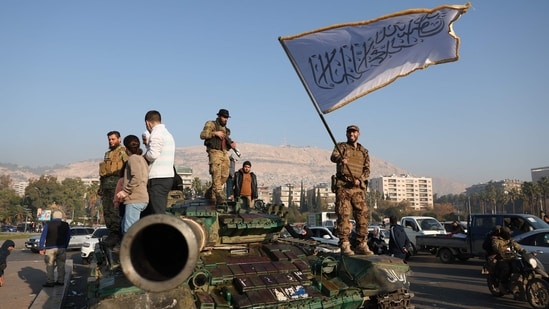
The uprooting of the Assad regime by Hayat Tahrir al-Sham group headed by Abu Mohammed al-Golani, once affiliated to Al Qaeda and ISIS, on December 8 will create a power vacuum leading to rapid radicalization of masses with multiple players and their international handlers seeking power through political Islam in Damascus. To add to this unfolding complication is the decimation of Syrian air force and navy by the Israelis, who are seeking to expand the buffer zone to save the Jew nation from any unexpected terror or military attack from the rebels. Even if the power struggle in Syria settles in favor of al-Golani, the victory of rebels over Assad regime will boost confidence of Sunni extremists group all over the world and provide justification to other Sunni Muslims to join hands for redressal of their perceived grievances against the state. The Sunni extremist groups are already flushed with the success of Taliban in Afghanistan on August 15, 2021 and rapid rise of Jamaat-e-Islami in Bangladesh after the fall of Sheikh Hasina regime on August 5, 2024.
While the victory of Islamist forces in Afghanistan, Bangladesh and now Syria will strengthen the hands of extremist forces, it will also lead to Islamic radicalization in other countries including the Indian sub-continent as these forces have tasted blood by uprooting secular regimes in these countries.
Challenge for India
{{/usCountry}}While the victory of Islamist forces in Afghanistan, Bangladesh and now Syria will strengthen the hands of extremist forces, it will also lead to Islamic radicalization in other countries including the Indian sub-continent as these forces have tasted blood by uprooting secular regimes in these countries.
Challenge for India
{{/usCountry}}For India and its intelligence agencies, the immediate challenge is to settle down power vacuum in Bangladesh under a strong political leadership or else groups like Hifazat-e-Islam, Jamaat-ul-Mujahideen Bangladesh, Ansarullah Bangla Team and Islamic Chhatra Shibir will push their agenda exploiting the reigning chaos in the Republic. In the first decade of this millennium, Bangladesh terrorist groups like HUJI were active in India and were used by Pakistani deep state to terror train Indians via Dhaka as also supplying RDX explosives and assault rifles into India via the same route. A number of terrorists from UP, Maharashtra, Bihar, West Bengal, Andhra Pradesh and Telangana used Bangladesh as a route to train in Pakistan as well as escape the Indian law. Later these terrorists under the Indian Mujahideen umbrella and Pakistani Karachi Project joined ISIS in Raqqa from Pakistan and Bangladesh.
While Syria may be distant from India unlike Bangladesh, terrorist groups could use the power vacuum in Damascus to train fighters for attacks in other countries as has happened in the past two decades. The Lashkar-e-Tayyeba was raised in Kunar province of Afghanistan and so was Jaish-e-Mohammed in terror camps in Khost. The tussle for power in Syria could also destabilize the entire West Asia region and bring insecurity to the region which is richly populated by the Indian diaspora. There is an immediate radicalization threat to West Asia and the contiguous Indian sub-continent as western Europe and the US still have the safety of distance. Clearly, the world is heading towards turbulent times where violence not peace will be the norm.