In the Boeing 787 cockpit, few controls are as heavily protected against accidental operation as the engine fuel switches. Multiple layers of mechanical safeguards guard against inadvertent movement of these critical levers that can instantly cut power to a $200 million aircraft.
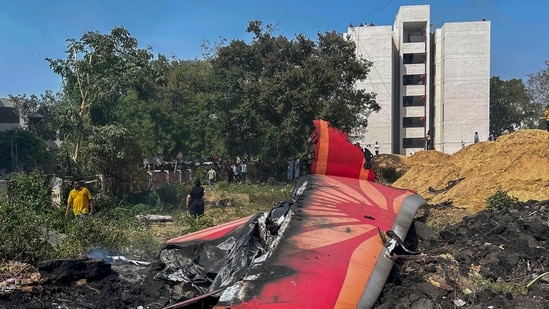
Those very switches lie at the heart of the Air India Flight 171 investigation, after preliminary findings revealed both moved from “RUN” to “CUTOFF” within one second of each other during take-off, starving the engines of fuel and sealing the fate of 260 people.
The switches sit underneath the throttle handles in the cockpit’s centre console, positioned where pilots’ hands naturally rest during critical flight phases. Physical brackets guard each switch on both sides, making it impossible to accidentally brush against them. A spring-loaded mechanism requires pilots to pull each switch upward against resistance before it can be moved.
“You can’t just bump these switches; they are intentionally spring-loaded and gated to prevent inadvertent usage,” aviation safety consultant John Cox told Reuters.
Aviation experts note this sequence makes accidental activation highly unlikely, particularly the simultaneous movement of both switches one second apart.
Also Read | Key to fatal Air India crash mystery: 32 seconds in flight deck
The Air India preliminary report identified the specific switches as Honeywell part number 4TL837-3D fitted on the crashed Boeing 787-8 aircraft. The report also cited a 2018 Federal Aviation Administration bulletin warning of potential problems with fuel control switch locking mechanisms on Boeing aircraft, including the 787.
The FAA described situations where fuel control switches were installed with locking features disengaged, potentially making them easier to move. Air India had not performed the suggested inspections because the bulletin was advisory rather than mandatory. The problem was not “considered an unsafe condition that would warrant airworthiness directive (AD) by the FAA”—meaning the bulletin did not require airlines to act specifically on the fuel switches. Honeywell did not respond to Hindustan Times’ requests for comment about the switch design or any known issues with the locking mechanisms.
{{/usCountry}}The FAA described situations where fuel control switches were installed with locking features disengaged, potentially making them easier to move. Air India had not performed the suggested inspections because the bulletin was advisory rather than mandatory. The problem was not “considered an unsafe condition that would warrant airworthiness directive (AD) by the FAA”—meaning the bulletin did not require airlines to act specifically on the fuel switches. Honeywell did not respond to Hindustan Times’ requests for comment about the switch design or any known issues with the locking mechanisms.
{{/usCountry}}Also Read | Air India crash report: Picking up the missing pieces to tragic puzzle
When moved to “CUTOFF,” the effects are immediate and catastrophic during flight. Fuel flow stops instantly, causing the engine to spool down and shut off. The loss also cuts electrical power from that engine’s generators, affecting aircraft systems and cockpit displays. Under normal operations, pilots use these switches mainly during ground procedures for engine start-up and shutdown. In flight, they would only move them during emergencies like engine fires or attempting to restart failed engines—procedures that require careful thought and coordination, not split-second reactions.
The preliminary report noted both switches later returned to “RUN” position as crews attempted to restore fuel flow, but by then the aircraft was on its fatal descent. Engine restart procedures require significant time and altitude—both unavailable during the 32 seconds between fuel cutoff and impact.
Boeing and enginemaker General Electric have not issued any safety bulletins to 787 operators since the crash, with the AAIB noting no need for emergency checks on other jets yet. Over 1,100 Boeing 787s operate worldwide, making this the first fatal accident in the aircraft’s 14-year service history.