The Allahabad high court has directed the police and district administration not to interfere with the right to recite Azan (Islamic call for prayers) five times a day at a mosque in Saharanpur, provided the petitioners comply with prescribed noise limits and the court’s 2020 judgment on the use of loudspeakers.
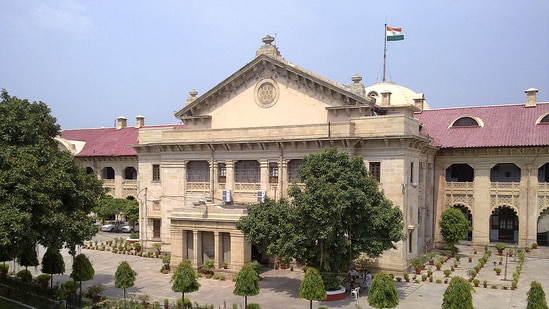
A division bench of Justice Ajit Kumar and Justice Garima Prashad issued the order while disposing of a writ petition filed by Shanawaz Khan and five other local residents. The petitioners had sought permission to use loudspeakers for Azan at Ayesha Masjid, alleging that local authorities were obstructing them despite judicial precedents governing the use of sound-amplifying devices.
The state government counsel, however, argued that the authorities were not restricting Azan itself but were enforcing permissible decibel levels and operational hours under the Noise Pollution (Regulation and Control) Rules, 2000. The counsel cited the high court’s 2020 judgment in Afzal Ansari v. State of UP, which held that while Azan is an essential Islamic practice, its recitation through loudspeakers or other sound-amplifying devices is not an integral part of the religion.
Court Ruling on Azan Recitation
In its 2020 judgment, the high court had held, “Azan may be an essential and integral part of Islam but recitation of Azan through loud-speakers or other sound amplifying devices cannot be said to be an integral part of the religion.”
{{/usCountry}}In its 2020 judgment, the high court had held, “Azan may be an essential and integral part of Islam but recitation of Azan through loud-speakers or other sound amplifying devices cannot be said to be an integral part of the religion.”
{{/usCountry}}The judgment further held that the use of sound-amplifying devices was subject to public order, morality, health and other provisions of Part III of the Constitution dealing with fundamental rights. It specifically held that such devices could not be permitted between 10 pm and 6 am by district administrations. It also observed that their use without permission was illegal and that applications seeking permission had to be dealt with in accordance with law, including the noise pollution rules.
During the proceedings, the petitioners assured the court that they would fully comply with the statutory noise limits and judicial directions.
The court, after hearing the parties, disposed of the petition by an order dated October 1, directing the petitioners to submit an application along with a notarised affidavit stating that they would strictly comply with the Noise Pollution (Regulation and Control) Rules, 2000, as well as the directions issued by the division bench in the Afzal Ansari case.
The court said that once such an application and affidavit were filed, “the police and district administration would not be interfering in the petitioners’ right to perform Azaan five times in the Ayesha Mosque situated at plot no. 47, Village Pathed, Police Station Gagalhedi, District Saharanpur.”
“It will however, be the duty of the police as well as district administration to ensure that the petitioners do abide by their own undertaking given in the affidavit, failing which it will remain open for them to take appropriate action in accordance with law,” the court added.
Saharanpur district magistrate Arvind Kumar Chauhan said he was yet to go through the court orders. “However, time-bound action will be taken as per the directions,” he said.