E-Paper



Amid row, collegium keeps Gujarat HC judge transfer on hold
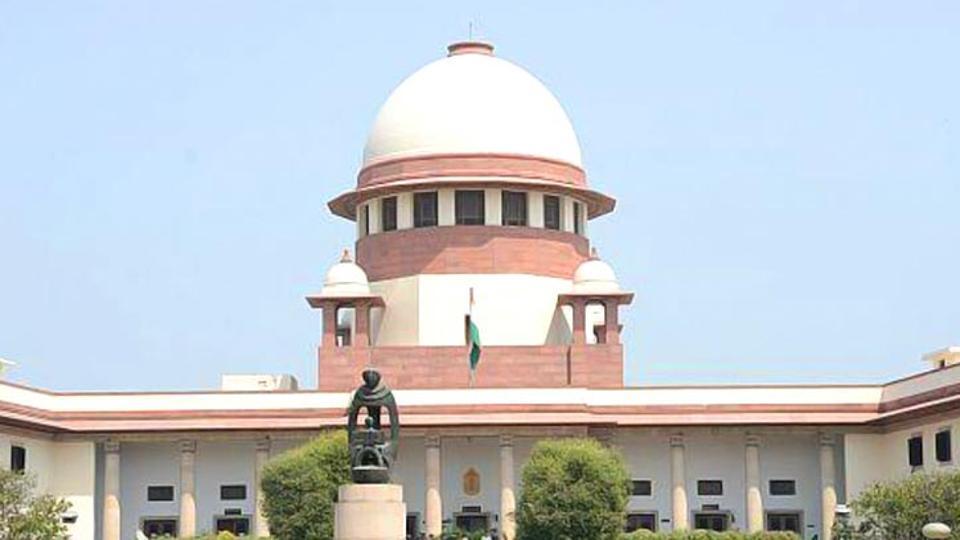
The Supreme Court collegium on Thursday made public its resolution recommending the transfer of seven high court judges, even as it decided to put on hold moving out a Gujarat high court judge following strong protests from the lawyers in that state


The Supreme Court collegium on Thursday made public its resolution recommending the transfer of seven high court judges, even as it decided to put on hold moving out a Gujarat high court judge following strong protests from the lawyers in that state.
According to the resolution, two judges each from the high courts of Andhra Pradesh and Madras have been recommended for the transfer, while three judges from Telangana are likely to be moved out.
From the Telangana high court, justices Lalitha Kanneganti (to Karnataka HC), D Nagarjun (to Madras HC) and A Abhishek Reddy (to Patna HC) are being transferred.
The Madras HC judges recommended for the transfer are acting chief justice T Raja (to Rajasthan HC) and justice VM Velumani (to Calcutta HC). From the Andhra Pradesh high court, the collegium has sought to transfer justices Battu Devanand (to Madras HC) and D Ramesh (to Allahabad HC).
According to the people aware of the matter, the proposal to transfer Gujarat HC judge Nikhil S Kariel has been put on hold.
In the first collegium meeting headed by the new Chief Justice of India Dhananjaya Y Chandrachud, on November 16, a decision was taken to transfer justices Raja, Reddy and Kariel for administrative reasons. However, no formal statement was released by the collegium, which included justices Sanjay Kishan Kaul, SA Nazeer, KM Joseph and MR Shah.
The move, however, triggered protests from high court lawyers from these states, and several bodies resolved to boycott work.
On Monday, the CJI, accompanied by justices Sanjay Kishan Kaul and MR Shah, met the delegations representing the Gujarat High Court Advocates’ Association (GHCAA) and the Telangana High Court Advocates’ Association (THCAA), and assured the lawyers’ outfits of looking into their objections.
At the same time, CJI Chandrachud “strongly” conveyed to the delegations that the lawyers should call off their strikes immediately and facilitate regular functioning of the courts in the wake of the deliberation and the assurance rendered.
Later, the lawyers’ bodies called off their strikes, even as they continued their protests against the proposed transfers.
On Saturday, the CJI underscored that the collegium takes administrative decisions keeping in view the “national perspective”, and added that advocates’ strikes make “consumers of justice suffer”.
Speaking at the felicitation function organised by the Bar Council of India (BCI), justice Chandrachud said: “It is important for members of the bar to realise that so very often, when we take decisions in administrative capacity, we are looking at things in a national perspective... Of course, always question those in authority, but you must also always learn to trust those in authority to the extent that they have the best welfare of them at their heart and for that they have to take tough decisions.”
In another related development on Thursday, the GHCAA made yet another representation to the CJI opposing the transfer of justice Vipul Pancholi to Patna HC. It was on Monday when a September 29 resolution of the collegium, recommending the transfer of justice Pancholi was released. At that time, justice Uday Umesh Lalit headed the collegium as the CJI.
Another resolution of the collegium published on the court website on Thursday recommended the names of two lawyers and six judicial officers for appointment as judges of Rajasthan HC.