Animal welfare organisations have critiqued the Union government’s Captive Elephant (Transfer or Transport) Rules, 2024 that were notified on March 14 and recommended that the Union environment ministry publish a finite list of elephants that are eligible for transfer with valid permits.
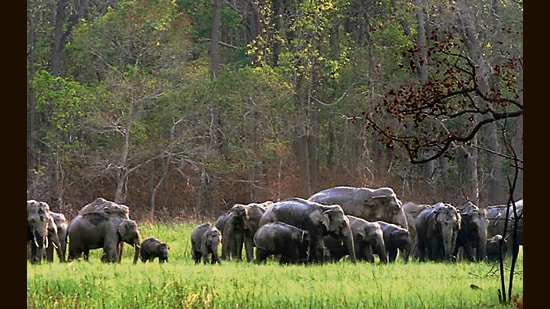
They wrote a letter to this effect to the ministry on April 1, even as animal welfare activists and environmentalists allege that medically fit elephants from several parts of the northeast, especially Assam and Arunachal Pradesh, have been illegally transported to other parts of the country, with specific reference to Vantara, the Reliance Industries and Reliance Foundation-promoted animal rescue and welfare centre in Jamnagar. To be sure, in interviews and other press interactions, Vantara officials have stressed that their focus is on rescue, rehabilitation and conservation.
Activists have also pointed to the spurt in smuggling of endangered, exotic animals from Southeast Asia and other parts of the world in the past one year which have allegedly been transferred to other parts of the country to private collectors.
Meanwhile, the environment ministry has been on a hyperdrive, issuing a number of notifications for those transacting in exotic species under Convention on International Trade in Endangered Species of Wild Fauna and Flora (CITES), a global agreement among governments to regulate trade in endangered, exotic species. India is a party to the CITES, which requires appropriate measures are taken to enforce the provisions of the Convention. The Wildlife Protection Amendment Act 2022 made provisions for implementation of CITES.
{{/usCountry}}Meanwhile, the environment ministry has been on a hyperdrive, issuing a number of notifications for those transacting in exotic species under Convention on International Trade in Endangered Species of Wild Fauna and Flora (CITES), a global agreement among governments to regulate trade in endangered, exotic species. India is a party to the CITES, which requires appropriate measures are taken to enforce the provisions of the Convention. The Wildlife Protection Amendment Act 2022 made provisions for implementation of CITES.
{{/usCountry}}Captive Elephants
One of the demands of the animal welfare organisations is to publish a finite list of elephants that are finally eligible for transfer with valid ownership certificates, location, owner details and genetic mapping before they can be moved, except for the purpose of rehabilitating the elephant. Experts said such a list would also end the controversy surrounding the transfer of elephants to rescue and rehabilitation centres.
HT sought a response from the MoEFCC on the recommendations made by animal welfare organisations but did not receive a response immediately.
The groups, People for Ethical Treatment of Animals (PETA) India, the Centre for Research on Animal Rights (CRAR), Heritage Animal Task Force, Kaziranga Wildlife Society, and the Federation of Indian Animal Protection Organisations (FIAPO) also suggested that Rule 7(1) of the transfer rules be amended to ensure that transfers are restricted to elephants with valid ownership certificates issued within the stipulated period of 180 days of the Declaration of Wild Life Stock Rules, 2003 on April 18, 2003.
“Only elephants with ownership certificates (OCs) issued before the cut off date in October 2003 for amnesty to regularise illegal possession of elephants, should be eligible for transfer. This is important to prevent people who have illegal custody of elephants to again use these Rules to claim a second period of amnesty to “regularise” their illegal custody of elephants,” said Khushboo Gupta, advocacy officer, PETA India.
The letter has also urged the ministry to end all speculation and mitigate fears that the permission to transfer elephants might end up facilitating the capture of wild elephants in the northeast, especially in parts of Assam and Arunachal Pradesh. “We seek a five-year embargo on any elephant transfers from the northeast to any part of India for any purpose except rehabilitation,” the letter added.
HT reported on March 16 that the environment ministry notified Captive Elephant (Transfer or Transport) Rules, 2024, which lays down that the procedure to be followed for transfer of captive elephants within a state or between two states. The notification authorises the chief wildlife warden of states and UTs to permit or reject transfers. The chief wildlife warden shall permit a transfer where the ownership certificate in respect of the elephant proposed for transfer existed prior to coming into force of the new rules. To be sure, the Wild Life (Protection) Amendment Act 2022 made way for transfer of captive elephants from one private owner to another “for a religious or any other purpose by a person having a valid certificate of ownership shall be subject to such terms and conditions as may be prescribed by the Central Government.”
Transfer of Exotic Animals
The Wildlife (Protection) Amendment Act, 2022 which was passed by both Houses of the Parliament in 2022 and has been in force since April 1, 2023 regulates how exotic species of animals and plants are bred, imported and exported.
For implementation of certain provisions of the Act, the Union environment ministry notified the Breeders of Species Licence Rules, 2023 on April 24 last year. Then came a slew of other notifications, especially since January this year which laid down a number of processes for those transacting in exotic species.
But, even before the amendment to introduce CITES provisions was passed, in 2020, the MoEFCC introduced a one-time amnesty program where it allowed owners of exotic live species that have been acquired illegally, or without documents, to declare their stock to the government under a voluntary disclosure scheme. In turn, a total of 32,645 individuals voluntarily declared their possession of exotic and native species from June to December 2020. The disclosures are not public.
Interestingly, parts of Assam, Mizoram and other areas in the northeast started seeing a spurt in seizures of illegally smuggled exotic species in the past couple of years. For example, HT reported on May 26 that Mizoram police seized one of the largest consignments of exotic animals intercepted along the northeast India border with Myanmar. “There has been a very unusual spurt in seizures of exotic animals from Assam and Mizoram including Kangaroos, Koalas, Moor Macaque, Spider Monkeys, Lemurs, baby Orangutans and what not. These were seized and placed in Guwahati zoo and then taken elsewhere because the zoo couldn’t keep them according to officials. To make way for transfer of these animals , every rule, regulation has been bent,” said Mubina Akhtar, wildlife activist and member of the Kaziranga Wildlife Society.
It wasn’t immediately clear where the seized animals have been sent.
Director of Assam state zoo, Ashwini Kumar, said: “It is correct that smuggled animals have been seized. There are animal transfer programs between zoos. No animal exchange or transfers can take place between zoos without the approval of Central Zoo Authority.”
Chief wildlife warden (Assam), Sandeep Kumar, was not reachable on the phone, while principal chief conservator forests (Social Forestry) of Assam, Raj Pal Singh, said he joined the post recently and was not aware of the seizures and rehabilitation of those animals.
The 2021-22 annual report of the Central Zoo Authority highlights the animal exchanges that occurred among Indian zoos. According to the report, the Madras Crocodile Bank Trust sent various crocodile species to other zoos.
The Nagaland Zoological Park in Dimapur contributed animals such as the Slow Loris, Peacock Softshell Turtle, Burmese Python, and Assam Macaque. The National Zoological Park in Delhi provided a variety of animals, including Hippopotamuses, deer, jackals, and foxes. These animals were all received by the Greens Zoological Rescue and Rehabilitation Centre in Jamnagar.
The report also mentions that the Greens Zoological Rescue and Rehabilitation Centre received several animals from Fauna Zoo Mexico, in addition to the exchanges with other Indian zoos.
The annual report also states that CZA approved the Master Layout Plan for Greens Zoological Rescue and Rehabilitation Centre, Jamnagar during 2021-22. To be sure, reports of increased seizures of exotic animals were reported after 2022.
On February 28 this year, the ministry issued a notification giving chief wildlife wardens of all states and UTs the power to issue registration certificates to those who have acquired CITES-listed species and to oversee if such acquisitions are legal. The amendment to the wildlife protection act in 2022 also gives powers to the Centre to exempt one or more specimens of any CITES listed species from such declaration for such quantity and for such period as it may deem fit.
HT reported on March 7 that people in possession of species under CITES will have to register them with the state wildlife department, according to the Living Animal Species (Reporting and Registration) Rules, 2024 issued by the Union environment ministry on February 28.
With this MoEFCC has put in place a range of regulations for those with exotic pets such as macaws, cockatoos or a variety of soft-shell turtles or those who have businesses dealing with such species such as private zoos.
In an interview with HT, Union environment minister, Bhupender Yadav in January, when asked which exotic species are being bred domestically and how is it aiding conservation of these species, said: “The Wild Life (Protection) Act, 1972 was amended in 2022. Through this amendment, the provisions of CITES have been included in the Act. The species listed in the three Appendices, viz, Appendix I, Appendix II and Appendix III (of CITES) have now been included in Schedule IV of the Act...The Government of India has notified the Breeders of Species Licence Rules, 2023 vide Gazette Notification dated 24th April 2023. Appendix I species are considered to be species that are highly threatened and require high degree of regulation for international trade. A licence for breeding of Appendix I species would help in regulating the trade and controlling the illegal trade of such highly endangered species and also ensure the welfare of these animals. This would also ensure to build up a database on the Appendix I listed exotic species that are being traded within and from India legally.”
Appendix I of CITES includes species threatened with extinction. Trade in specimens of these species is permitted only in exceptional circumstances. Some of these species include Giant Pandas, River Dolphins, Kangaroos, Pangolins, Marmosets, Tamarins, Hornbills, a variety of Owls, Iguanas among others.