New Delhi:The Indian Council of Medical Research (ICMR) on Tuesday asked states to put on hold for two days antibody testing for Covid-19 using rapid testing kits or RTKs supplied to them late last week, citing huge variations in the results -- a move that compromises efforts by many states to test aggressively in so-called containment zones using these kits, which were procured with some difficulty.
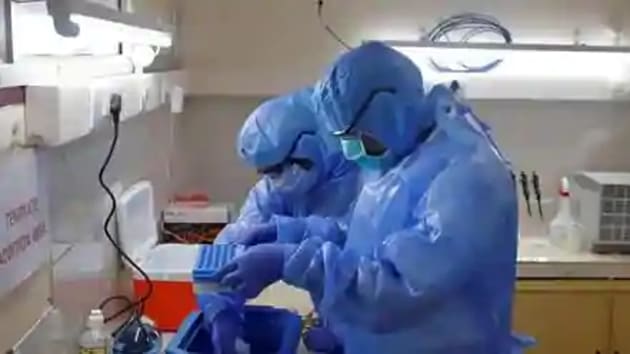
Dr Raman R Gangakhedkar, head of epidemiology and communicable diseases, ICMR, said that after receiving a complaint from one state on Monday, the body at the forefront of the country’s fight against Covid-19 spoke to three states on Tuesday.
“We are learning that samples which are positive in RT -PCR are showing too much variation (when tested by RTKs) in the range of 6% to 71%,” he added.
This means that only 6% of the samples that test positive in the accurate but time-consuming Reverse Transcriptase-Polymerase Chain Reaction (RT-PCR), test positive in the antibody test.
ICMR’s guidelines for such rapid tests mandate that they be carried out only for people who show symptoms of the disease for at least seven days, or those who have been directly or indirectly exposed to the infection, and that a negative test be followed by a RT-PCR one.
Ahead of Gangakhedkar’s comments at the daily press briefing on India’s fight against Covid-19, Rajasthan stopped using the antibody test kits after they were accurate in only 5.4% of the cases, according to state health minister Raghu Sharma. It wasn’t immediately clear which other states ICMR spoke to. West Bengal on Monday complained about the quality of RT-PCR tests supplied to it.
{{/usCountry}}Ahead of Gangakhedkar’s comments at the daily press briefing on India’s fight against Covid-19, Rajasthan stopped using the antibody test kits after they were accurate in only 5.4% of the cases, according to state health minister Raghu Sharma. It wasn’t immediately clear which other states ICMR spoke to. West Bengal on Monday complained about the quality of RT-PCR tests supplied to it.
{{/usCountry}}The 550,000 RTKs ordered from China arrived late last week after missing two deadlines and were distributed to states. While ICMR initially wanted them used to assess the extent of the disease’s spread in so-called green zones (according to the health ministry, districts with very few or no cases), it subsequently allowed states to test them in containment zones in hot spots -- where lots of cases, including clusters were found. Many states hoped to use the blood test (RT-PCR uses a nasal swab) to ramp up testing.
Those plans have now been put on hold by ICMR, which has created eight field teams to validate the results.
“It was anticipated that Chinese kits won’t be of good quality as many of their exported products haven’t worked of late,” said Dr T Jacob John, former head of virology department, CMC Vellore. “On Feb 2 we knew it was a pandemic. We were the last to be hit but we didn’t make use of the time... This is the time to consolidate our resources and work like a single unit. It should be a consortium approach and not a competitive approach,” he added.
To be sure, unlike the RT-PCR kits that show up only active infections, at any stage, however early (and even in asymptomatic individuals), antibody tests do not detect infections till antibodies have been generated, which could take up to a week after the infection, and usually happen around the same time or even after the symptoms show up. While some countries have said they will use these tests to see who can return to work (they are a good measure of immunity), most experts say they are best used to assess population exposure.
“The RT-PCR is the gold standard in terms of identification of patients is concerned. The rapid test has limited utility, and is good for surveillance and conducting epidemiological investigations,” Lav Agarwal, joint secretary at the Union health ministry, said.
Gangakhedkar said the kits were tested in Delhi and had shown a 71% accuracy and also mentioned that Covid-19 antibodies emerge after seven days. It wasn’t immediately clear how many of the samples tested involved patients who tested positive in a RT-PCR test within the past week.
“In the lab testing for quality check, we found the efficacy to be around 71%, which was decent considering rapid tests are usually about 80-84% accurate, and we sent it across to our regional centres for distribution in states,” Gangakhedkar said.
The ICMR said as the tests are halted, it will send experts from eight of its institutes to different locations to conduct field testing of samples using RTKs.
“After two days we will be in a better position to issue a revised advisory in this regard,” Gangakhedkar added.
If its validation exercise continues to throw up variations, ICMR plans to take up the matter with the manufacturer. Gangakhedkar said the findings (variations) could not be ignored despite the antibody test being a first generation ELISA (enzyme linked immunosorbent assay). Such tests are used to find antibodies against specific diseases, and usually get better with time. For instance, it took several generations before the ELISA test for HIV-AIDS was perfected.
The kits were ordered from Chinese manufacturers Guangzhou Wondfo and Zhuhai Livzon. Hindustan Times couldn’t ascertain the sensitivity (ability of the test to come up with a positive result when presented with an infected sample, also known as true positive) and specificity (ability of the test to correctly identify a non-infected sample) rating of the test.
ICMR had ordered 3.5 million more RTKs.
Experts have previously raised concerns about the accuracy of the tests received from China. “There were ample examples from the US and Europe on how these Chinese kits were of dubious quality. The Chinese government has become strict and not allowed many of its manufacturers to export because of quality issues, so we had to be careful while ordering these,” said a senior virologist, who wished to remain anonymous.