
 E-Paper



Approach HCs in cases of temple endowments, SC tells petitioners
The court emphasised that the high courts should consider various dimensions of the legal provisions in question, and may even constitute an expert committee for assistance if required

 Prefer HTon Google


The Supreme Court on Tuesday directed petitioners challenging the constitutionality of various provisions of Hindu Religious Endowments laws in Tamil Nadu, Andhra Pradesh, Telangana, and the Union territory of Puducherry to first approach the respective high courts.
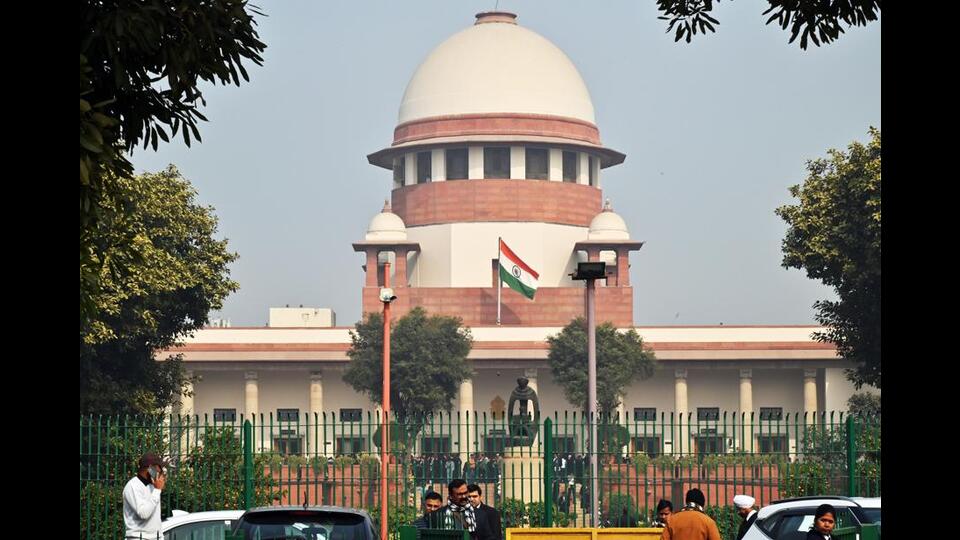
A bench of justices BV Nagarathna and Satish Chandra Sharma disposed of multiple petitions, including a writ petition filed in 2012 by Swami Dayananda Saraswati and another filed by former BJP parliamentarian Subramanian Swamy, while granting liberty to the petitioners to file fresh writ petitions before the jurisdictional high courts. The court emphasised that the high courts should consider various dimensions of the legal provisions in question, including socio-economic, cultural, and religious aspects, and may even constitute an expert committee for assistance if required.
During the hearing, the bench sought the Centre’s stance, prompting additional solicitor general (ASG) KM Nataraj to respond that the regulation of religious endowments falls within the purview of the states. “It is a state subject; the state has to regulate. I don’t think the Union can do much in the matter,” ASG Nataraj said.
The ASG, also representing Puducherry, argued that each of the four legislations under challenge was state-specific. “To what extent regulation is required and how it is applied to a particular temple in a particular situation will have to be first examined by the respective high courts,” he contended.
Towards the conclusion of the hearing, solicitor general Tushar Mehta appeared and stated: “Principally, temples can never be under the control of the government. If religion has no business in governance, governance has no business in religion. As simple as that.” He added: “Temples are not departments of the government.”
In its order, the bench recorded: “We find that the better way of ventilating the grievances of the petitioners is to assail the provisions of the respective Acts before the respective jurisdictional high courts, so as to enable the high courts to better appreciate the dimensions of the challenge.”


