The area under kharif or summer rice has expanded to a record 41.15 million hectares as on September 22, despite a monsoon-battering El Nino weather pattern, a final round of official estimates show.
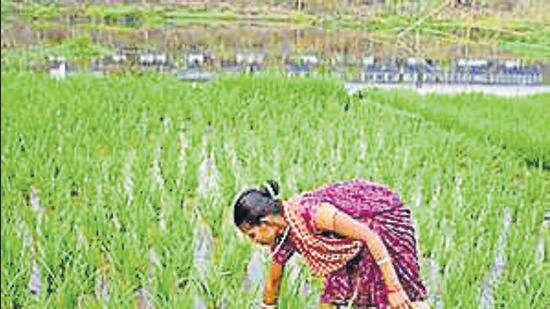
For a country battling high cereal prices for the last 12 months, the robust acreage of the main summer staple should help to put a lid on prices and boost supplies. Harvests are due to begin next month.
The reported paddy acreage is 2.7% higher than the corresponding period of last year and 3% higher than the normal area as calculated by the agriculture ministry. The driest August on record had triggered drought-like conditions in parts of the country but a late revival of the monsoon in September has improved the condition of most crops.
Rice plantings have increased in Telangana, a large producer, Uttar Pradesh, Madhya Pradesh and Rajasthan. The India Meteorological Department (IMD) on Friday announced that the summer monsoon will start withdrawing from September 25.
The monsoon is vital to Asia’s third-largest economy because it waters nearly half of India’s net-sown area and replenishes over 100 nationally important reservoirs critical for drinking, irrigation and energy.
{{/usCountry}}The monsoon is vital to Asia’s third-largest economy because it waters nearly half of India’s net-sown area and replenishes over 100 nationally important reservoirs critical for drinking, irrigation and energy.
{{/usCountry}}Robust rice production will boost procurement, or government’s purchase of rice for state-held granaries, boost supplies and could prompt the government restore exports.
The retreating rain-bearing system will bring more rain in Madhya Pradesh, Gujarat, Chhattisgarh, Bihar and West Bengal, which are states that had the driest conditions this summer and are producer of crops such as paddy, soyabean, pulses and oilseeds.
Late rains have reduced the monsoon deficit from 11% just weeks ago to 6% currently. “Fresh rains have been very beneficial for sugarcane, paddy and pulses,” said Abhishek Agrawal of Comtrade.
Rice acreage was deficient in August but picked up in a big way with the revival of the monsoon under the influence of low-pressure systems, according to an update by the agrometeorology division of the IMD.
However, pulses output is set to decline this year and could keep their prices high, as the acreage under most types of lentils is lower than last year. The total area under pulses is down by nearly 4% to 1.2 million hectares. India relies on imports to meet its total domestic demand of pulses.
Harvesting of rice usually commences in October but there could be a delay in states such as Punjab. “We have re-sown paddy with late-maturing varieties because of a poor monsoon,” Jaipal Singh Nain, a member of the Bharatiya Kisan Union from Fazilka, Punjab, had told HT earlier this week.