Banking services are expected to face disruptions for three days from Monday as bank unions begin a nationwide strike over their demand for a five-day working week and other pending issues.
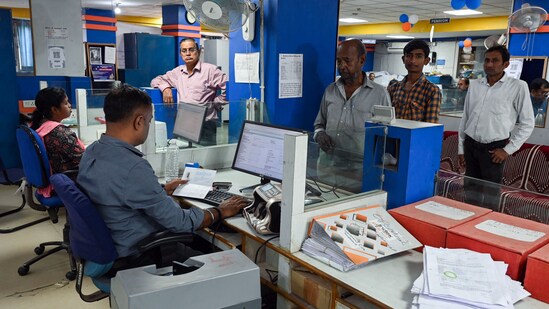
The strike is likely to affect services such as cheque clearance, cash deposits and withdrawals, particularly at public sector banks, old generation private sector banks and regional rural banks. However, digital banking and other online services are expected to remain available, news agency PTI reported.
Branches of new generation private sector banks, including ICICI Bank, HDFC Bank and Axis Bank, will remain open during the three-day strike.
What services may be affected?
Deep Dive
What banking services will be affected during the nationwide bank strike?
Why are bank unions demanding a five-day working week?
How can customers manage their banking needs during the strike period?
Customers using public sector banks and other institutions could face delays in branch-based banking services during the strike. Most public sector banks and other institutions have already issued advisories warning customers about possible inconvenience.
State Bank of India (SBI), in its advisory, said it would make every effort to provide essential banking services at branches and offices, but some services could be affected during the strike.
"Customers are therefore requested to complete their essential banking transactions well in advance of the proposed strike dates to avoid any inconvenience. Customers are also requested to make use of ATMs/ADWMs for their cash requirements and utilise YONO, Internet/Mobile Banking, UPI and other digital channels for their banking needs, wherever possible," it said.
Why are bank unions on strike?
{{/usCountry}}"Customers are therefore requested to complete their essential banking transactions well in advance of the proposed strike dates to avoid any inconvenience. Customers are also requested to make use of ATMs/ADWMs for their cash requirements and utilise YONO, Internet/Mobile Banking, UPI and other digital channels for their banking needs, wherever possible," it said.
Why are bank unions on strike?
{{/usCountry}}The strike has been called by the United Forum of Bank Unions (UFBU), an umbrella body representing seven bank employees' and officers' unions. The unions are demanding a five-day working week along with several other pending issues.
The latest three-day strike comes after a one-day nationwide strike held on September 11. The UFBU has also threatened an indefinite strike from October 26, 2026 if its demands are not addressed.
The demand for a five-day banking week has remained unresolved for several years. Union leaders said the government did not give any commitment on the issue during recent conciliation meetings before the Chief Labour Commissioner.
"Agitation has been forced on the unions due to the actions of the government and management," said Rupam Roy, general secretary of the All India Bank Officers' Confederation (AIBOC).
What are the other demands?
Apart from a five-day working week, the unions are seeking changes to pension benefits, a uniform dearness allowance formula for all pensioners and an option for employees covered under the National Pension System (NPS) to shift to the Old Pension Scheme (OPS).
"A five-day working week is already followed by central and state government offices, the RBI, LIC, GIC, NABARD and several other institutions. The stock market, money market and foreign exchange market also function on a five-day basis," said L Chandrasekhar, general secretary of the National Confederation of Bank Employees (NCBE).
What has the finance ministry said?
The finance ministry earlier this week urged bank employees not to go on strike and asked them to resolve their remaining demands through dialogue.
"Given that most concerns of the unions have been substantially addressed, that the remaining demand continues to be examined, and that the government continues to proactively introduce welfare measures for the banking workforce, bank employees are urged to refrain from resorting to strikes, work towards resolving issues through dialogue, and ensure that banking services remain uninterrupted," it said.
The ministry also said that one of the unions' key demands, withdrawal of the performance-linked incentive (PLI) scheme, was put in abeyance earlier this month following detailed discussions.
Despite the government resolving one of the two major demands raised by the union and continuing discussions, a one-day strike was held on September 11.