The joint statement issued by India and Pakistan on Thursday on the ceasefire agreement between their top military commanders may have surprised many but it comes months after National Security Adviser (NSA) Ajit Doval and his counterpart in Islamabad initiated back-channel conversations to ensure peace along the tense border, people aware of the matter said on condition of anonymity.
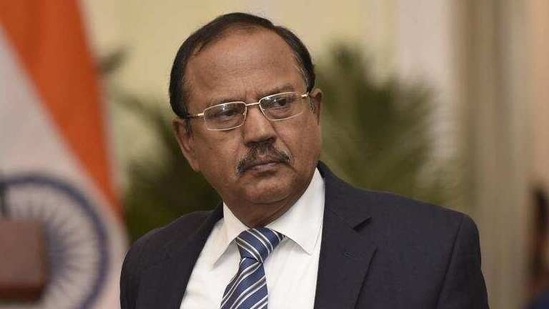
NSA Doval and Moeed W Yusuf, Prime Minister Imran Khan’s special assistant on National Security Division and Strategic Policy Planning, have been in touch directly and via interlocutors from the intelligence community, one of these people confirmed.
The joint statement is the first outcome of these conversations that included at least one face-to-face meeting in a third country, the person cited above said, without naming the location. He added that only a small group of top government leaders including the Prime Minister, home minister Amit Shah, defence minister Rajnath Singh and external affairs minister S Jaishankar were aware of the details of the talks.
ALSO WATCH | India-Pakistan ceasefire: The Ajit Doval factor & Islamabad’s reaction
Late on Thursday evening, however, Yusuf tried to distance himself from the talks in a series of tweets. “No such talks have taken place between me and Mr. Doval...The welcome development on the LoC is a result of discussions through the established channel of DGMOs,” he said.
Thursday’s joint statement, issued in New Delhi by the defence ministry, said the director generals of military operations (DGMO) of the two armies had agreed to “strict observance of all agreements, understandings and cease firing along the Line of Control” from Wednesday midnight.
{{/usCountry}}Thursday’s joint statement, issued in New Delhi by the defence ministry, said the director generals of military operations (DGMO) of the two armies had agreed to “strict observance of all agreements, understandings and cease firing along the Line of Control” from Wednesday midnight.
{{/usCountry}}The two top commanders also “agreed to address each other’s core issues and concerns which have a propensity to disturb the peace and lead to violence”.
To be sure, this is not the first time that the two top army officers have agreed to hold peace along the border. They signed off on a similar pact in 2018 when they pledged to strictly adhere to the terms of the ceasefire understanding of 2003 in letter and spirit. That wasn’t to be, though. Officials said Thursday’s joint statement could be the first of the many steps that the two countries take over the next few months to normalise relations, one step at a time.
National security planners said there were five developments over the last month or so that indicated a nuanced shift.
The first sign that the back-channel conversations were on track came earlier this month. Pakistan Army chief General Qamar Javed Bajwa, in a departure from his strident pitch against India after the Balakot air strike in 2019, on February 2 spoke of Islamabad’s commitment to what he called the ideal of mutual respect and peaceful co-existence and said: “it is time to extend a hand of peace in all directions”.
The second was the toned-down statements that emerged from Islamabad three days later, on February 5, which is observed by the Pakistani establishment as Kashmir Solidarity Day. “I found it unusual,” said a counter-terror official who wasn’t in the loop on the secret talks and who asked not to be named.
The third was a decline in the ceasefire violations along the border in Jammu and Kashmir in recent weeks.
A top government functionary said Gen Bajwa’s much-publicised peace proposal, a decline in ceasefire violations and Pakistan’s toned-down rhetoric were clearly linked to the quiet conversations taking place.
The fourth sign of a possible thaw in the relations was Pakistan steering clear of the Kashmir issue at last week’s South Asian Association of Regional Cooperation (Saarc) meeting convened by Prime Minister Narendra Modi on the Covid-19 pandemic.
Dr Faisal Sultan, special assistant to Prime Minister Imran Khan on Health restricted himself to the issue at hand, a sharp contrast to Pakistan’s previous attempt to raise the Kashmir issue at the Saarc meeting held in March last year.
The fifth indicator, an official said, was New Delhi’s gesture of allowing Imran Khan’s special aircraft to use Indian airspace en route to Sri Lanka on Tuesday. PM Khan’s Pakistan Air Force jet flew along India’s coastline and over the Lakshadweep archipelago before landing in Colombo.
India’s decision to allow the special flight to use its airspace was in marked contrast to Pakistan’s action in 2019, when Islamabad denied permission for the use of Pakistani airspace by three Indian VVIP flights.