The Bar Council of India (BCI) on Thursday night withdrew, within hours, its order freezing the enrolment of the entire 2026 graduating batch of NALSAR University of Law, Hyderabad, hours after its initial action triggered a protest threat from the Cockroach Janta Party (CJP), which recently led a mega youth protest from Delhi's Jantar Mantar against exam irregularities, resulting in the resignation of education minister Dharmendra Pradhan
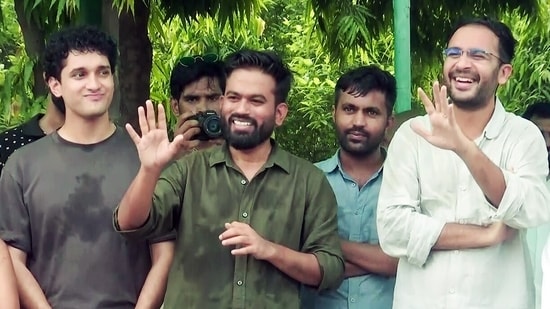
The BCI had on Thursday itself directed all state bar councils not to enroll any student from the batch while it sought details of those allegedly involved in a campaign opposing Chief Justice of India Surya Kant's participation in the university's convocation.
The retreat by BCI came roughly two hours after the order was issued.
Reacting to the issuance of the order, CJP founder Abhijeet Dipke hinted at a Jantar Mantar-like agitation again with a post on X, at around 7:25 pm, saying, “What if all legal cockroaches come together?”
BCI chairman Manan Kumar Mishra then, announcing the withdrawal of the order, said in a post on X at around 8:45 on Thursday, “After detailed deliberation, the @barcouncilindia has modified its earlier directions concerning @NALSAR_Official. All 2026 passed-out students of NALSAR will now be entitled to seek enrolment with the State Bar Council of their choice. The factual inquiry will continue, and further action will follow on the basis of the report. No student shall be made to suffer without any fault on his or her part.”
{{/usCountry}}BCI chairman Manan Kumar Mishra then, announcing the withdrawal of the order, said in a post on X at around 8:45 on Thursday, “After detailed deliberation, the @barcouncilindia has modified its earlier directions concerning @NALSAR_Official. All 2026 passed-out students of NALSAR will now be entitled to seek enrolment with the State Bar Council of their choice. The factual inquiry will continue, and further action will follow on the basis of the report. No student shall be made to suffer without any fault on his or her part.”
{{/usCountry}}The sequence of events indicates that the BCI's initial order and its withdrawal unfolded within a span of just two hours.
'Beijjati hui wo alag'
Manan Kumar Mishra, in a fresh post after midnight, said the Council had considered representations and reactions from senior advocates, members of the Bar, law students and citizens before concluding that the NALSAR batch "had no role in any disturbance or movement".
"After considering the representations and reactions of Senior Advocates, learned members of the Bar, law students and public spirited citizens, and being satisfied that the 2026 batch of NALSAR, Hyderabad, had no role in any disturbance or movement, the Bar Council of India has decided to close the proceedings altogether. No further action is required," Mishra said.
Mishra wished the students well, while adding that students should voice their opinions "with respect and institutional decorum". He also said that "Dissent is welcome in a democracy; public ridicule of constitutional institutions is often counterproductive."
The CJP, however, mocked BCI and its chairman over the U-turn, suggesting that it made the authorities pull an all-nighter. CJP spokesperson Ashutosh Ranka reacted to Mishra's post, saying, “CJP ne night out padwa diya. Beijjati hui wo alag. [CJP made them pull an all-nighter, on top of it the humiliation]”
Another CJP spokesperson, Saurav Das, argued that the BCI's earlier communication had not been completely withdrawn, pointing to the portion relating to an inquiry and identification of students.
"Mr. Mishra, the order has NOT been fully withdrawn. The part which seeks names of the students and orders for an 'inquiry' against them for their peaceful dissent still stands, as per your own new letter," Das said.
He demanded that the BCI withdraw the communication in full and guarantee that no action would be taken against NALSAR students for their dissent. "No student at NALSAR should face any inquiry or witch hunt for their democratic dissent against the Chief Justice of India," Das said.
Das also said the CJP's call for protests outside the BCI and Mishra's official residence would continue until the demand was met.
In a message to CJP's Dipke and Das on Friday, Manan Kumar Mishra told them the interests of the BCI are the same as theirs, "to protect the rights of the students."
"The Bar Council of India aims to protect the interests of the youth of India. I want to communicate to Abhijeet Dipke and Das (Sourav Das) that our interests are the same as theirs, to protect the rights of the students," Mishra said, speaking to ANI news agency.
What BCI's initial order was about
HT reported earlier that the BCI's initial order had sought an authenticated report identifying those who had initiated, organised, coordinated or mobilised the campaign against the CJI's proposed participation in the convocation. It had also sought details of representations, signatories, meetings, social-media groups and the involvement of faculty members, alumni, student organisations or outsiders.
The initial BCI communication had directed state bar councils not to enrol NALSAR's 2026 graduates "till further orders". It was subsequently modified, with Mishra saying, "No student shall be made to suffer without any fault on his part."
The controversy began after 70 members of NALSAR's outgoing LLB batch submitted a representation on July 23 opposing CJI Kant's proposed participation as chief guest at the university's convocation. Students from other batches later expressed solidarity with the representation.
The students' objections followed remarks made by the CJI while hearing a plea concerning alleged police excesses during student protests in Delhi. The campaign subsequently drew wider attention, including from the CJP, whose founder Abhijeet Dipke responded to the BCI's initial action by writing on X: "What if all legal cockroaches come together?"
The phrase echoed the language behind the CJP's protest identity, which emerged after the CJI compared some unemployed young people to cockroaches. The movement later gained attention after protests over unemployment and other issues.