
 E-Paper



‘Best deal’: EAM Jaishankar defends India’s decision to buy Russian crude
Russia has gone from being a marginal energy provider to becoming one of the top three oil suppliers for India since the start of the Ukraine crisis

 Prefer HTon Google


The impact of the cap imposed by the G7 group of major economies on the price of Russian oil is not clear, though concerns remain about its effects on the stability of global energy markets, external affairs minister S Jaishankar said on Wednesday.
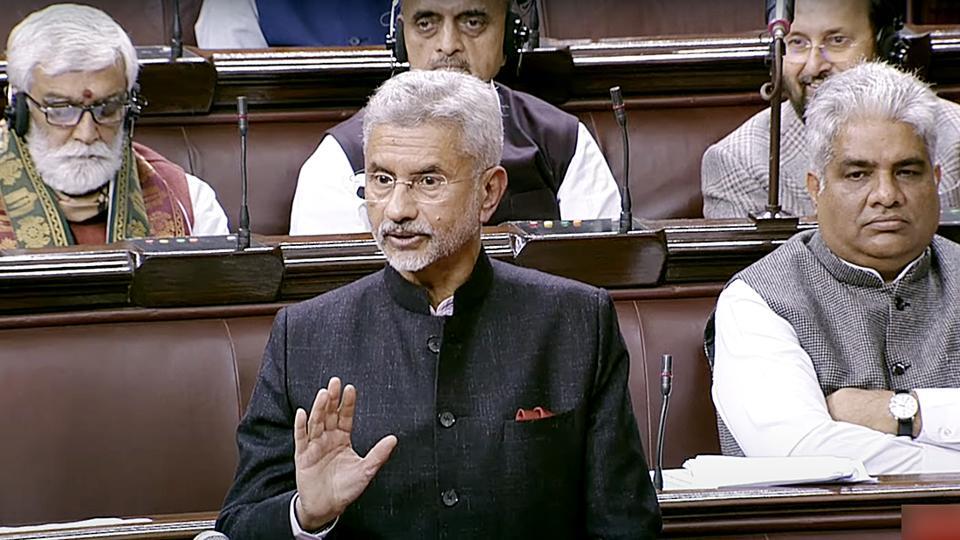
Jaishankar again defended India’s decision to buy Russian crude in the face of continuing pressure from Western countries by saying that India’s energy procurements are aimed at getting the best deal for the people at a time of global economic uncertainty.
“The impact of this [G7 oil cap] is not very clear to us. Our concern is what would it do to the stability and the affordability of the energy markets,” he said while responding to questions from lawmakers after delivering a statement in the Rajya Sabha on India’s key foreign policy initiatives of recent months.
“I would like to clarify – we do not ask our companies to buy Russian oil. We ask our companies to buy oil, what is the best option that they can get. Now, it depends on what the market throws up,” he said in response to another question.
“We are not buying from one country, we buy from multiple sources, but it is a sensible policy to go where we get the best deal in the interest of the Indian people, and that is exactly what we’re trying to do,” he added.
Russia has gone from being a marginal energy provider to becoming one of the top three oil suppliers for India since the start of the Ukraine crisis. Amid Western sanctions, Moscow offered various discounted commodities, including food and fuel, to New Delhi.
Oil prices have risen amid concerns that the new G7 cap of $60 a barrel on Russian crude might disrupt global supplies in the coming months. The cap was implemented on Monday to “prevent Russia from profiting from its war of aggression against Ukraine”.
Jaishankar said it is his duty to ensure that the Indian public “does not pay the cost of some other country’s or region’s actions” when it comes to the supply of food, fuel and fertilisers. Asked by lawmakers if India had adopted a position of neutrality on the Ukraine situation, he said: “We have been publicly clear at the prime minister’s level that this is not an era of war. We have consistently urged dialogue and diplomacy.”
“When it comes to the impact of the war on the Indian people or the rest of the world, we have also done the right things about that. We have taken measures to soften the impact, whether it is of fuel [prices] or food inflation or fertiliser cost. If it is your contention that our position has been in putting the interests of the Indian public first, I plead guilty,” he added.
Also Read:‘Not era of war’: Declaration by G20 echoes India’s Ukraine line
Jaishankar noted in his statement that India’s advocacy of dialogue and diplomacy has been consistent and persistent in the context of the Ukraine war. “We have also extended support on specific concerns, such as supply of food grains and fertilisers, as indeed on security of nuclear installations,” he said.
India’s G20 presidency will focus on forging consensus within the grouping of the largest economies and raising causes of the Global South at a time when the world is grappling with “uncertainties, disruptions and rivalries”, Jaishankar said.
India’s contribution to finding common ground among G20 members in a polarised environment during the summit in Bali last month was widely appreciated and there is interest in the country’s digital delivery, public health response and green growth initiatives, Jaishankar said in his statement.
The current G20 presidency is taking shape against the backdrop of a geopolitical crisis, food and energy insecurity, slow progress on Sustainable Development Goals (SDGs), mounting debt burden and challenges to climate action.
“Our endeavour is to build consensus within the G20, champion causes especially of the Global South, and shape the setting of the agenda. This will also be an occasion for us to highlight the 3Ds of India – development, democracy and diversity,” he said.
India, he said, will provide a “stronger voice to the issues of interest of the Global South”, and the emphasis will be on “sharing the India story, caring for all and taking collective action”. It will also focus on priorities such as digital India, clean energy, women-led development, multilateral reforms and the ‘Lifestyle For Environment’ or LiFe initiative.
Jaishankar recalled Prime Minister Narendra Modi’s remarks to Russian President Vladimir Putin on the margins of the Shanghai Cooperation Organisation (SCO) Summit in Samarkand in September – that this is not an era of war – and said India’s position was appreciated by the world community and found reflection in the G20 Bali Declaration.
Modi’s discussions with world leaders in Bali focused on reviving global growth, ensuring food and energy security, promoting technology, preserving the environment, and addressing public health and digital transformation. The Indian side also sought the support of all G20 members for the success of its presidency, he said.
India formally kicked off its G20 presidency by organising a meeting of the G20 Sherpas in Udaipur this week. The country will hold about 200 meetings in 32 sectors at multiple locations before the G20 Summit next year.
“We envisage the G20 presidency as an occasion to showcase India to the world. This will be done through cultural activities, regional festivals, technology programmes, sustainability initiatives, millets promotion, One District One Product promotion, community engagement and civil society activities,” Jaishankar said.


