
 E-Paper



Bihar seeks addition of caste-based laws in ninth schedule
The Nitish Kumar government on Wednesday asked the Centre to include two recently amended laws, which increase the caste-based quota in Bihar from 50% to 65%, in the ninth schedule of the Constitution.

 Prefer HTon Google


The Nitish Kumar government on Wednesday asked the Centre to include two recently amended laws, which increase the caste-based quota in Bihar from 50% to 65%, in the ninth schedule of the Constitution for providing them immunity from judicial review, and reiterated the demand for special status to the state.
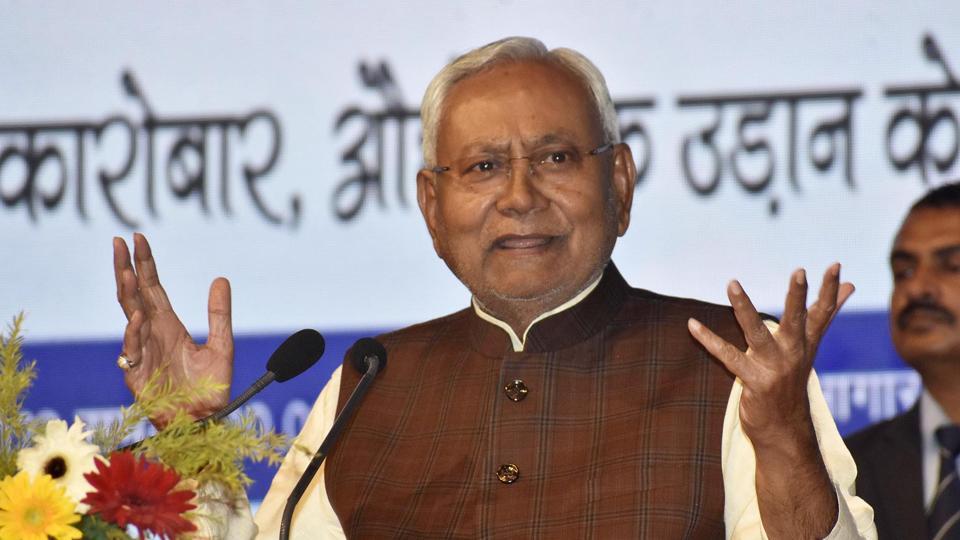
Proposals to put forth these two demands were discussed and approved during the state cabinet meeting chaired by Kumar, additional chief secretary, Bihar cabinet, S Siddharth said.
“A total of 40 agenda points, including two impromptu proposals, were discussed and given assent to by the cabinet,” Siddharth said.
Hours later, the state government sent a letter to the Centre, urging it to begin the formalities to include the two laws in the ninth schedule.
“We will wait and watch for the Centre’s reaction to our proposal. This requires a constitutional amendment by Parliament. We may seek an appointment with the Prime Minister and handover a formal proposal to him,” said state parliamentary affairs minister Vijay Kumar Chaudhary.
The development came a day after the state government notified the increase in quota for reserved categories in education and government jobs, from 50% to 65%, joining only a handful of other states such as Tamil Nadu where the quantum of such reservation exceed the 50% ceiling fixed by the Supreme Court in the 1992 Indra Sawhney case.
Siddarth said the inclusion of the two laws — the Bihar Reservation of Vacancies in Posts and Services Amendment Act, 2023 and the Bihar Reservation (Admission in Educational Institutions) Amendment Act, 2023 — in the ninth schedule would give them immunity from judicial review. Tamil Nadu’s reservation law was put in the ninth schedule — which has only limited scope for judicial scrutiny — in 1993.
The two laws raised the quota for Scheduled Castes (SC) from 16% to 20%, Scheduled Tribes (STs) from 1% to 2%, Extremely Backward Castes (EBCs) from 18% to 25% and Other Backward Classes (OBCs) from 15% to 18% to elevate the total quantum of caste-based reservations to 65%, setting the stage for a potential shake-up of Hindi heartland politics that could elevate caste as a key poll plank for the 2024 Lok Sabha polls.
To be sure, the total quantum of reservation in jobs and educational institutions will stand at 75%, after taking into account the 10% quota for economically weaker sections (EWS).
The state cabinet also passed a resolution to request the Centre to grant special status to Bihar, a long-standing demand of CM Kumar.
“The cabinet has passed a resolution requesting the Centre for grant of special category status to Bihar,” Kumar wrote in a post in Hindi on X (formerly twitter), adding that the demand was necessitated by the findings of the recently-concluded caste-based survey carried out in the state.
The senior Janata Dal (United) leader further said that his government has planned to undertake a number of welfare measures for the benefit of 9.4 million poor families.
“We intend to provide, in instalments, an assistance of ₹2 lakh to one member of each of these families for some type of economic activity,” Kumar said.
The chief minister also maintained that his government was committed to building pucca (permanent) houses for “39 lakh [3.9 million] families living in huts” and every such household will be provided ₹1.20 lakh for the purpose.
He said that the Bihar government has decided to increase the assistance to landless families for purchasing land from ₹60,000 to ₹1 lakh which would benefit 63,850 such households identified in the survey.
“The implementation of all such measures will incur an expenditure of ₹2.50 lakh crore. Because of the huge sum involved, we have set a deadline of five years from now for the completion of the schemes. But if we get special category status, we will be able to accomplish the task in a much shorter time,” Kumar, the longest-serving chief minister of state, said.
Kumar said that he was raising the demand for special status since 2010. “To look into our demand, the government at the Centre had set up a committee headed by (former RBI governor) Raghuram Rajan which submitted its report in 2013, but nothing came of it,” he wrote in the social media post. “In May 2017, we again wrote to the Centre requesting special status…. it is my request that the Centre agree to the demand keeping in view the interests of the people of Bihar.”
Former minister and JD(U) chief spokesman Neeraj Kumar said: “Both houses of the state legislature had approved a proposal seeking special status for Bihar and the same was sent to the Centre twice. But the state government’s plea was neither accepted nor rejected.”
Explaining the benefits of the special status, he said: “Bihar will able to grant tax holiday or substantial tax concession to investors willing to set up their industries or other installations to boost economic activities. Besides, the state will also qualify for getting 90% central share in centrally-sponsored scheme instead of the current 60% or even less than it from the Centre.”
The Bihar cabinet, additional chief secretary Siddharth said, approved the proposal to increase the dearness allowance (DA) for state government employees and pensioners by 4% with effect from July 1. It also approved the draft of Bihar logistics policy 2023, which envisages various incentives and capital subsidy to the investors in building logistics parks, multi-modal logistics park and other associated installations. The cabinet also gave its assent to the energy department’s investment proposal for setting up 185MW solar power project at Kajra in Lakhisarai.


