The ruling Bharatiya Janata Party, already navigating Opposition allegations that it was rigging elections in the country in collusion with the Election Commission of India, is also facing sharp criticism from one of its own senior figures: Murli Manohar Joshi, a former union minister and a long-standing party veteran.
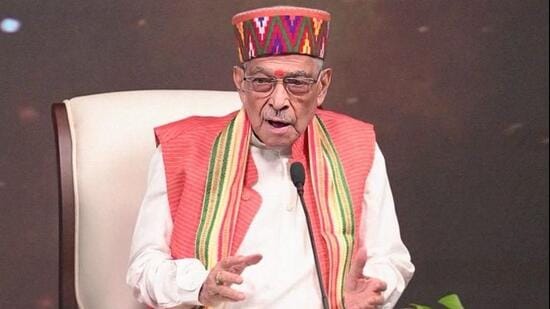
Joshi, who earlier spoke in favour of students protesting at Jantar Mantar against NEET paper leaks in July, has condemned loud music events held near major holy sites.
Last week’s intervention by the 92-year-old leader, who was among the party patriarchs elevated to the Margdarshak Mandal (guidance committee) in 2014, came after reports about loud music being played near the Badrinath Temple as part of the Devbhoomi Cultural Festival on September 19-20.
In a post on X on Friday, Joshi questioned why the authorities had granted permission for a music concert at Badrinath Dham, calling it a violation of cultural decorum and an assault on the shrine’s sanctity.
“It is noteworthy that this Dham was established by Adi Guru Shankaracharya Maharaj in the Himalayan environment for peaceful devotion through divine hymns. It is remarkable that even blowing a conch shell is prohibited at this site, yet we disregard this and organise noisy music events, thereby gravely neglecting India’s spiritual, cultural, and environmental values. Along with that, at such a high altitude, allowing thousands to dance ignores the adverse health impacts on them as well,” he said.
In recent months, this is the second time Joshi has taken a stance at odds with his party.
{{/usCountry}}In recent months, this is the second time Joshi has taken a stance at odds with his party.
{{/usCountry}}The first was after the July 20 police action against students led by the Cockroach Janta Party who were protesting paper leaks at Janata Mantar. At the time, he criticised the use of “brutal force” on women and girls protesting at Jantar Mantar and asserted that their concerns were “genuine”. He also cautioned that the government’s approach and the use of force would alienate large sections of Indian society from the national goal of Viksit Bharat.
“It is painful to see young students from different parts of the country assembled for days on the streets of New Delhi. Their anxieties and concerns regarding the examination system are genuine and must be handled with empathy and a desire to find a lasting solution. I fervently hope that this is not treated merely as a law-and-order issue to be tackled through the use of force. It is very painful to see that even young girls were brutally mishandled,” he said in a post on July 23.
When Dharmendra Pradhan finally resigned as education minister, Joshi congratulated the students for the “peaceful conclusion to the movement”. In an interview soon after the protests, he lashed out at the government for its education policy, which he said was no longer a priority and had been relegated to the background amid expanded spending on road transport and private industrialisation.
To be sure, Joshi, who served as union education minister from 1998 to 2004 in the Atal Bihari Vajpayee government and faced criticism for changing the curriculum and history textbooks, has a history of making controversial statements.
Ahead of the 2014 national elections, when he was told to contest from Kanpur and not Varanasi which elected him to the Lok Sabha in 2009, he downplayed the personal appeal of the party’s prime ministerial candidate, Narendra Modi. “This wave or that wave, Modi is a representative of the party as a PM candidate. So, it’s not a highly personalised thing, it is a representative wave. He gets the support from different parts of the country, from different sections of the society and from all leaders of the BJP,” Joshi told a Malayalam news channel.