In a relief to bank customers, the finance minister has increased the insurance cover on bank deposits by five times to Rs 5 lakh. At present, the Deposit Insurance and Credit Guarantee Corp. (DICGC) provides a cover of up to Rs 1 lakh for all types of deposits in a single bank. “The new limit would cover a significant number of retail depositors,” said Virendra Kumar Sethi, head, mortgages and other retail assets, Bank of Baroda.
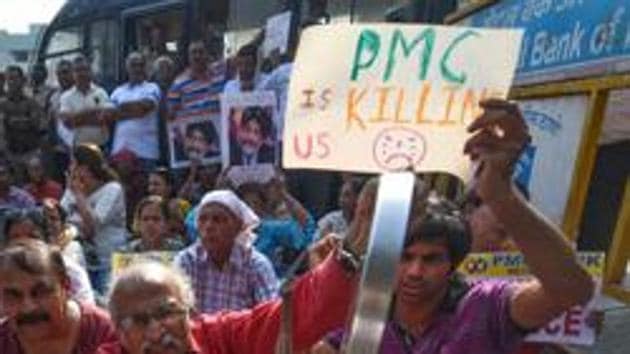
Ever since the crisis broke out at the Punjab and Maharashtra Co-operative (PMC) Bank, there have been demands to raise the insurance cover on deposits.
The cover was last raised after the securities scam of 1992. According to an SBI Research published before the budget, the level of insured deposits as a percentage of assessable deposits has declined from a high of 75% in financial year (FY) 1982 to 28% in FY18. Assessable deposits are those which are subjected to premium collection.
The present Rs 1 lakh deposit insurance covers 90% of the total savings accounts.
According to the SBI report, an insurance of Rs 2 lakh would cover 70% of the term deposits.
However, experts point out that it takes the Reserve Bank of India a long time to pay the claim. Insurance is paid out only when a bank is liquidated.
India is one of the countries where deposit insurance is low—at about $1,508 (for Rs 1 lakh, it will go up to $7,540 for ₹5 lakh). In comparison, for the US, the cover is $250,000 and for the UK, about $111,143, said the report.
{{/usCountry}}India is one of the countries where deposit insurance is low—at about $1,508 (for Rs 1 lakh, it will go up to $7,540 for ₹5 lakh). In comparison, for the US, the cover is $250,000 and for the UK, about $111,143, said the report.
{{/usCountry}}According to SBI Research, until March 2018, India had about 0.23 billion term deposit accounts with an average balance of Rs 59,819, and 1.60 billion savings bank account with an average balance of Rs 23,590.
Budget 2020 also gave investors a reason to cheer. The FM said that the government would sell a part of its holding in Life Insurance Corp. of India (LIC) by way of an initial public offering (IPO). “This will benefit investors as well as policyholders,” said Arun Kejriwal, director, KRIS Capital, a stock advisory firm.
While the stock investors would get to own the country’s largest insurer, customers can expect better corporate governance, more transparency, competitively priced products and better customer service once LIC is listed.