
 E-Paper



Can’t stop SIR, will set it aside if found illegal: Supreme Court
The Supreme Court said ECI, as a constitutional body, must be presumed to be acting in accordance with its constitutional responsibilities

 Prefer HTon Google


The Supreme Court on Monday observed that it cannot restrain the Election Commission of India (ECI) from conducting its ongoing special intensive revision (SIR) of electoral rolls across the states, emphasising that the legality of the process will ultimately be decided at the stage of final judgment. Until then, the court said, the commission, as a constitutional body, must be presumed to act in accordance with its constitutional responsibilities and that any breach could invite its intervention.
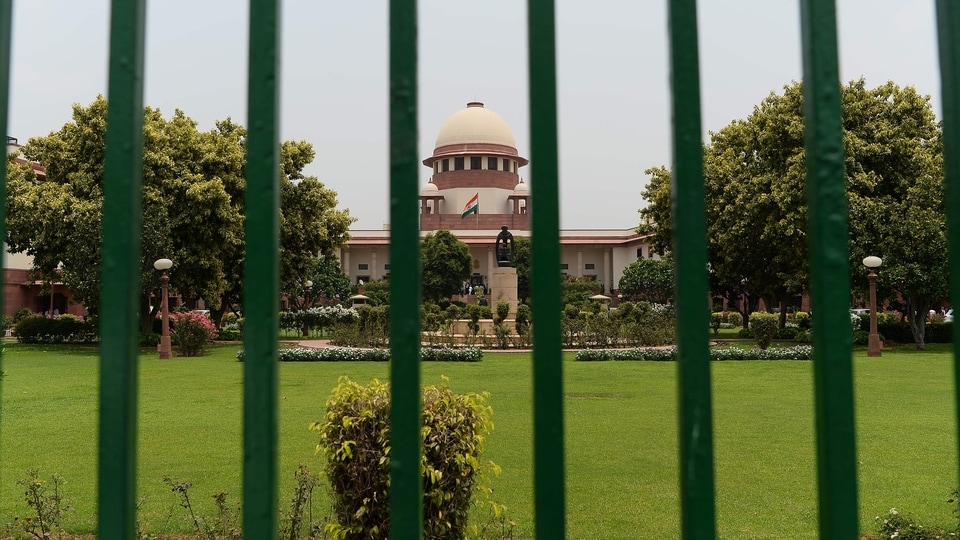
A bench of justices Surya Kant and Joymalya Bagchi made the remarks while adjourning till October 7 the hearing of a batch of petitions challenging SIR, including the one being carried out in election-bound Bihar. Petitioners, led by civil society groups and opposition parties, had pressed for an urgent hearing before October 1, the date of publication of the final voters’ list in Bihar, but the court refused, explaining that the pending Dussehra vacation would not make such scheduling feasible.
“The publication of the final voter list will not make any difference to our adjudication. If we are satisfied that there is illegality, we can intervene regardless of the list having been finalised,” the bench observed, responding to submissions by advocate Prashant Bhushan for NGO Association for Democratic Reforms (ADR), who alleged that ECI was ignoring its own manuals by not publishing objections received.
Senior counsel Abhishek Manu Singhvi, Gopal Sankaranarayanan and advocate Vrinda Grover also sought an early hearing, warning that the assembly elections are due to be notified in mid-October and pressing that the exercise not be allowed to continue unchecked. The bench, however, reiterated that the matter would be taken up on October 7, the earliest non-miscellaneous day available after the Dussehra recess.
“How can we stop? If other states have filed petitions, of course they will also be heard,” the bench told Sankaranarayanan, who pressed for an urgent hearing while pointing out that ECI is going ahead with the SIR exercise in other states too.
Meanwhile, the bench suggested that ECI bring greater transparency by publishing more data on the claims and objections received. While the commission’s counsel, senior advocate Rakesh Dwivedi, said weekly updates were already being issued, the court replied: “To the extent you can bring information in the public domain, it will bring transparency.” The suggestion was not, however, incorporated into the court’s formal order.
The bench also considered an application by advocate Ashwini Upadhyaya seeking the withdrawal of Aadhaar card from the list of acceptable identity documents for the SIR, accusing ECI of allowing “illegal immigrants” to obtain enrolment. The court issued notice on the plea but declined to stay its use, noting that Aadhaar remains legally recognised to establish identity and residence. “Any document can be forged… driver’s licence, Aadhaar, many documents. But Aadhaar is to be used to the extent law permits,” the court remarked.
Upadhyay’s petition was last taken up by a bench led by justice Surya Kant on September 8 when the court ordered that Aadhaar must be accepted as the 12th valid document for inclusion in Bihar’s electoral rolls during the ongoing SIR, intervening after complaints that election officials were refusing to recognise it despite earlier directions. The bench had at the time turned down ECI’s reservations against formally adding Aadhaar to its list of approved identity proofs, stressing that while the document cannot establish citizenship, it remains a valid indicator of identity and residence.
Monday’s hearing came against the backdrop of an affidavit ECI filed last Friday, in which it underlined its exclusive authority to decide the manner and frequency of conducting revisions of electoral rolls. The commission maintained that Articles 324 of the Constitution, read with the Representation of the People Act, 1950, and the Registration of Electors Rules, 1960, vest the power of preparing and revising rolls entirely with ECI, leaving no scope for judicial direction on timelines.
“The ECI has complete discretion over the policy of revision to the exclusion of any other authority,” the affidavit said, warning that judicial intervention could amount to encroaching upon its plenary powers.
The affidavit was filed in response to Upadhyaya’s PIL seeking a judicial mandate for mandatory SIRs across the country ahead of every major election, to prevent alleged large-scale infiltration and fraudulent enrolment. He argued that demographic changes in border states and districts risked distorting electoral outcomes and urged the Court to institutionalise periodic intensive revisions.
ECI countered that it had already decided on June 24 to undertake the present SIR nationwide with January 1, 2026, as the qualifying date, and had issued directives to state chief electoral officers accordingly. A meeting of state CEOs was held in New Delhi earlier this month to review preparations.
Monday’s proceedings now set the stage for October 7, when the Supreme Court is expected to hear arguments in detail on the constitutional validity of the SIR process and determine whether the ongoing exercise, in Bihar or elsewhere, passes muster under law.



