The ongoing census and geo-tagging of Kashmir’s majestic Chinars have brought to fore the existence of trees that are much older and larger than what were currently believed to hold these records in the central part of the Valley, according to forest officials familiar with the matter.
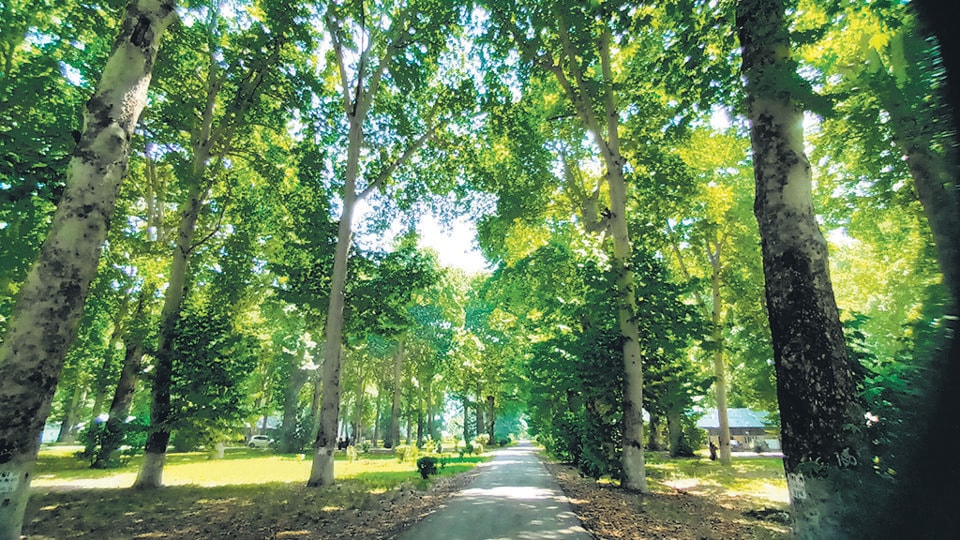
What was believed to be the oldest Chinar tree, was planted some 700 years ago and is located at Chetturgul Chaadoora in central Kashmir’s Budgam district. It has a girth of 14.78 metres (over 48 feet) and a height of 19 metres.
But now, several older trees have been found in central Kashmir, one of which appears to be nearly 1,000 years old and is located in Budgam itself. These older trees have a girth of over 50 feet.
“We want to locate the biggest Chinar in Kashmir. The one which was considered the biggest and oldest is in Budgam district… but we have now found trees bigger than that,” Mohammad Lateef, divisional forest officer, research division, said.
Providing details, Dr Syed Tariq, coordinator of the Chinar census project of Forest Research Institute, said: “The 700-year-old tree at Chetturgul Chaadoora is over 48 feet (14.78 metres) in girth. However we found another tree in Budgam district which is 52.6 feet (16 metres) in girth and appears to be 1,000 years old. The more the girth of the tree, the more its age.”
“Similarly, in Ganderbal district, we found trees which have girth over 50 feet,” he added.
{{/usCountry}}“Similarly, in Ganderbal district, we found trees which have girth over 50 feet,” he added.
{{/usCountry}}The census and geo-tagging of Chinar trees started last year, and is likely to be completed by the end of March next year, Lateef said. “Last year, our team enumerated some 10,000 Chinar trees and geo-tagged them. This year also the work is going on,” he said.
Geo-tagging is the process of appending geographic coordinates to media based on the location of a mobile device. Geotags can be applied to photos, videos, websites, text messages, and QR codes, and could also include timestamps or other contextual information.
The ongoing geo-tagging and census process revealed that Srinagar, Budgam, Ganderbal and Anantnag districts have more Chinar trees than the remaining districts, Lateef said.
“Maximum trees were found along the Jhelum and Sindh rivers and are confined to south and central Kashmir.”
Chinar, which is found in almost every village in Kashmir, is also known as the Oriental Plane or Platanus orientalis (in scientific binomial nomenclature). Called Chinar or Chenar in Asia and, Boueen in Kashmir, it grows up to a height of 30 metres and girth of 10 to 15 metres at ground level; it takes around 150 years to grow to its full size.
The number of Chinar in the Valley has, however, reduced over the decades, from an estimated 42,000 to below 20,000, owing to natural and man-made factors, Lateef said.
Census and geo-tagging will go a long way in protecting this variety of tree, the forest officer said. “By this exercise, we will be able to keep a track of these trees, cross check claims of those who deem them a threat to habitations and cut them for their benefit. We can also track their health and remove the ailing ones with new plantations.“We are producing an e-form for Chinars like google forms. Whenever the geo-tagging exercise is completed, one can get any information on any tree from anywhere like its crown length, height and girth.”
The forest officer added: “Chinar is the only living fossil in Kashmir and is part of our culture. Till now, there was no conservation plan and policy to protect this tree. We want to tag this plant to preserve it for the future.”