The Centre has moved the Supreme Court seeking a direction to declare as illegal the appointment of the incumbent Jharkhand director general of Police (DGP) Tadasha Mishra, contending that the state government’s 2025 regulations governing the selection of police chief are contrary to the top court’s binding directions in the past.
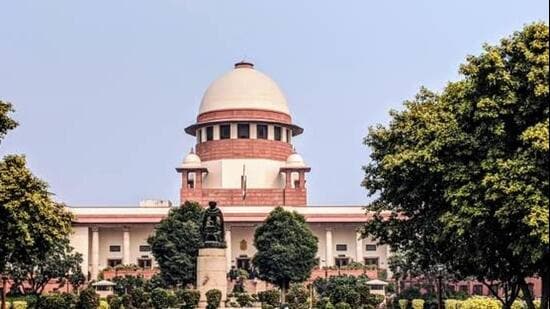
Chief Justice of India Surya Kant agreed on Wednesday to list the Centre’s application for hearing on Thursday, after Solicitor General Tushar Mehta mentioned it.
The application, filed in the long-running Prakash Singh case, has challenged the legality of appointments made under the “Selection and Appointment of Director General and Inspector General of Police, Jharkhand (Head of the Police Force) Regulation, 2025”. The Centre has asked the court to direct Jharkhand to implement its directions in the Prakash Singh case and, alternatively, declare DGP appointments made under the 2025 regulation illegal.
The Prakash Singh case relates to the Supreme Court’s monitoring of police reforms, in which the court has issued a series of directions since 2006 aimed at insulating the police from undue political interference and ensuring transparent, merit-based appointments and fixed tenures for senior police officers.
Also Read: Chandigarh: PGI eyes parking project revival after SC ruling
{{/usCountry}}Also Read: Chandigarh: PGI eyes parking project revival after SC ruling
{{/usCountry}}In the present plea, the Centre has particularly objected to the manner in which the Jharkhand government amended its regulations to facilitate Mishra’s appointment as DGP on December 30, 2025, a day before she was due to retire. According to the application, a December 29 resolution removed the requirement of six months’ residual service for appointment as DGP, paving the way for Mishra’s appointment under the 2025 regulations.
This, the Centre has argued, runs contrary to the Supreme Court’s directions in the Prakash Singh case, under which recommendations for appointment of a DGP are to be made from officers having at least six months of residual service before retirement. The court had clarified in its March 13, 2019 order that the requirement would apply to the UPSC’s recommendation and preparation of the panel.
The Centre has also questioned the very framing of the 2025 regulations. Jharkhand notified the regulations on January 8, 2025, providing for a state-level nomination committee for selection of the DGP. The application says the state framed the regulations without obtaining the Supreme Court’s permission as required by its earlier directions.
Also Read: Supreme Court decision to allow green fire crackers may still push pollution to 2025 levels
The Centre’s challenge comes against the backdrop of an earlier appointment made under the same regulatory framework. Jharkhand appointed Anurag Gupta as DGP on February 2, 2025, for a two-year tenure despite his having only around three months of service left before superannuation. The Ministry of Home Affairs subsequently wrote to the state on April 22, May 3 and May 23, 2025, opposing the appointment and pointing out that Gupta had retired on April 30, 2025.
After Gupta subsequently sought voluntary retirement, Jharkhand appointed Mishra as DGP on December 30, 2025. The Centre says its January 6, 2026 communication asked the state to cancel both the 2025 regulations and Mishra’s appointment, since she was due to superannuate the following day, and to initiate a fresh appointment process in accordance with the Supreme Court’s directions. The state, however, continued with the appointment process, the application alleges.
The Centre has also brought to the Supreme Court’s notice that a PIL challenging the 2025 regulations and Gupta’s appointment, which was pending before the Jharkhand High Court, was transferred to the Supreme Court on August 18, 2025. The top court had, in an order of May 19, 2026, also noted that an acting DGP was functioning in Jharkhand and sought a compliance affidavit from the state.
The Centre has contended that Jharkhand cannot selectively rely on the Prakash Singh judgment to claim a two-year tenure for its DGP while departing from the mandatory selection requirements laid down by the same judgment. “The directives of this Hon’ble Court are required to be implemented in toto in true spirit and not in a selective or partial manner,” said the application.
The Prakash Singh directions require the state government to select the DGP from among the three senior-most officers empanelled by the UPSC on the basis of length of service, very good record and experience, with the selected officer ordinarily having a minimum tenure of two years irrespective of the date of superannuation.
The Centre has now asked the Supreme Court to direct Jharkhand to abide by its directions in the Prakash Singh case and to declare DGP appointments made under the state’s 2025 regulation illegal.