
 E-Paper



Supreme Court decision to allow green fire crackers may still push pollution to 2025 levels
2025 was the first in many years when firecrackers were allowed and it went on to become the most polluted in five years despite favourable weather conditions.

 Prefer HTon Google


The Supreme Court’s order permitting specified next-generation green crackers – especially for the serial firecrackers known as ladi – could expose the Capital to worse levels of pollution if trends from last year are an indication: 2025 was the first in many years when any firecrackers were allowed and it went on to become the most polluted in five years despite favourable weather conditions.
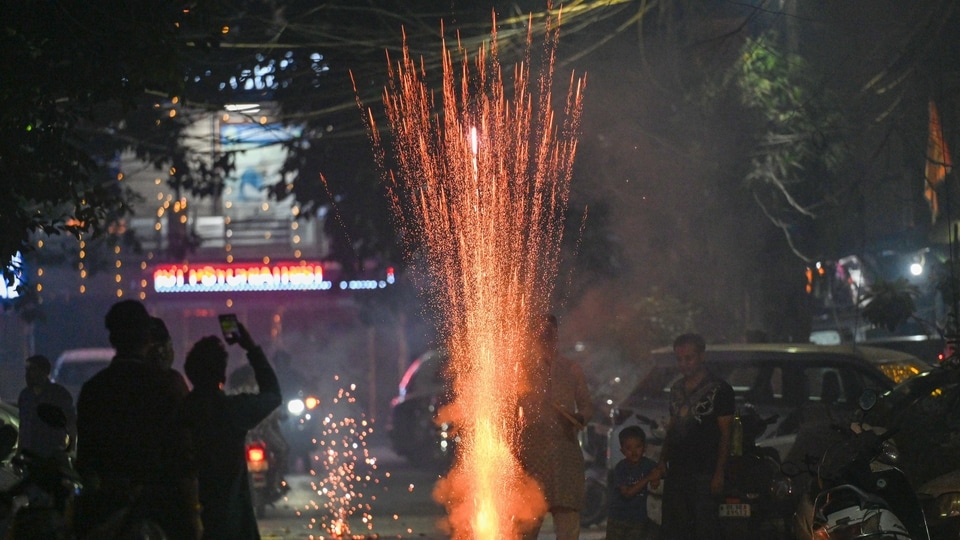
For years, firecrackers had been banned in Delhi through the peak pollution months. In October 2025, the Supreme Court allowed NEERI-approved green crackers for three days around Diwali, within fixed hours. The relaxation was meant to be a controlled opening. Instead, crackers of every kind flooded the market and were burst.
Also Read I Delhi as its canvas: India Biennale to spread out across capital from December 4 onwards
Key issues in green crackers
Three problems drove the surge. First, green crackers still pollute. NEERI puts the emissions cut at 30-40% per cracker, and allowing them when none were allowed before still added to the emissions load.
Second, labels were faked. HT spot checks last year found boxes marked “green” or “eco-friendly” without certification or QR codes.
Third, law enforcement could not tell one cracker from another during celebrations.

Dipankar Saha, former head of the Central Pollution Control Board’s air laboratory and one of the scientists who developed green crackers in 2018, said the technology reduces emissions but cannot eliminate them.
“Anything involving combustion cannot be green, but it has lesser harmful chemicals, including barium or aluminium. The next-generation crackers can be less polluting than those developed before but still cannot be completely without emissions,” he said.
Enforcement worries him more. “Even if allowed, the concern will be how agencies stop conventional firecrackers from flooding in, alongside these green firecrackers. We have seen in the past that enforcement has been poor,” Saha said. He added that crackers from neighbouring countries would be easy to obtain.
Jinitha Varghese, programme manager at the think tank Envirocatalysts, called the shift a “dangerous compromise”. “Green firecrackers are not zero-emission; they are simply slightly less polluting. In an airshed as overburdened as Delhi-NCR, introducing millions of ‘green’ crackers over a two-hour window will still push AQI levels past hazardous thresholds, reversing years of hard-won policy progress on clean air,” she said.
The court has said the final framework will specify which crackers can be burst and for how long.
‘Regulated use is welcome’
Traders welcomed the order but want clarity, and time to stock only permitted products. Sunil Mittal, secretary of the Delhi Fireworks Association, said last year’s decision left them little room.
“We were given a three-day window last year to sell NEERI-approved green firecrackers, but the decision came at the last minute. If there is enough time, we will be able to check and procure only approved crackers from Sivakasi at reasonable rates,” he said.
Also Read I Delhi records lowest September AQI in five years at 102, highest ‘moderate’ air quality days in 2026
Most traders said they could not tell certified green crackers from conventional ones.
“Everything depends on the manufacturers. If they are able to produce firecrackers which cause minimum harm to the environment, then why should sellers be stopped from selling them,” said Shubhash Kumar, a trader in Shakti Nagar.
Sunil Jain, a trader in Shahdara, prefers regulation to a ban. “People don’t stop burning crackers because it is banned, they manage to get it from outside. If the green crackers are allowed, at least we can ensure that pollution-free crackers are used by people. Regulated use is welcomed,” he said.
Frequently Asked Questions



Stay updated with all top Cities including, Bengaluru, Delhi, Mumbai and more across India. Stay informed on the latest happenings in World News along with Delhi Election 2025 and Delhi Election Result 2025 Live, New Delhi Election Result Live, Kalkaji Election Result Live at Hindustan Times.


